
Last updated September 23, 2026
Free visual inspection and a written scope of work before any mitigation begins - photos, moisture readings, and drying logs go in your claim file
The scope we write is the scope we bill. Anything new gets shown to you, in writing, before we touch it.
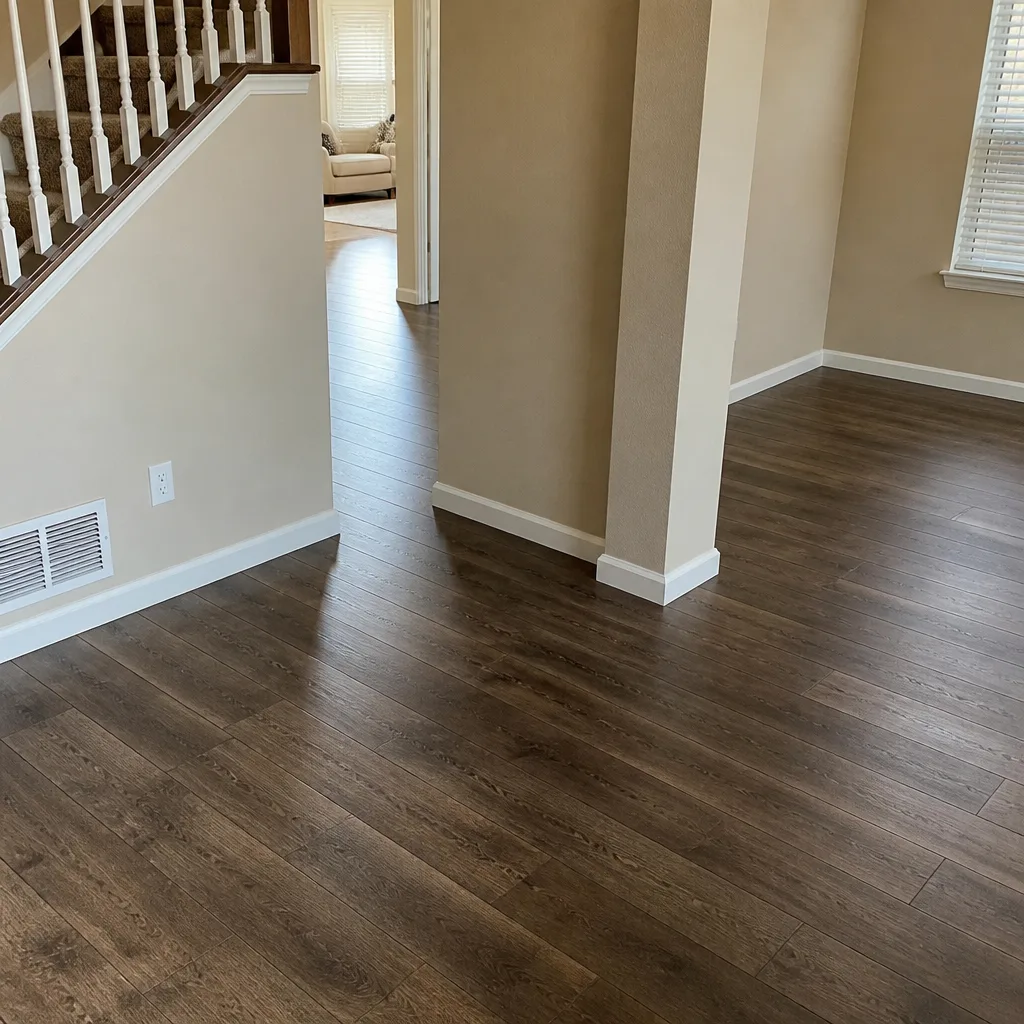
 Before
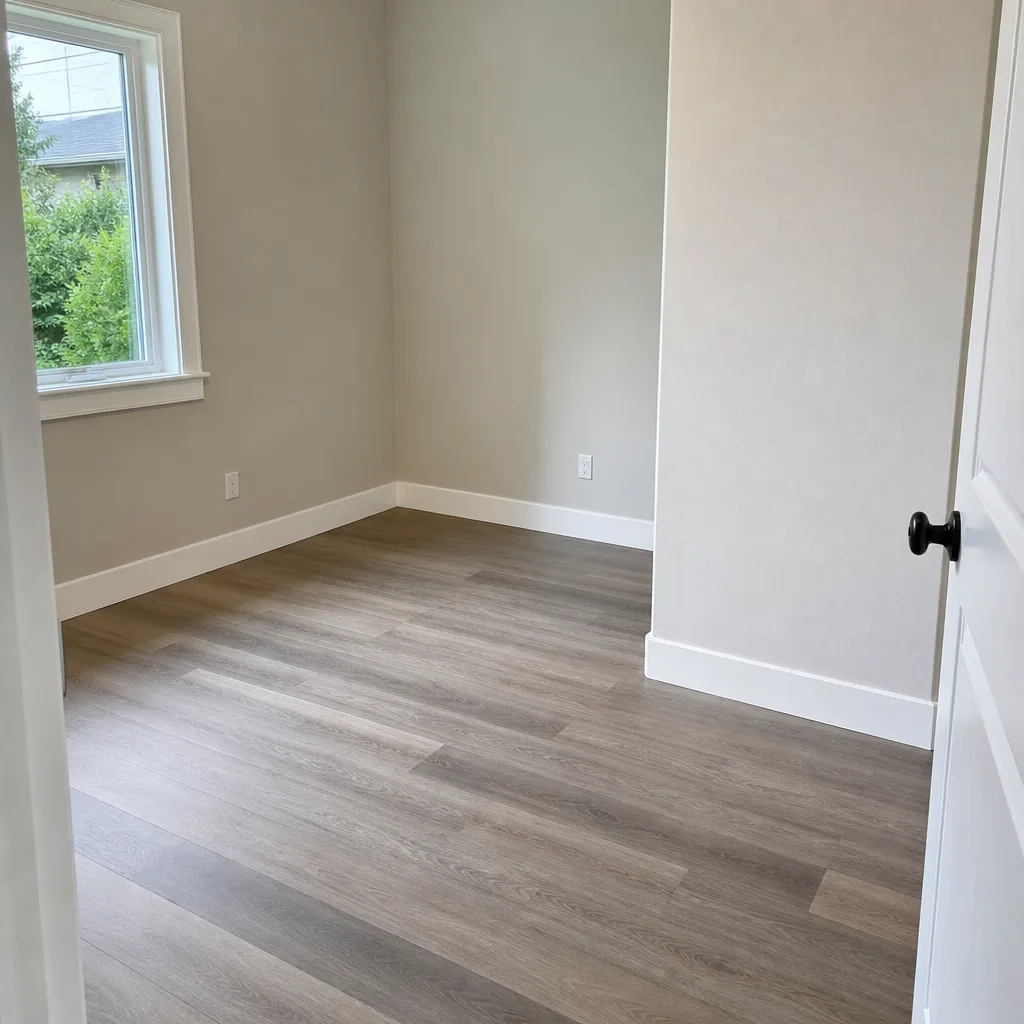 After
After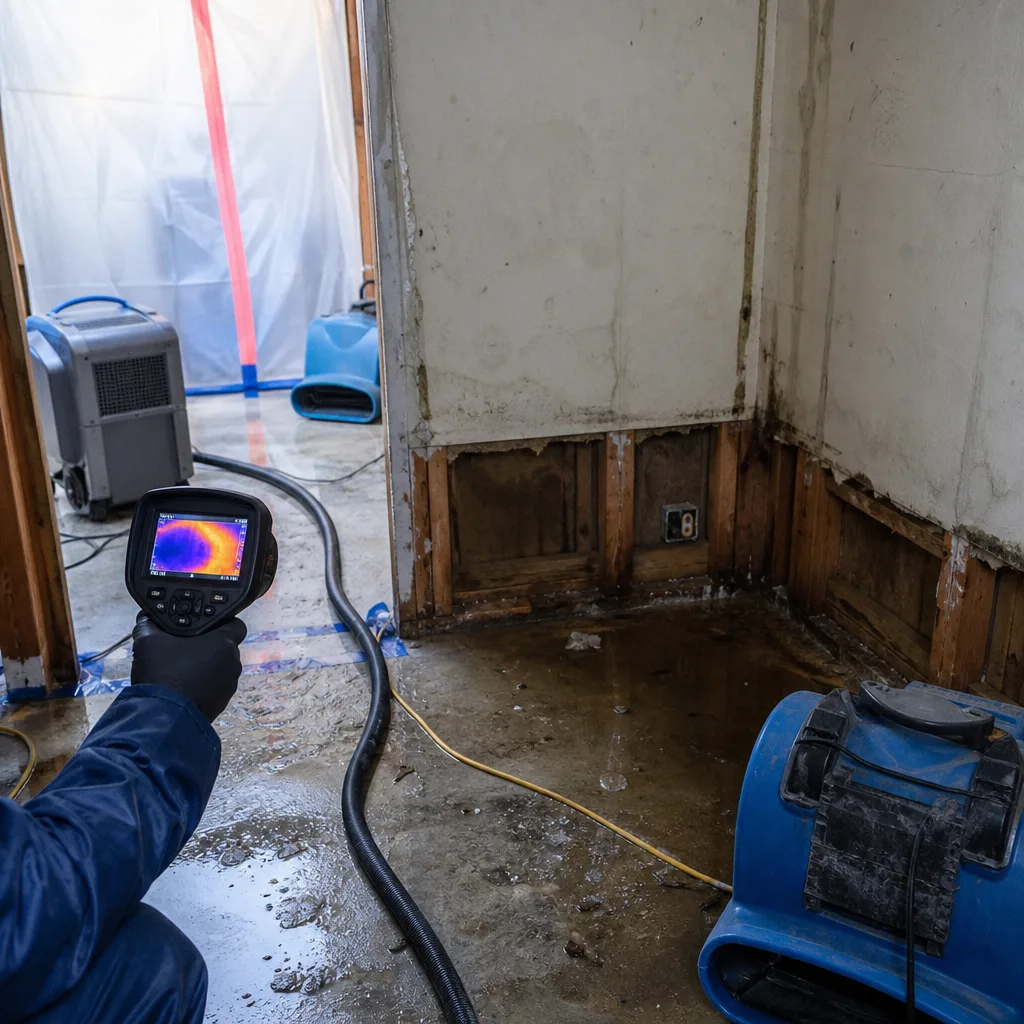 Before
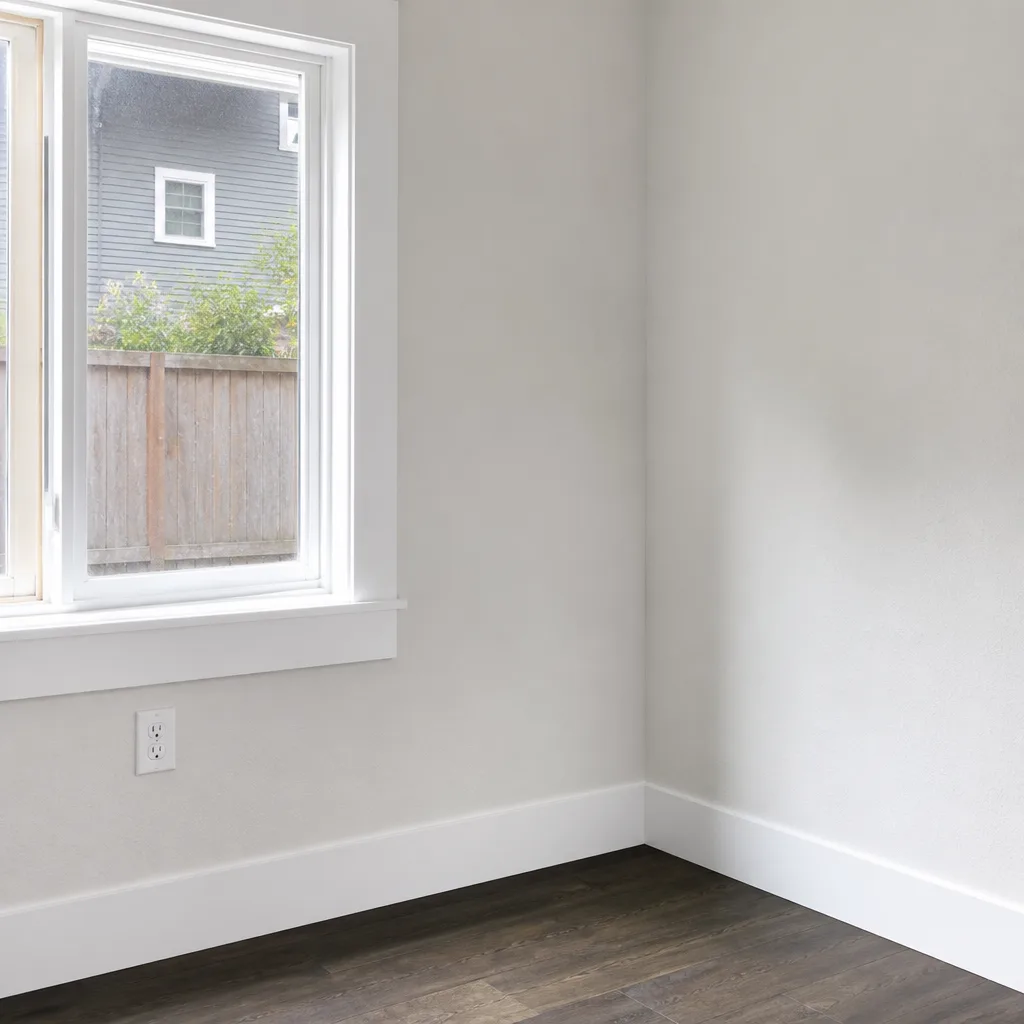 After
After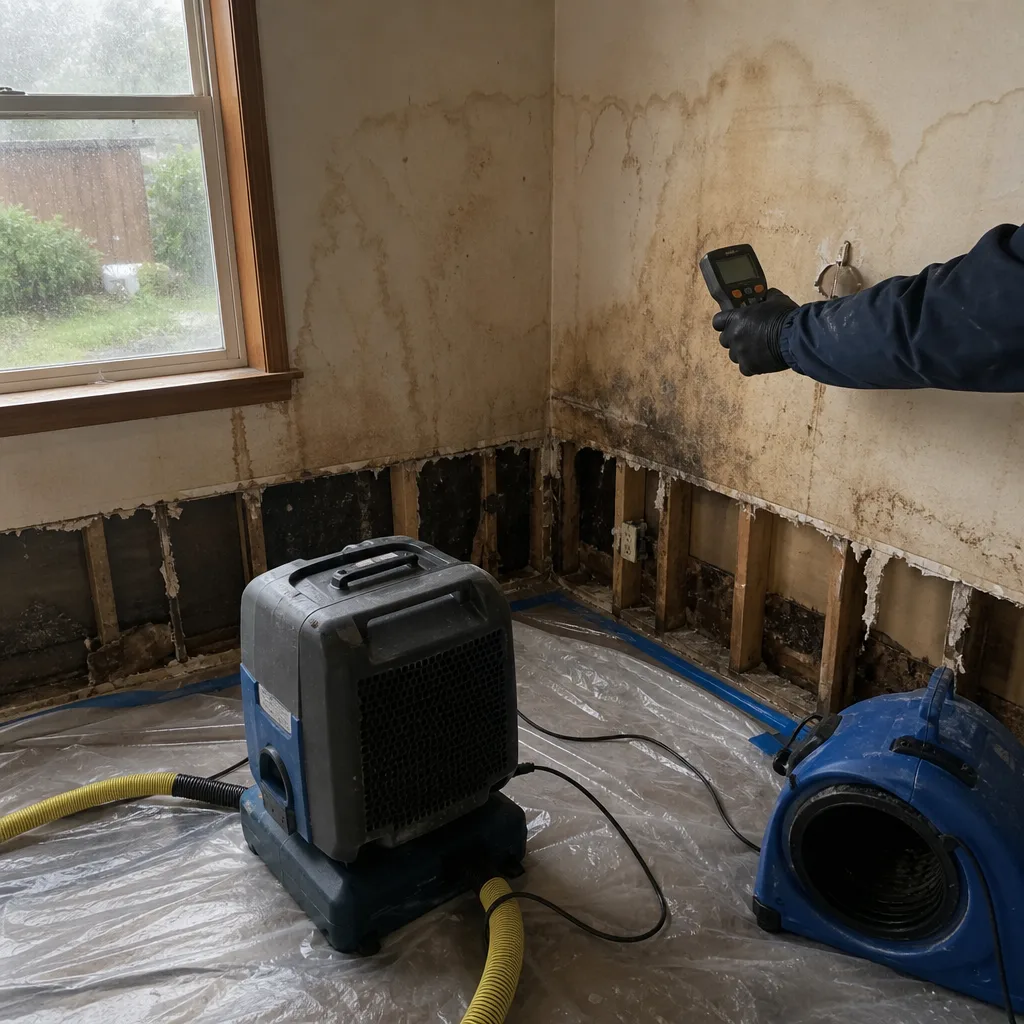 Before
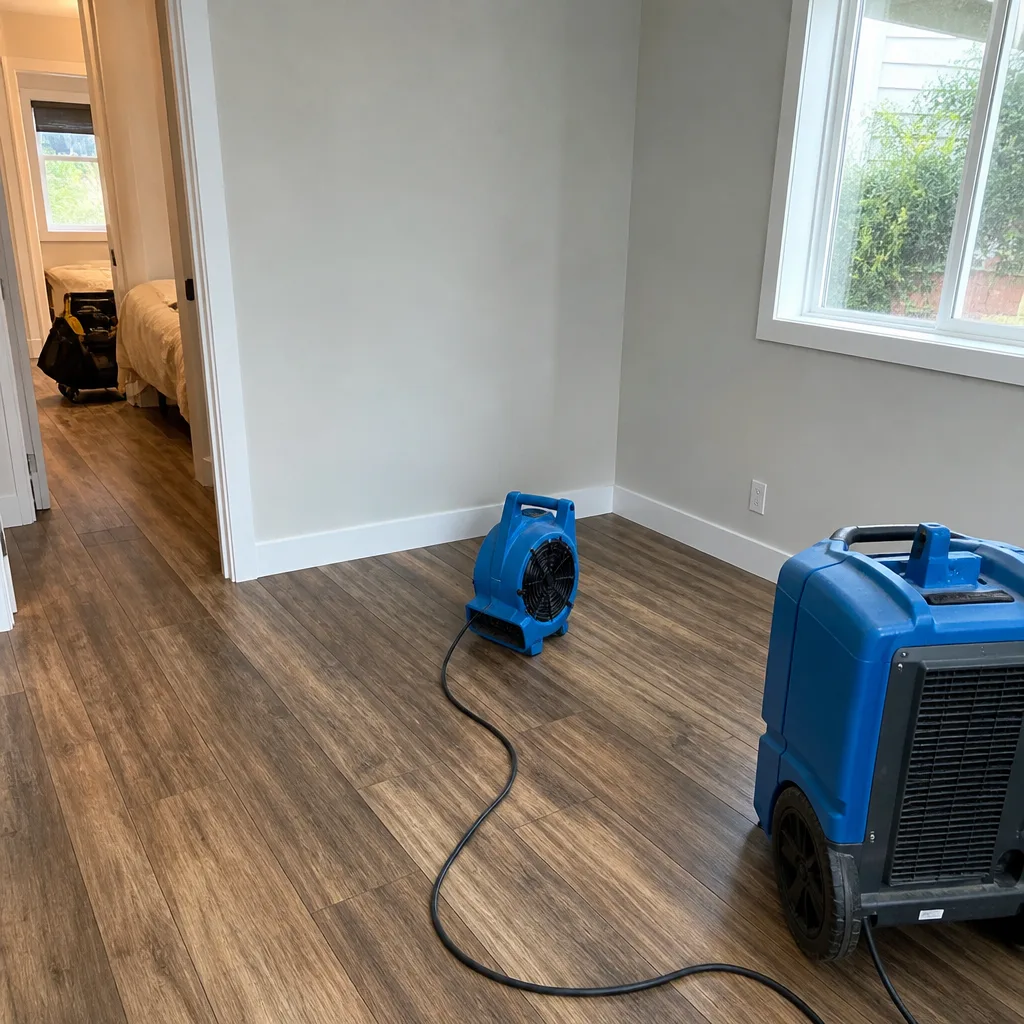 After
AfterThe Complete Guide to Damage Restoration in Seattle
A King County homeowner’s $34,000 water damage claim was reduced to $11,000 - not because the adjuster disputed the damage, but because the contractor’s file contained no daily moisture readings and no written scope before demolition began. The water was real. The mold was real. The denial was paperwork. In Seattle, where 38 inches of annual rainfall meet clay-heavy soils that wick moisture into foundations long after storms pass, this story repeats weekly. This guide explains what actually determines whether a restoration job gets fully paid: documentation that starts before the first tool is unboxed.
Quick Answer
Damage restoration in Seattle is the process of returning a structure to pre-loss condition after water, fire, mold, storm, or biohazard damage, documented with a written scope, baseline moisture map, and photo log before any work begins. In Seattle’s climate, successful restoration depends on matching equipment and protocols to local conditions - clay soil moisture intrusion, Douglas fir framing characteristics, and Damage Restoration Permits, Codes & Inspections in WA: What You Need to Know under RCW 19.28 - rather than applying generic national playbooks.
Table of Contents
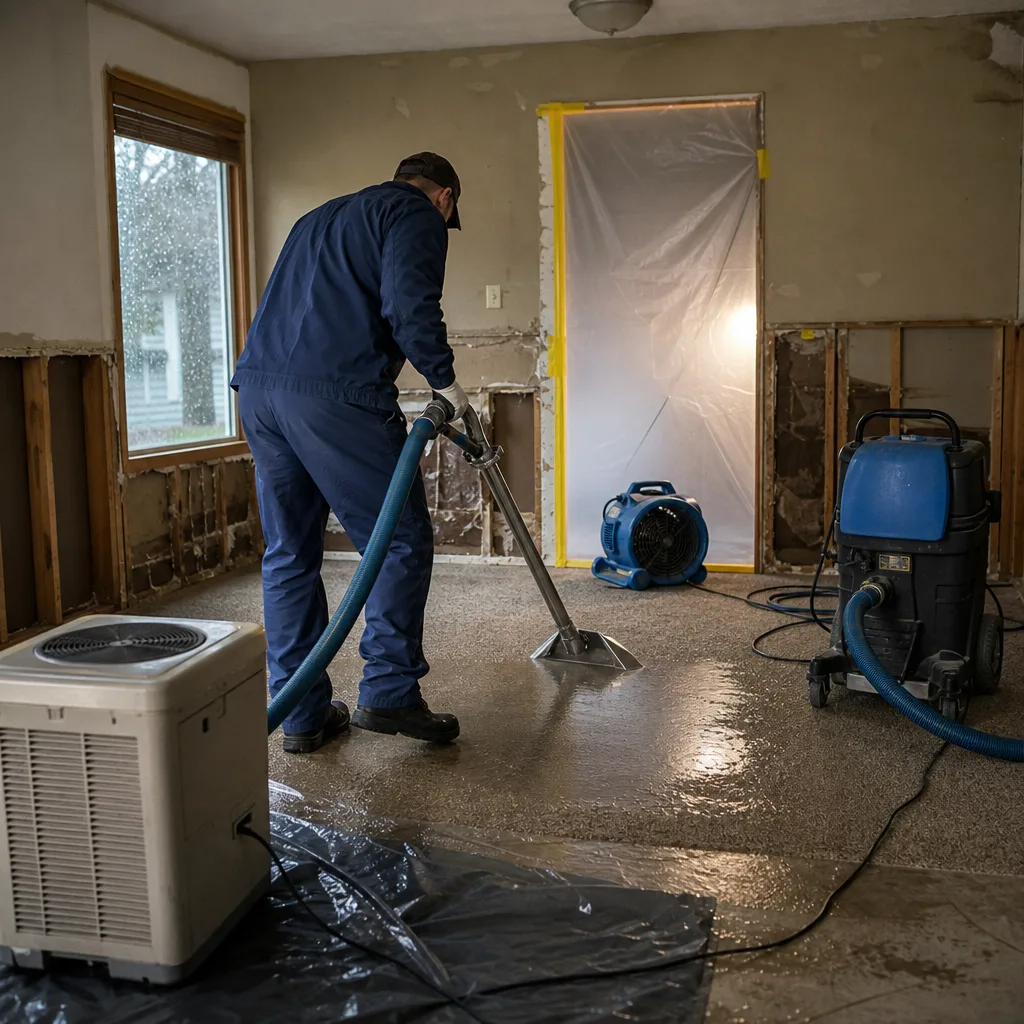
- Seattle’s Unique Damage Landscape: Rain, Soil, and What Actually Fails
- The Three Documents Every Seattle Restoration Job Must Produce Before Work Starts
- How to Read a Drying Log and What “Passing” Actually Means
- Mitigation, Remediation, and Reconstruction: Why Conflating Them Kills Claims
- Washington State RCW 19.28 and Seattle DCI Permits: Timeline Traps
- Equipment and Protocols Built for Seattle’s Materials
- Insurance Documentation: The Gap Between Damage and Payment
- Choosing a Restoration Contractor in Seattle
BeforeAfterSeattle’s Unique Damage Landscape: Rain, Soil, and What Actually Fails
Seattle’s restoration problems look different from Phoenix or Miami. The Puget Sound lowland sits on glacial till and clay-heavy soils that retain moisture for weeks after saturation. Where sandy soils drain vertically, Seattle’s clay layers create lateral moisture migration - water moves sideways through capillary action along foundation walls, often entering basements and crawl spaces without a visible source above grade.
We’ve documented this pattern repeatedly in neighborhoods from Ballard to Rainier Valley. A homeowner spots water in a basement corner after a three-day November rain. The roof is intact. The gutters are clear. The moisture is traveling through soil, finding gaps in the foundation waterproofing, and wicking into sill plates and rim joists. Standard exterior drying protocols fail here because the moisture source is subsurface and persistent.
Seattle’s 38-inch annual rainfall is concentrated October through April, creating seasonal pressure on structures that national restoration franchises often miss. Their playbooks assume acute events - burst pipes, flash floods - rather than chronic hydrostatic pressure that degrades building envelopes over multiple wet seasons.
Specific failure patterns we see in Seattle:
- Sill plate rot in pre-1980s homes: Cedar and old-growth Douglas fir sill plates in Capitol Hill, Wallingford, and Green Lake homes were installed without capillary breaks. Decades of clay-soil moisture wicking have created hidden decay that only appears when baseboard removal reveals crumbling wood.
- OSB sheathing degradation: Oriented strand board used in 1990s-2000s construction in West Seattle and Queen Anne absorbs moisture faster than plywood, swells at edges, and creates vapor barrier failures that trap condensation inside wall cavities.
- Concrete slab vapor emission: Newer construction on former industrial sites in SoDo and Georgetown often sits on slabs with inadequate vapor barriers. Moisture vapor pressure differential - the force that pushes water vapor through concrete - exceeds flooring adhesive limits, causing tile delamination and vinyl bubbling that looks like a leak but is actually soil moisture.
These conditions require psychrometric data collection that accounts for vapor pressure differential, not just relative humidity. Psychrometrics is the study of air-vapor mixtures; in restoration, it means calculating how much moisture air can hold at specific temperatures, then determining whether your drying environment is actually removing water from materials or just circulating wet air.
Our Water Damage Restoration in Seattle page details the specific protocols we deploy for each of these failure types.
The Three Documents Every Seattle Restoration Job Must Produce Before Work Starts
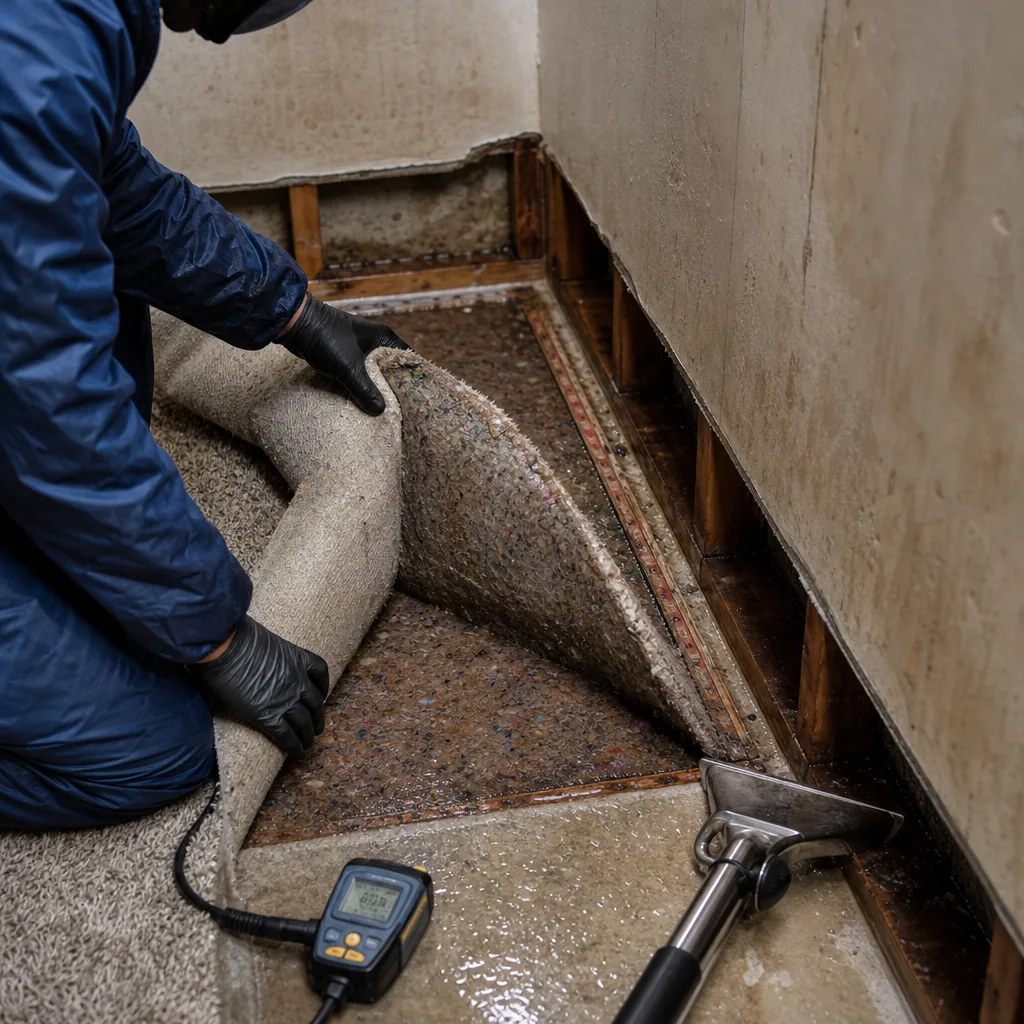
Haven Standard, Clause 1 requires a written price before any work begins. But price is only one of three documents that separate payable claims from disputed ones. Every Seattle restoration job we accept produces these documents before demolition or drying equipment deployment:
- Written Scope of Work: A room-by-room description of what will be done, what materials will be removed or dried in place, and what the finished condition will be. Not an estimate - a scope. Estimates guess; scopes define. The scope includes square footage measurements, material classifications (Class 1-4 water damage, Category 1-3 contamination), and a demolition plan with specific stopping points. Without this document, adjusters cannot verify that billed work matches authorized work.
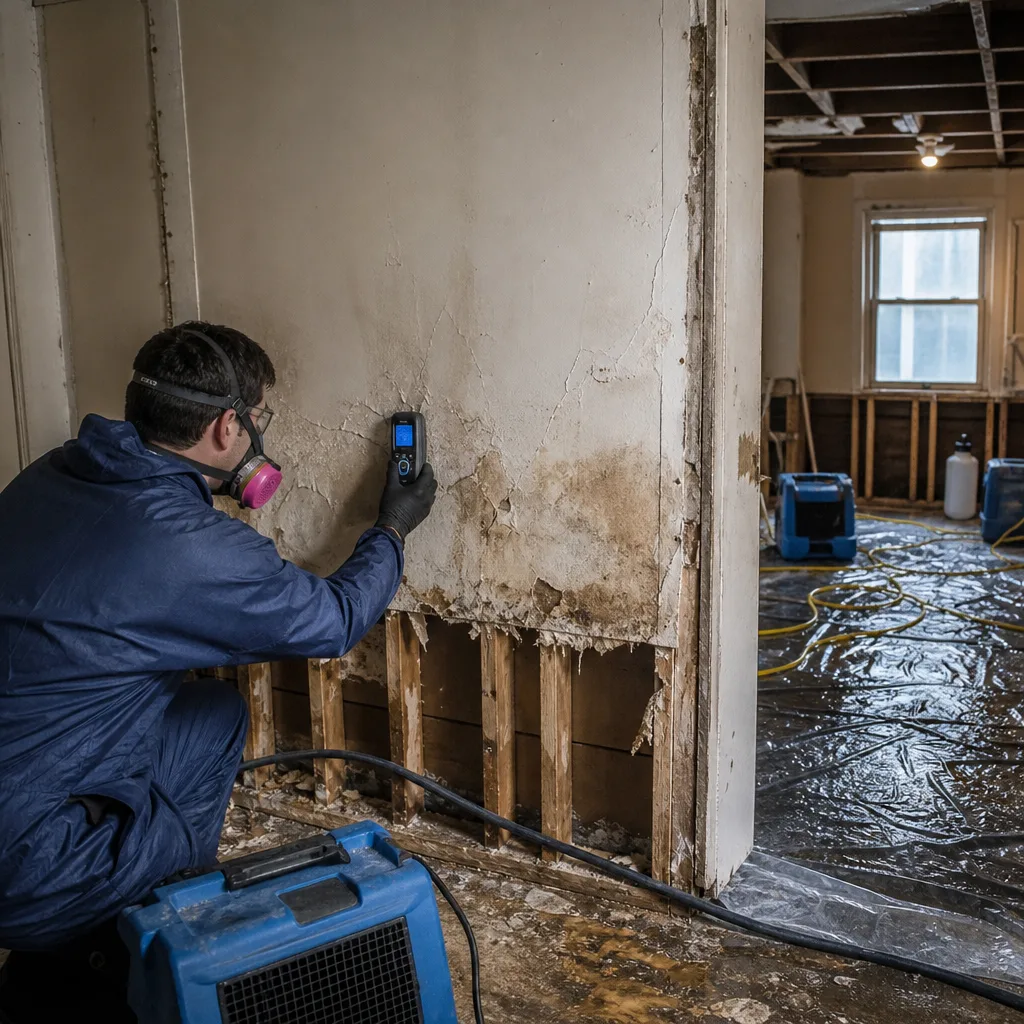
- Baseline Moisture Map: A documented record of moisture content in every affected material before equipment runs. We use calibrated pin and pinless moisture meters on drywall, framing, concrete, and subfloors, recording readings by location with photos. A baseline moisture map proves that materials were actually wet and establishes the drying goal. In Seattle, where ambient humidity often exceeds 70% in winter, “feels damp” is not evidence; 18% moisture content in Douglas fir framing is.
- Photo Log Protocol: A sequential photo record with timestamps, showing pre-loss condition (where determinable), damage discovery, moisture readings, equipment placement, and daily progress. Our standard deliverable, never an upsell. Adjusters increasingly require geotagged photos with EXIF data intact; we deliver files that preserve this metadata.
These three documents form a chain of evidence. The scope authorizes the work. The moisture map proves necessity. The photo log proves execution. Missing any link, and a $40,000 invoice becomes a $15,000 settlement.
We’ve reviewed competitor estimates through our Free Second Opinion service and found the same gap repeatedly: a one-page “proposal” with a single price and no scope language, no moisture readings, and no photo protocol. That document might win the job, but it loses the claim.
How to Read a Drying Log and What “Passing” Actually Means
Insurance adjusters in King County increasingly request daily drying logs before authorizing reconstruction draws. Knowing how to read one protects your claim. Here’s what a legitimate drying log contains, and what “passing” means for different Seattle building materials.
A proper drying log records: date and time of each reading, equipment deployed by model and serial number, ambient temperature and relative humidity, specific humidity (grains of moisture per pound of dry air), and moisture content readings by material and location. Equipment run hours are logged to document that dehumidifiers and air movers operated continuously as specified.
What “passing” means by material:
| Material | Dry Standard / Passing Reading | Seattle-Specific Note |
|---|---|---|
| Douglas fir framing (2×4, 2×6) | ≤15% moisture content | Old-growth fir in pre-1960s homes reads lower naturally; new-growth fir in modern construction may read 12% in equilibrium. We establish job-specific dry standards rather than applying blanket numbers. |
| OSB sheathing | ≤18% moisture content, no edge swelling | OSB is common in 1990s-2010s Seattle construction. Once swollen, structural integrity is compromised even if moisture content drops. Replacement, not drying, is often the correct scope. |
| Concrete slab (above grade) | ≤4.0 lbs/1000 sq ft/24hr (calcium chloride test) or ≤75% RH (in-situ probe) | Seattle’s clay soils create chronic vapor pressure. A slab reading 95% RH in summer may read 85% in winter without intervention. We test with in-situ probes per ASTM F2170, not surface meters. |
| Plywood subfloor (CDX, tongue-and-groove) | ≤16% moisture content | Plywood in Seattle’s older homes often uses exterior-grade adhesive that tolerates moisture better than interior-grade, but delamination risk increases above 20%. We note adhesive grade in our scope. |
| Drywall (paper-faced, 1/2″) | ≤12% moisture content or ≤1 point above unaffected reference | Drywall is highly permeable and dries quickly with proper air movement. The risk is hidden mold in the paper facing if drying is delayed beyond 48-72 hours. We remove compromised drywall rather than gamble on salvage. |
Tertiary drying - the final phase where materials approach equilibrium moisture content - is where most DIY and low-budget jobs fail. Equipment is removed when surfaces feel dry, but core moisture remains. Two months later, mold appears, or flooring fails, or the homeowner discovers the problem during a remodel. Our drying logs document tertiary phase completion with readings taken 24 hours after equipment removal, confirming stability.
Vapor pressure differential drives drying speed. When the vapor pressure in a material exceeds the vapor pressure in the surrounding air, moisture moves outward. Our equipment from Dri-Eaz and Phoenix creates controlled negative vapor pressure in the drying environment, accelerating this movement. Without measuring and logging this differential, you’re guessing.
Mitigation, Remediation, and Reconstruction: Why Conflating Them Kills Claims
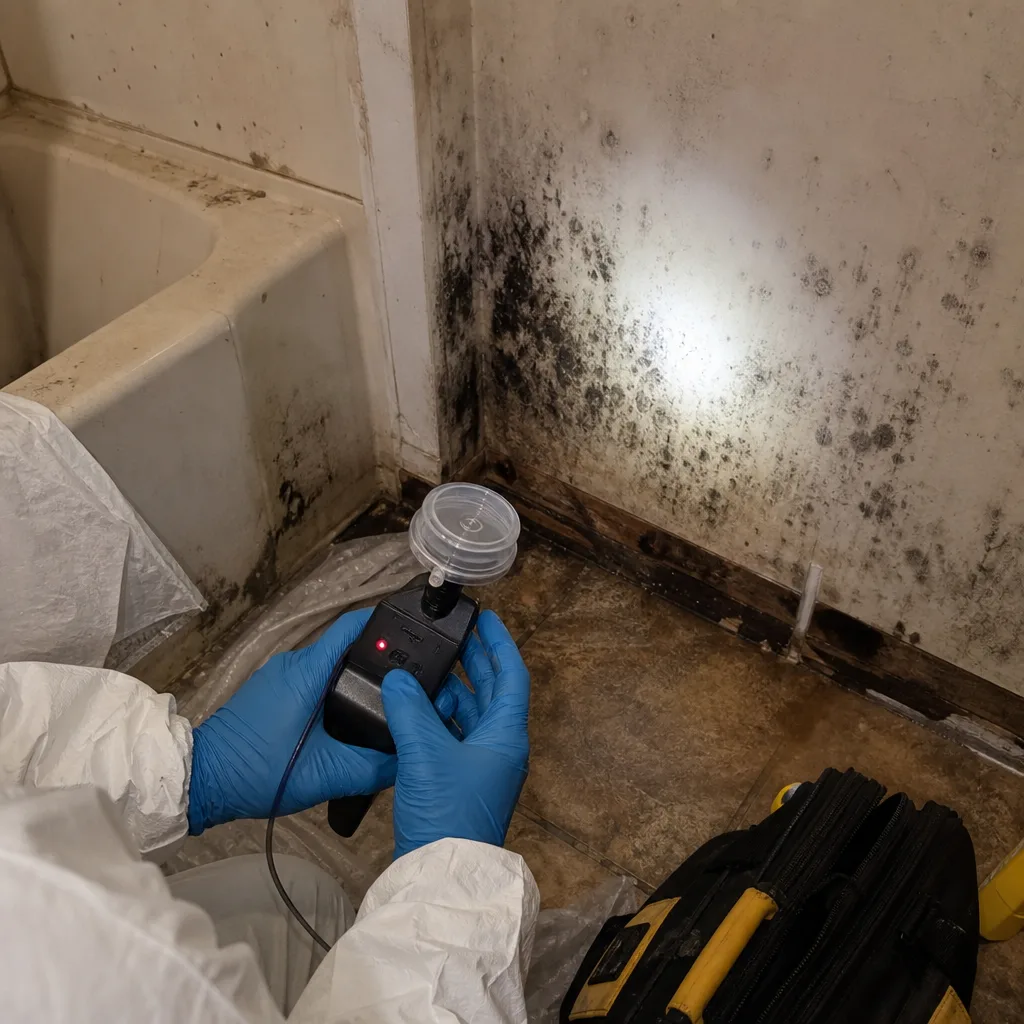
The most common reason Seattle claims get disputed is category confusion on invoices. These three phases have distinct purposes, distinct billing codes, and distinct documentation requirements. Mixing them on a single line item invites scrutiny.
Mitigation is emergency stabilization: water extraction, controlled demolition, drying equipment deployment, and temporary protective measures. It happens immediately, often within hours of the loss event. Billing is time-and-materials based, with equipment rental by day. Speed matters - every hour of standing water increases secondary damage. Our live phone coverage, 24 hours a day, 7 days a week, exists because mitigation cannot wait for business hours.
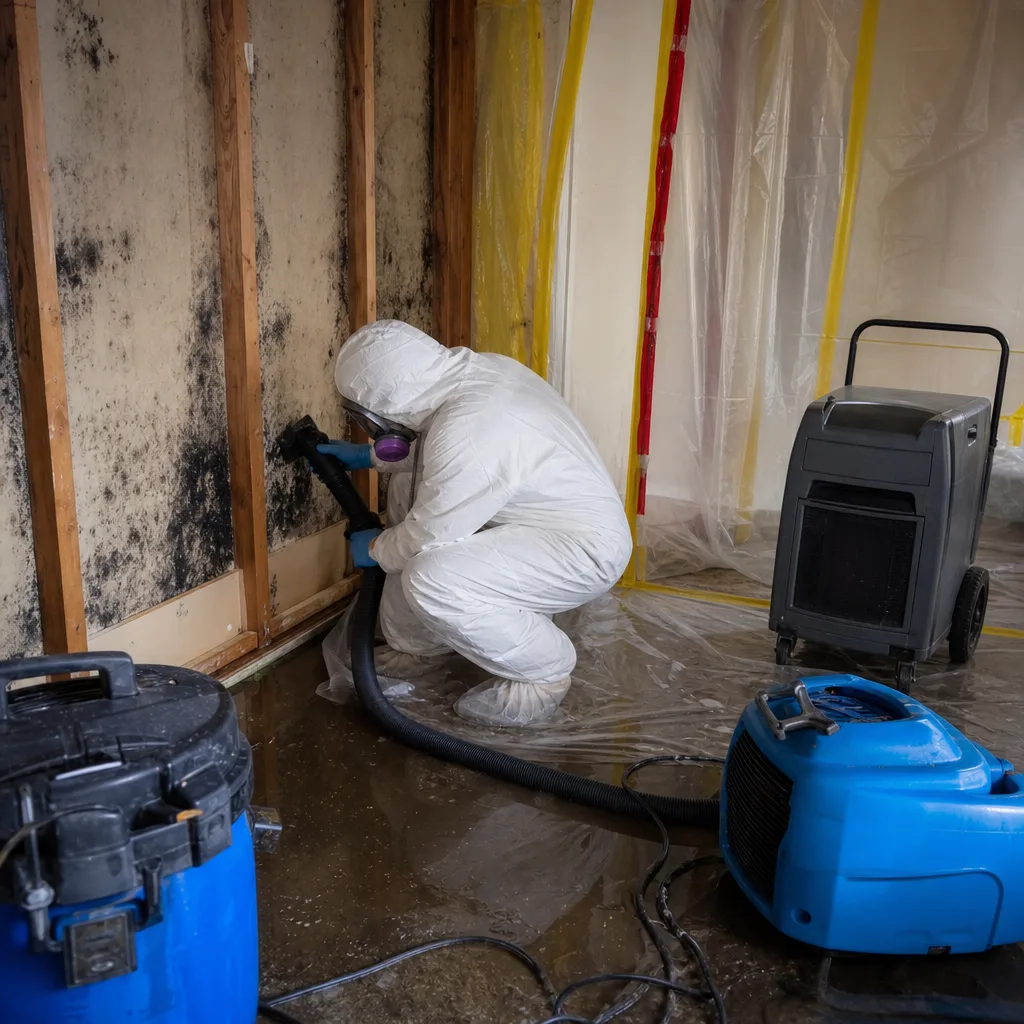
Remediation is contamination removal: mold, sewage, fire residue, or biohazard materials. It follows mitigation and requires containment, negative air pressure, and specific disposal protocols. Billing is scope-based, with defined start and completion criteria. Remediation without a written scope and post-remediation verification sampling is incomplete documentation.
Reconstruction is the return to pre-loss condition: drywall installation, flooring replacement, painting, fixture reinstallation. It is scheduled work, scoped in writing, with material selections and finish specifications documented. Never promise same-day service for reconstruction; that work is priced and scheduled like any remodeling project.
Where claims fail:
- Mitigation billed as reconstruction: A contractor invoices “wall repair” when the work was actually emergency drywall removal and disposal. Reconstruction rates exceed mitigation rates; adjusters flag this as upcoding.
- Remediation without verification: Mold remediation completes with no post-remediation air sampling or surface sampling. The adjuster cannot confirm the problem was solved, so the invoice sits in suspense.
- Equipment left too long: Dehumidifiers billing at day 14 when drying logs show materials reached standard at day 6. Daily logs prevent this; their absence invites it.
- Scope creep without amendment: Additional demolition or material replacement discovered mid-job, with no written scope amendment signed by the property owner and submitted to the insurer before work proceeds.
Our Mold Remediation in Seattle page explains how we document remediation completion for adjuster acceptance.
Washington State RCW 19.28 and Seattle DCI Permits: Timeline Traps
Restoration work in Seattle triggers permit requirements that national contractors often miss, creating delays and claim complications. See our Damage Restoration Warning Signs: A Seattle Homeowner’s Reference Guide for other common red flags. Understanding these requirements before work starts prevents the “permit hold” that stalls reconstruction for weeks.
RCW 19.28 is the Washington State electrical code, administered locally by Seattle’s Department of Construction and Inspections (DCI). Any restoration work involving electrical system repair, panel replacement, or rewiring in water-damaged areas requires an electrical permit and inspection. This includes seemingly minor work: replacing outlets below the water line, rewiring damaged circuits, or installing new equipment in previously wet locations.
Seattle DCI also requires permits for:
- Structural repairs to load-bearing elements (sill plates, rim joists, posts, beams)
- Plumbing modifications beyond direct replacement of damaged fixtures
- HVAC ductwork replacement or modification in contamination scenarios
- Demolition of load-bearing walls or significant structural elements
The timeline trap works like this: mitigation completes in 5-7 days. The contractor begins reconstruction, discovers electrical damage requiring permit work, and submits for permit. Seattle DCI’s review period for electrical permits is currently 10-15 business days for simple projects, longer for complex ones. The property sits in limbo. The homeowner’s additional living expense coverage burns. The adjuster questions why reconstruction didn’t account for permit requirements in the initial scope.
Our process: we identify permit triggers during the initial scope development, before mitigation begins. If electrical damage is suspected, we coordinate with licensed electricians and permit submission concurrent with mitigation, not after. This requires documentation - photos of the electrical panel, circuit mapping, and damage assessment - that becomes part of the initial file.
Contractors who skip permits create worse problems. Unpermitted electrical work discovered at sale can derail transactions. Insurance coverage may be voided for unpermitted modifications. And Seattle DCI has increased enforcement, with penalties that attach to the property record.
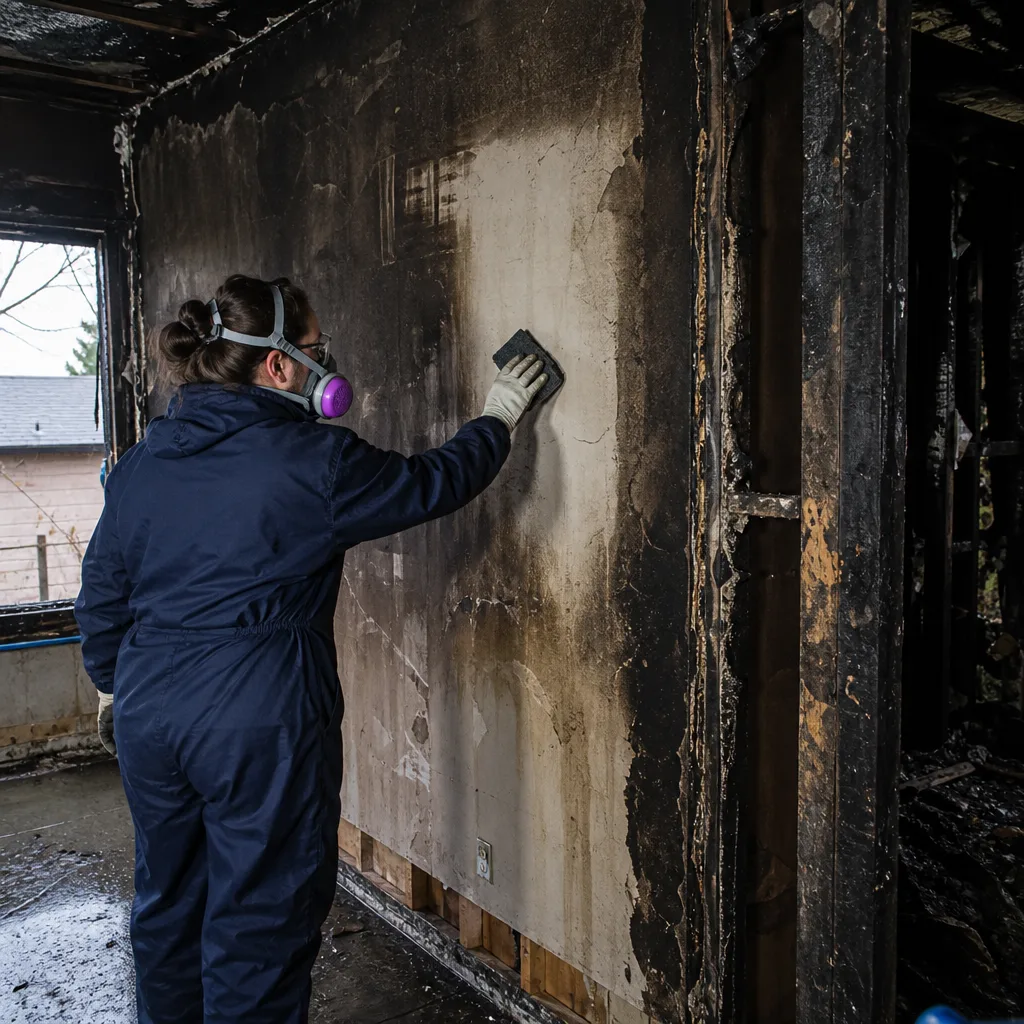
Our Fire & Smoke Damage Restoration in Seattle page details permit coordination for fire-damaged structures, where electrical and structural permits are nearly always required.
Equipment and Protocols Built for Seattle’s Materials
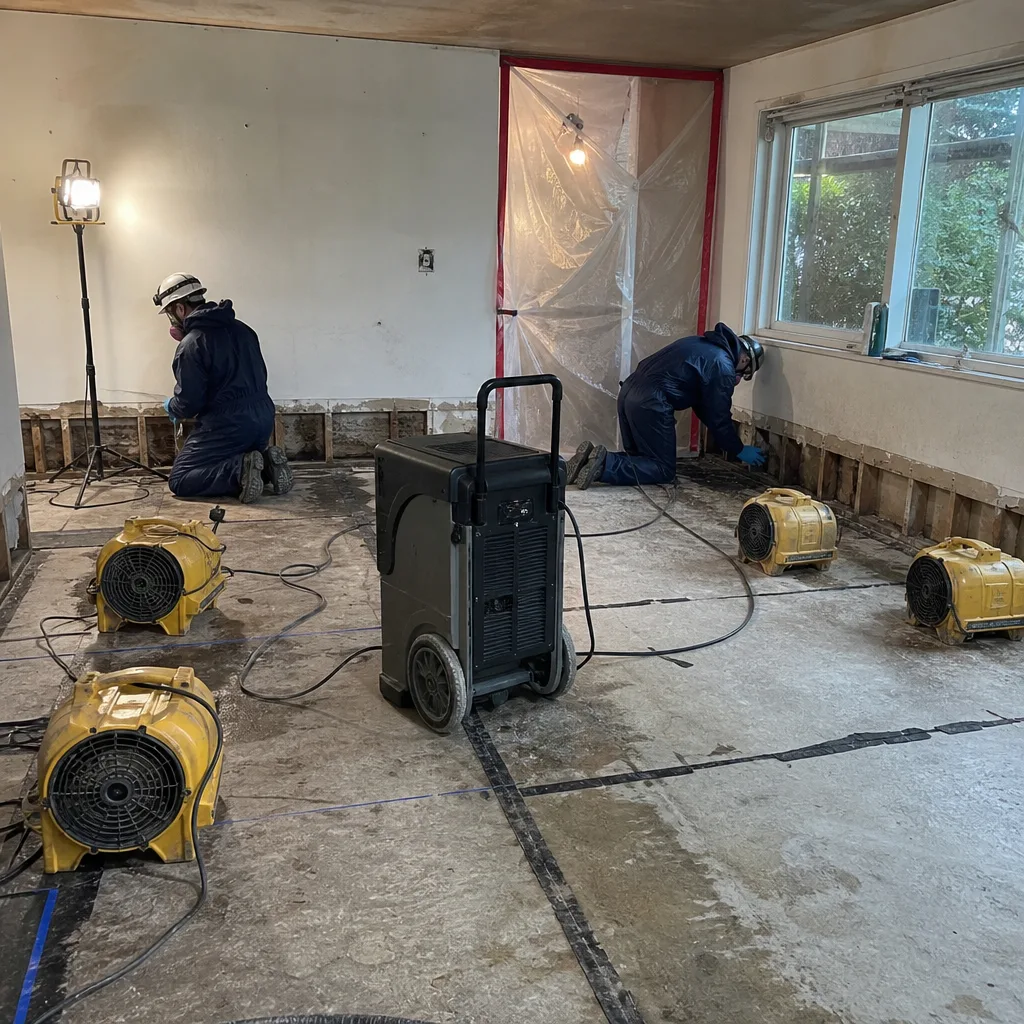
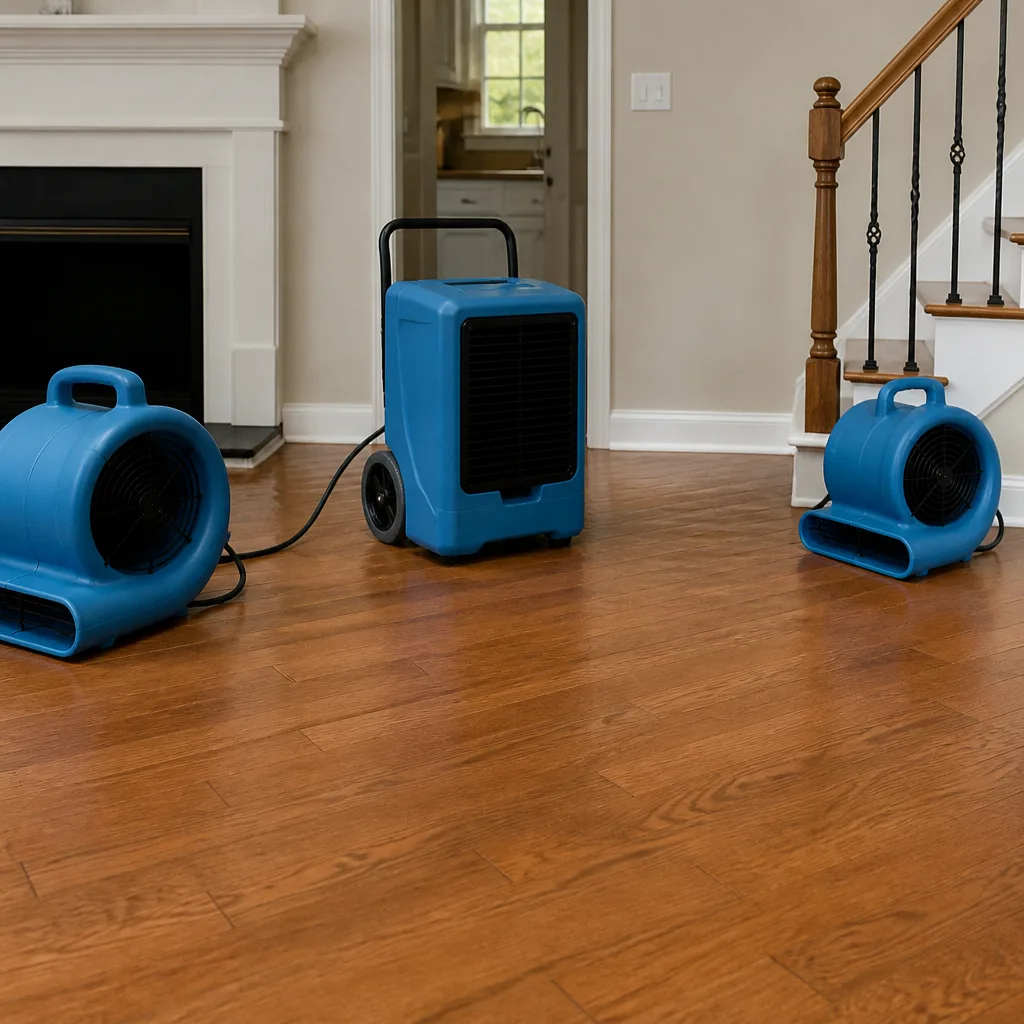
Seattle’s building stock demands equipment selection matched to material types, not generic “water damage” packages. We deploy professional-grade drying systems from Dri-Eaz, Phoenix, and XPOWER, selected by material and moisture load.
For dense, old-growth Douglas fir framing common in pre-1960s Seattle homes, standard refrigerant dehumidifiers struggle. The wood’s density and natural oils slow moisture release. We use low-grain refrigerant (LGR) dehumidifiers from Dri-Eaz or desiccant systems from Phoenix that achieve lower specific humidity, maintaining the vapor pressure differential needed to pull moisture from dense wood.
For concrete slab drying in newer construction or commercial properties, surface dehumidification is ineffective. Moisture moves through slab thickness by vapor diffusion, driven by the vapor pressure differential between slab bottom and top. We deploy sealed systems with negative air pressure at the slab surface, sometimes with supplemental heat, to accelerate diffusion. In-situ probes monitor progress at depth, not just surface readings.
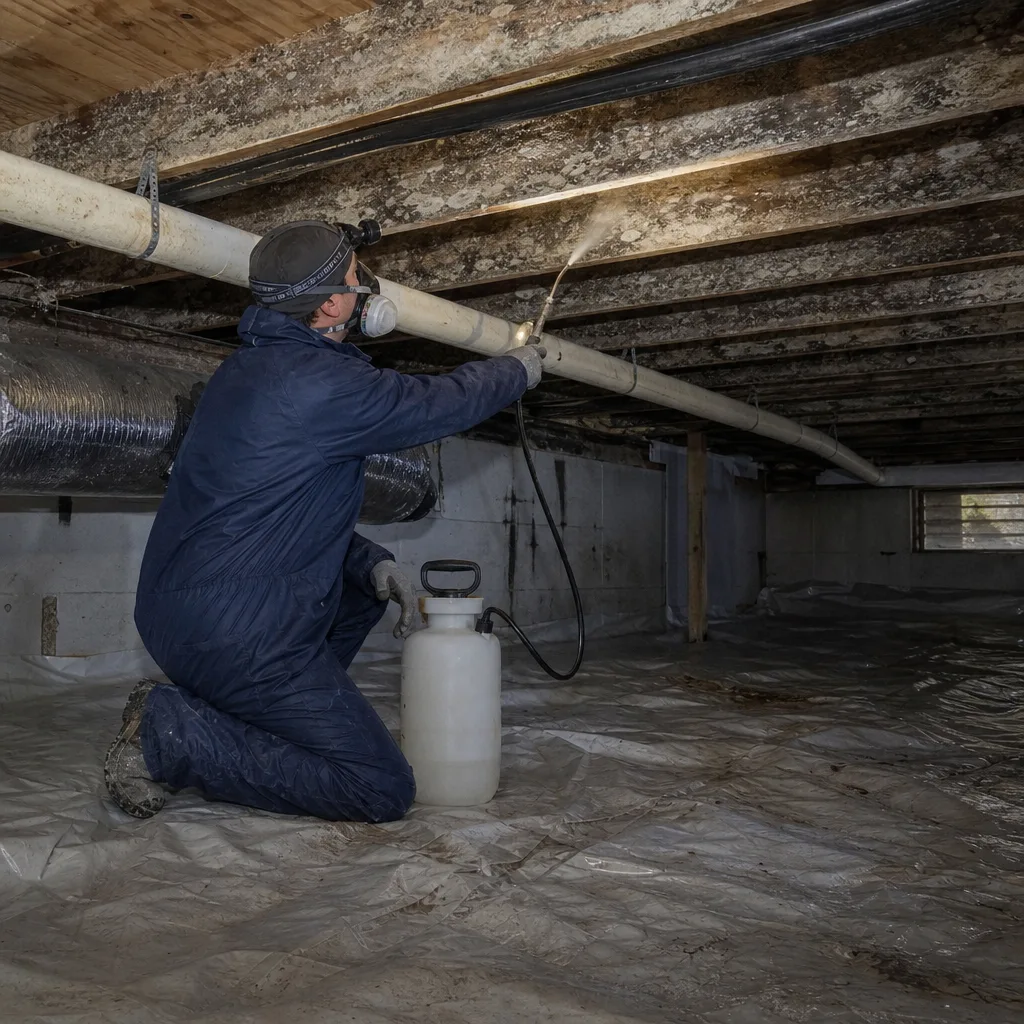
Crawl space drying in Seattle presents unique challenges. Clay soils create chronic humidity. Ventilation standards have shifted; older homes with vented crawl spaces often have moisture problems that ventilation alone cannot solve. We assess each crawl space individually, sometimes recommending sealed, conditioned crawl spaces as the permanent solution, documented as a separate scope from emergency drying.
Air mover placement follows IICRC S500 standards, modified for Seattle’s tighter building envelopes. Modern energy code construction reduces natural air exchange, requiring more calculated air mover positioning to ensure turbulent airflow across wet surfaces. We document placement with photos, including distance from walls and angle of attack, so the drying log proves protocol compliance.
All work is documented to IICRC, RIA, and IFA standards. These industry bodies establish the scientific basis for restoration decisions; our documentation references specific standards sections when scope decisions might be questioned.
Insurance Documentation: The Gap Between Damage and Payment
The $34,000 claim reduced to $11,000 was not an outlier. It was the predictable result of documentation failure. Here’s what actually determines whether a restoration invoice gets paid in full, reduced, or denied.
Insurance adjusters work from evidence, not sympathy. Their authority to pay is constrained by policy language and documentation standards. When documentation gaps exist, they cannot approve full payment without exposing their employer to recovery action. The reduction is not personal; it’s procedural.
The documentation chain that secures payment:
- Proof of loss: The initial report, with date, time, cause, and affected areas. Photos with timestamps. Witness statements if cause is disputed.
- Proof of necessity: The baseline moisture map, showing affected materials exceeded dry standards. The written scope, showing proposed work addresses documented damage. Without this, any demolition looks optional.
- Proof of execution: The daily drying log, with readings trending toward standard. The photo log, showing equipment in place and materials drying. Equipment serial numbers and run hours.
- Proof of completion: Final moisture readings at or below standard. Post-remediation verification for contamination. Signed completion certificate with warranty documentation.
Our documentation-first approach exists because Alicia Brennan founded Back to Dry in 2011 after seeing claims denied for documentation gaps that had nothing to do with whether damage was real. The 12,000+ homes we’ve restored since then have all followed the same protocol: written price before work starts, documented record when the crew leaves.
Photo documentation and direct adjuster coordination are standard, not premium services. We provide adjusters with organized digital files: dated photos, meter calibration certificates, drying logs in spreadsheet format, and scope narratives that reference policy language. This reduces adjuster workload, which increases payment speed.
The 365-Day Done Right Promise, backed by The Haven Standard, applies to documentation too. If an insurer requests additional documentation within a year, we provide it. If a documentation gap is discovered, we close it. The warranty is written and signed, not verbal.
Choosing a Restoration Contractor in Seattle
Seattle’s restoration market includes independent operators, national franchises, and general contractors who add restoration as a sideline. The differences matter for your claim and your property.
Questions to ask any contractor before signing:
- Will you provide a written scope before any work begins, with my signature required? Haven Standard, Clause 1. No exceptions. A contractor who cannot commit to this in writing will not document your claim properly.
- What documentation will I receive, and when? The answer should include: written scope, baseline moisture map, daily drying log, photo record, and completion certificate with warranty. “We’ll send you an invoice” is not sufficient.
- How do you handle permit requirements? Any contractor working in Seattle should identify permit triggers during scoping, not discover them mid-job. Ask for specific examples from recent jobs.
- What equipment will you deploy, and why? The answer should reference specific brands and models matched to your materials, not “industrial dehumidifiers.” Ask why that equipment for your specific situation.
- Can you provide a Free Second Opinion on a competitor’s estimate? We offer this at no charge because documentation gaps are easier to fix before work begins than after. A contractor who won’t review a competitor’s scope may not want scrutiny on their own.
Background-checked, uniformed technicians with named credentials should be standard, not exceptional. We verify licenses and insurance before technicians arrive, with license numbers available on request. The technician who scopes your job should be qualified to explain every reading and every scope decision.
Our DryMark Restoration Seattle home page provides additional information about our service area and response protocols.
Common Mistakes to Avoid
- Waiting to document: Homeowners often begin cleanup before photographing damage or calling their insurer. Every hour of delay erodes evidence. Document first, even if cleanup must follow quickly.
- Accepting verbal scope changes: Any change to the work plan - additional demolition, equipment addition, material substitution - must be written and signed before execution. Verbal authorizations disappear when claims are reviewed.
- Ignoring crawl space moisture: Seattle’s clay soils make crawl spaces chronic moisture sources. Surface drying of the main floor while crawl space humidity remains above 70% guarantees future mold and structural damage.
- Using the same contractor for mitigation and reconstruction without separate scopes: This invites category confusion on invoices. Even when using one contractor, insist on distinct, documented scopes for each phase.
- Skipping post-remediation verification: Mold remediation without air or surface sampling leaves no proof the problem was solved. The cost of verification is minor compared to re-remediation or claim denial.
- Assuming all permits are the contractor’s problem: Unpermitted work attaches to the property, not the contractor. Verify permit status before paying final reconstruction draws.
When to Call a Professional
Call immediately for standing water of any depth, water affecting electrical systems or panels, sewage or gray water contamination, visible mold growth exceeding 10 square feet, fire or smoke damage with structural compromise, or any damage where the cause or extent is unclear. These scenarios involve safety hazards - electrical shock, structural collapse, biological contamination - and documentation requirements that compound with delay.
For water damage, the 48-hour window before mold colonization is real but often misunderstood. Mold can begin growth within 24-48 hours on organic materials at moisture content above 16%, but visible growth may not appear for days or weeks. The absence of visible mold is not evidence of no mold. Documentation - moisture readings, thermal imaging, air sampling - determines actual conditions.
DryMark Restoration Seattle offers free estimates in Seattle - call (425) 671-5392. Estimates include a written scope, baseline moisture assessment, and documentation protocol explanation before any commitment. For emergency situations, live phone coverage is available 24 hours a day, 7 days a week with no voicemail on emergency lines. Explore more guides & resources on protecting your property.
Frequently Asked Questions
Water damage mitigation in Seattle typically ranges from $1,200 for limited extraction and drying to $8,500+ for whole-house drying with extensive demolition; mold remediation averages $2,500-$7,000 depending on containment complexity and square footage; fire and smoke restoration starts around $4,000 for light damage and exceeds $25,000 for structural involvement. For detailed pricing factors, see our Damage Restoration Cost Breakdown: The Seattle Homeowner’s Reference for 2026. Every job is scoped in writing before work begins under Haven Standard, Clause 1, with no additions once the crew is inside. Call (425) 671-5392 for a free estimate with exact pricing for your situation.
Most homeowner policies cover sudden and accidental water damage, fire, and storm damage, but exclude gradual damage, maintenance failures, and most mold unless directly caused by a covered peril. Documentation determines payment: policies with documented moisture maps, written scopes, and photo logs are paid at higher rates and faster than those without. We coordinate directly with adjusters and provide the documentation package that supports your claim. Call (425) 671-5392 to discuss your specific policy language.
For emergency mitigation - standing water, active leaks, sewage backup - we dispatch as quickly as traffic and crew availability allow, with live phone coverage 24 hours a day, 7 days a week to coordinate response. Reconstruction is scheduled, not dispatched; it requires permit verification, material procurement, and scope finalization that cannot be rushed without documentation gaps. Speed language belongs on mitigation only.
Surface cleaning of limited water damage on non-porous materials is sometimes feasible for homeowners, but hidden moisture in wall cavities, subfloors, and framing requires detection equipment and drying protocols that most homeowners do not have. Mold on porous materials - drywall, insulation, carpet - generally requires professional remediation with containment and negative air pressure. We offer free second opinions on any written estimate to help you evaluate scope necessity.
Restoration companies specialize in damage documentation, emergency stabilization, and insurance coordination; general contractors specialize in planned construction with longer timelines and different billing structures. Some companies do both, but the documentation standards differ. Restoration requires daily logs, moisture readings, and photo protocols that construction typically does not. For insurance-funded work, a restoration specialist with reconstruction capability provides continuity without documentation gaps between phases.
You retain full authority over your claim, but we coordinate directly with adjusters as your documented representative, providing the evidence package that supports your position. This includes scope narratives, moisture data, photo records, and code upgrade documentation. Direct coordination reduces back-and-forth and accelerates payment, but all decisions remain yours. We do not negotiate settlements; we provide the documentation that makes fair settlement obvious.
The Bottom Line
Damage restoration in Seattle succeeds or fails on documentation, not drama. The written scope before work starts, the baseline moisture map, the daily drying log, and the photo record on every visit - these documents transform restoration from a disputed expense into a payable claim. Seattle’s clay soils, Douglas fir framing, and permit requirements create conditions that generic playbooks miss. Equipment from Dri-Eaz, Phoenix, and XPOWER matched to local materials, protocols documented to IICRC standards, and a 365-Day Done Right Promise backed by The Haven Standard - this is what documentation-first restoration looks like. The $34,000 claim that became $11,000 didn’t fail because the damage wasn’t real. It failed because no one could prove it was.
Written by Alicia Brennan, Owner at DryMark Restoration Seattle, serving Seattle since 2011.