
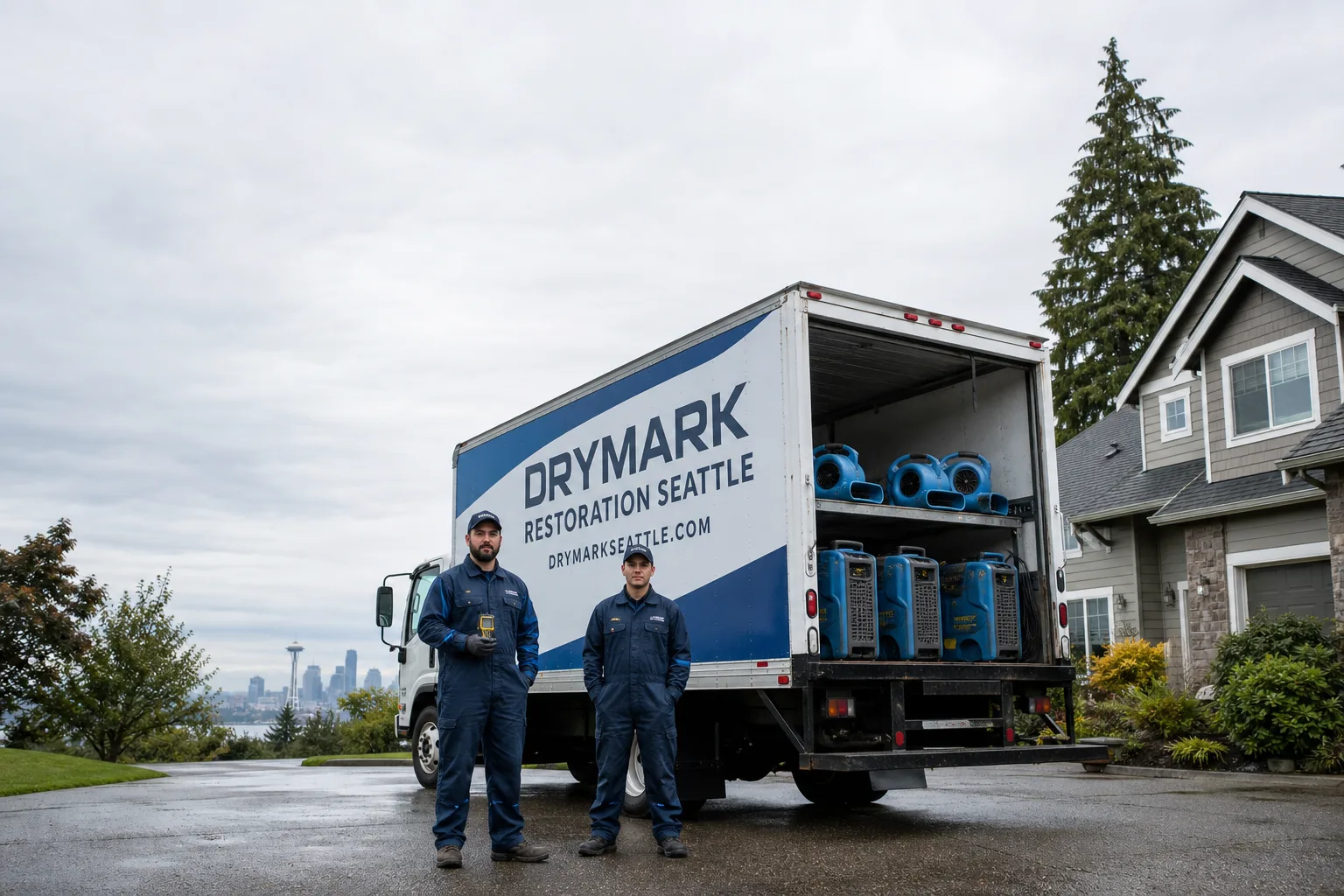
Free visual inspection and a written scope of work before any mitigation begins - photos, moisture readings, and drying logs go in your claim file
The scope we write is the scope we bill. Anything new gets shown to you, in writing, before we touch it.
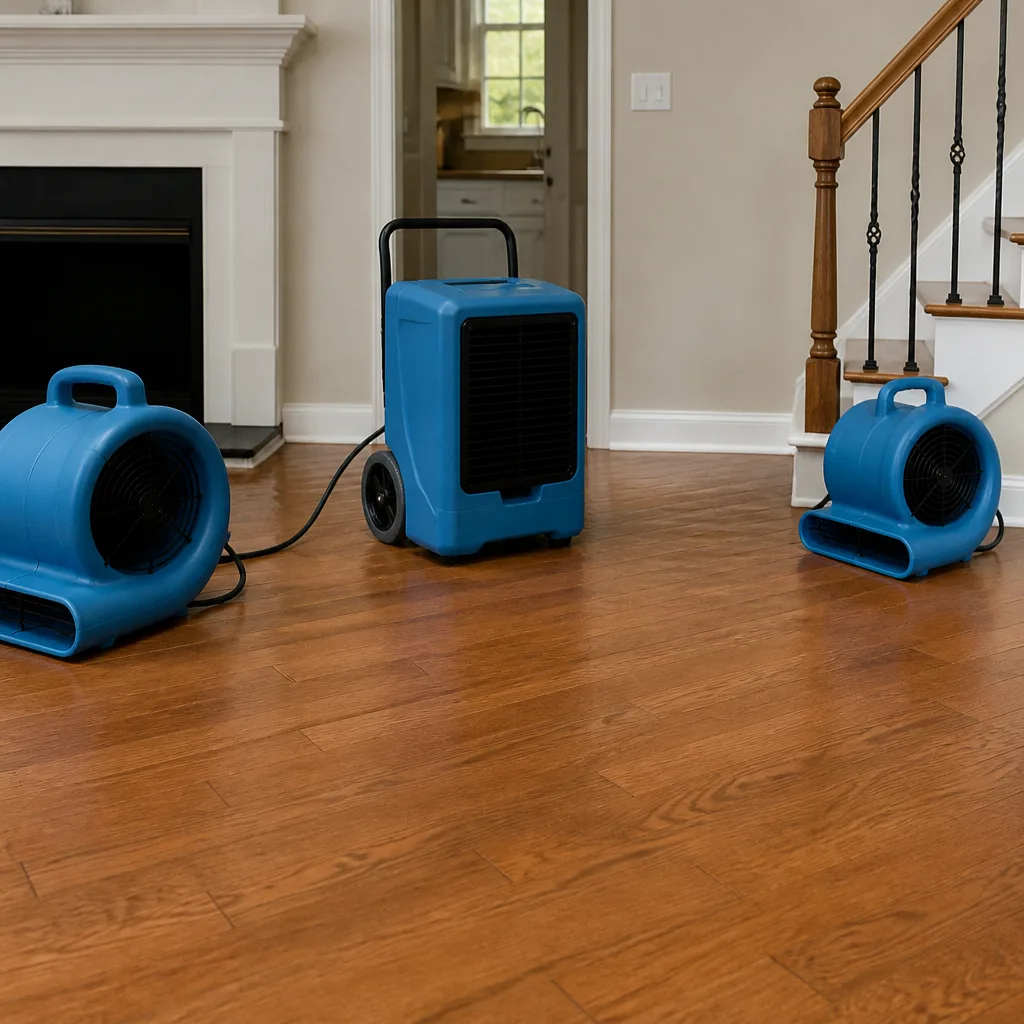
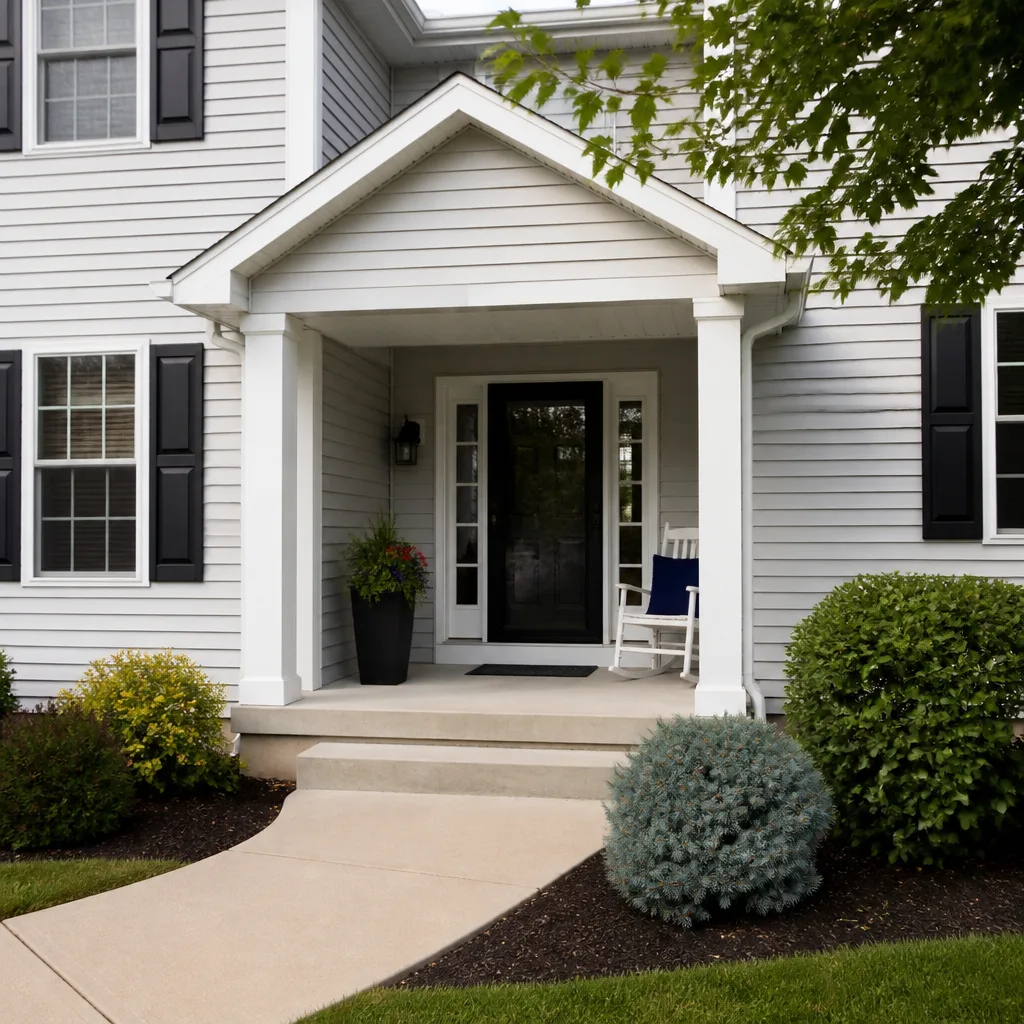
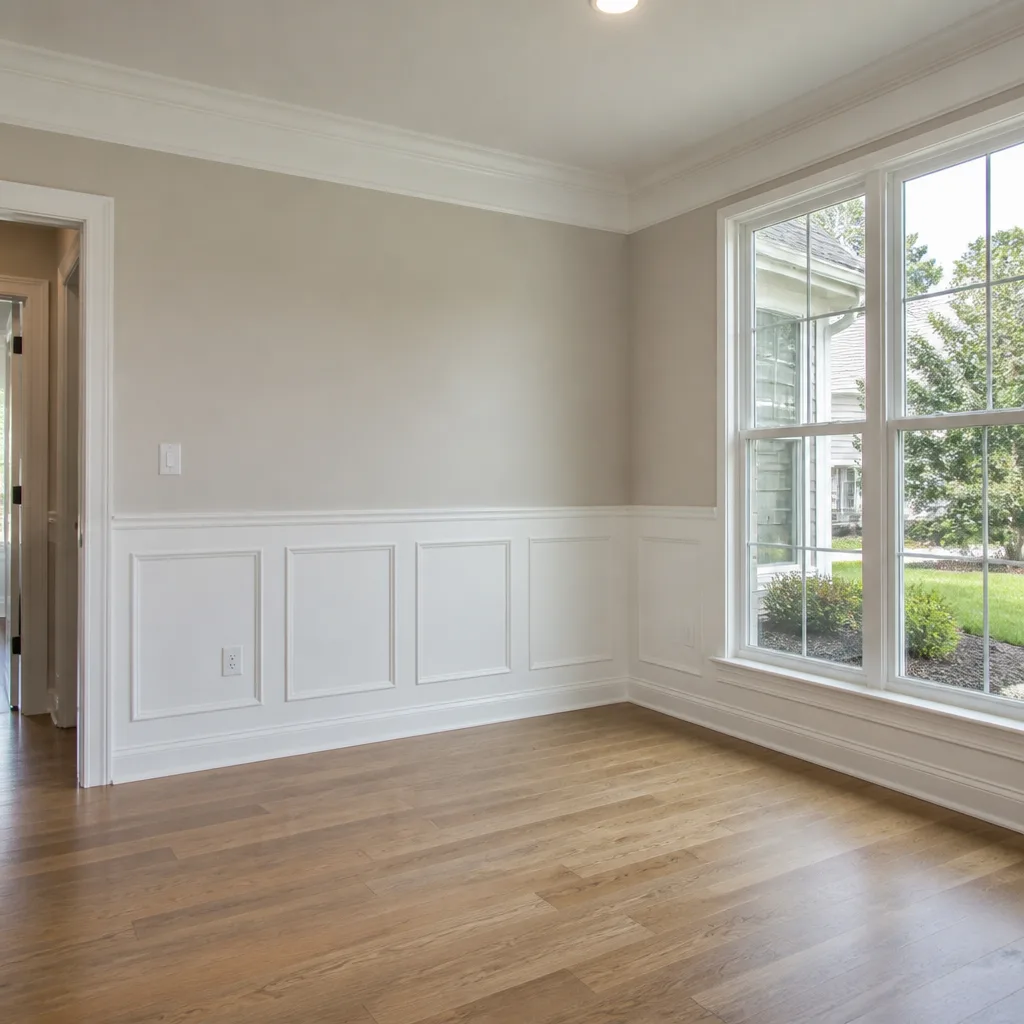
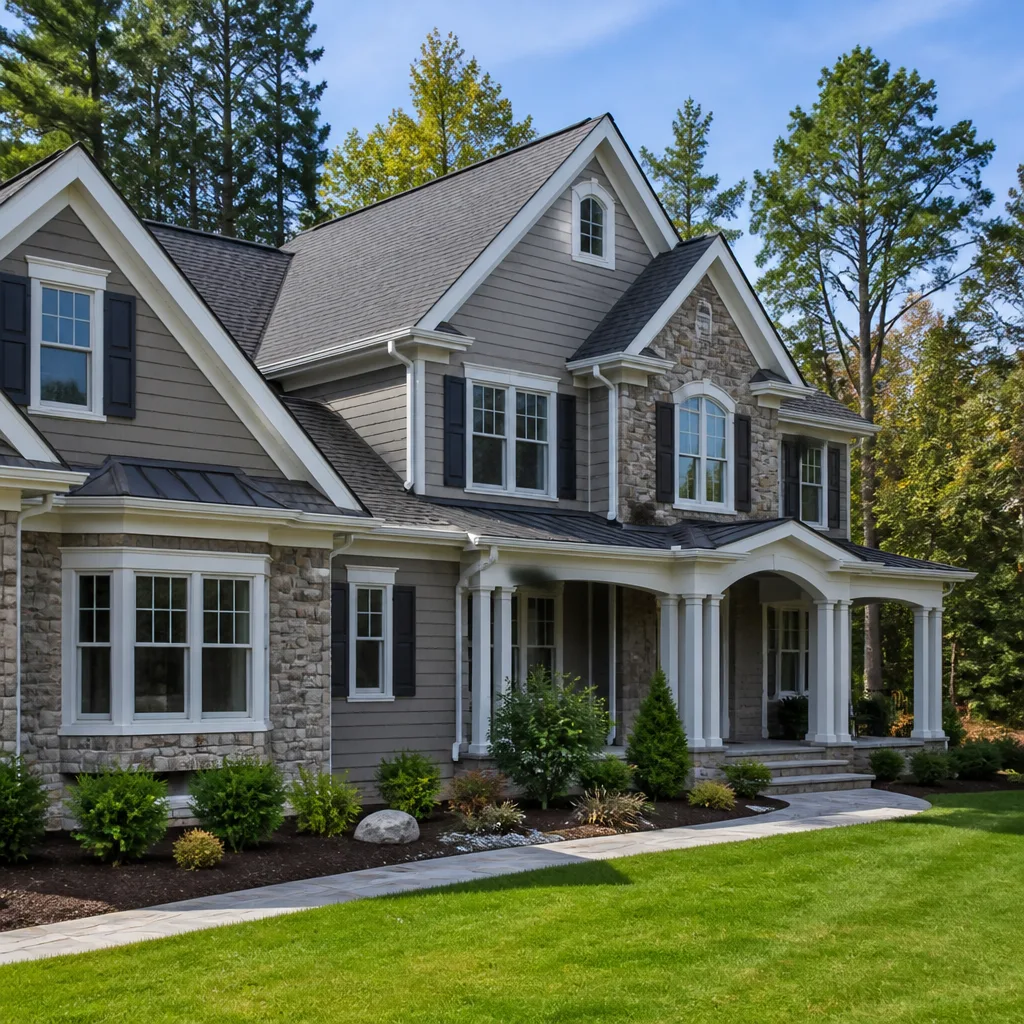
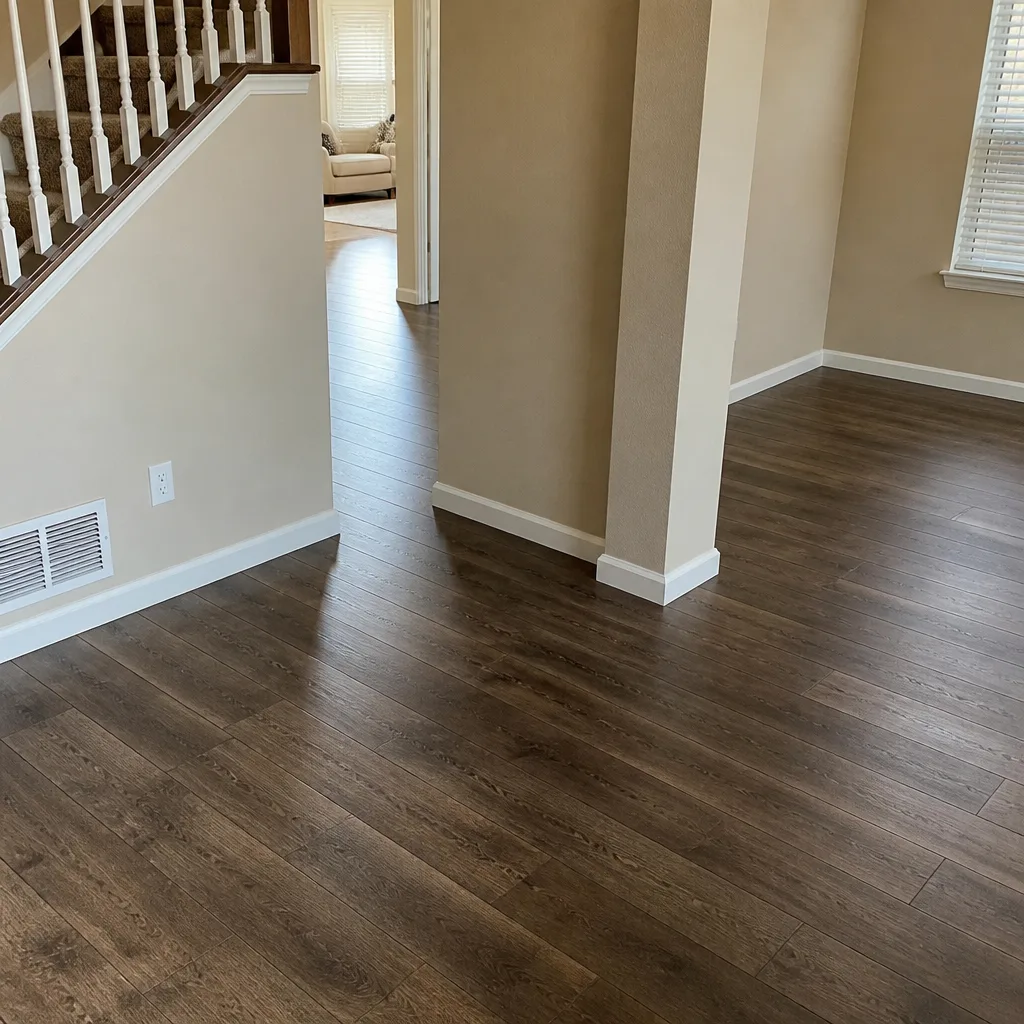
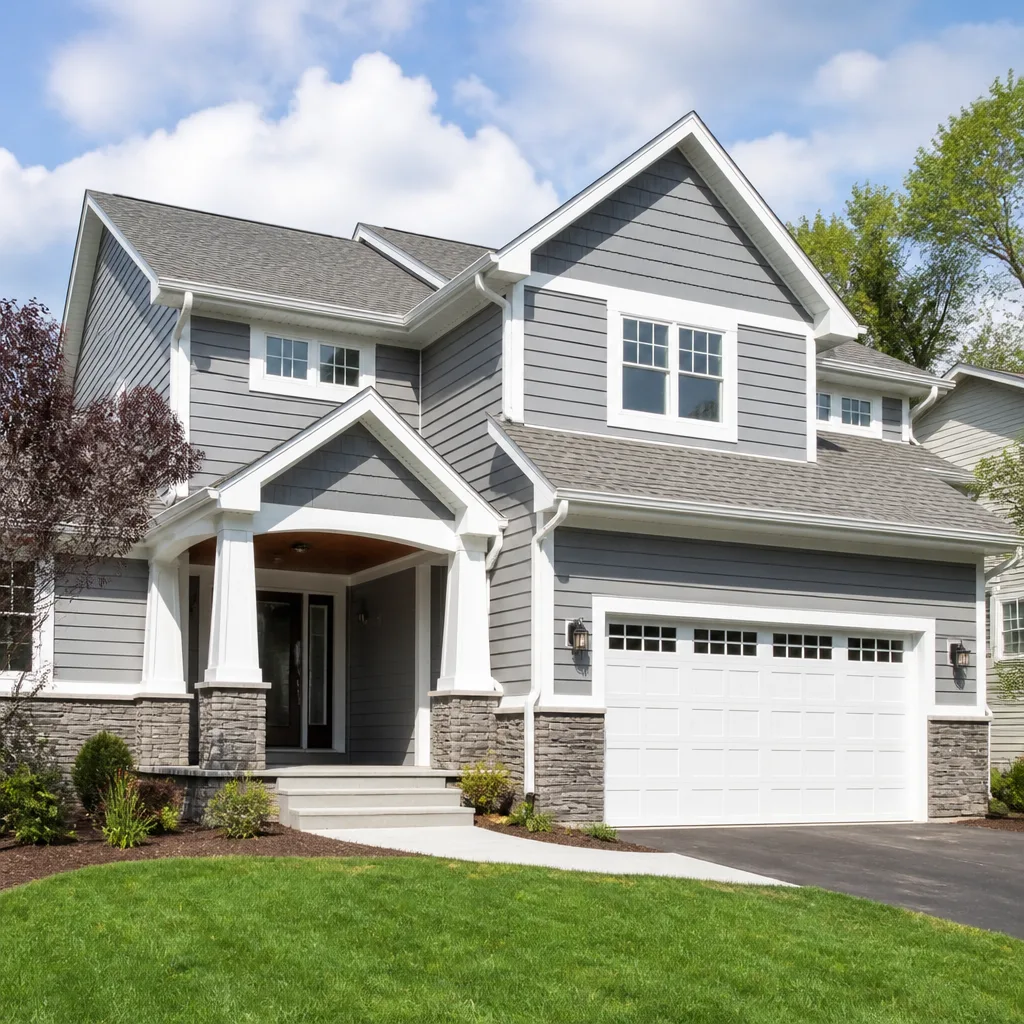
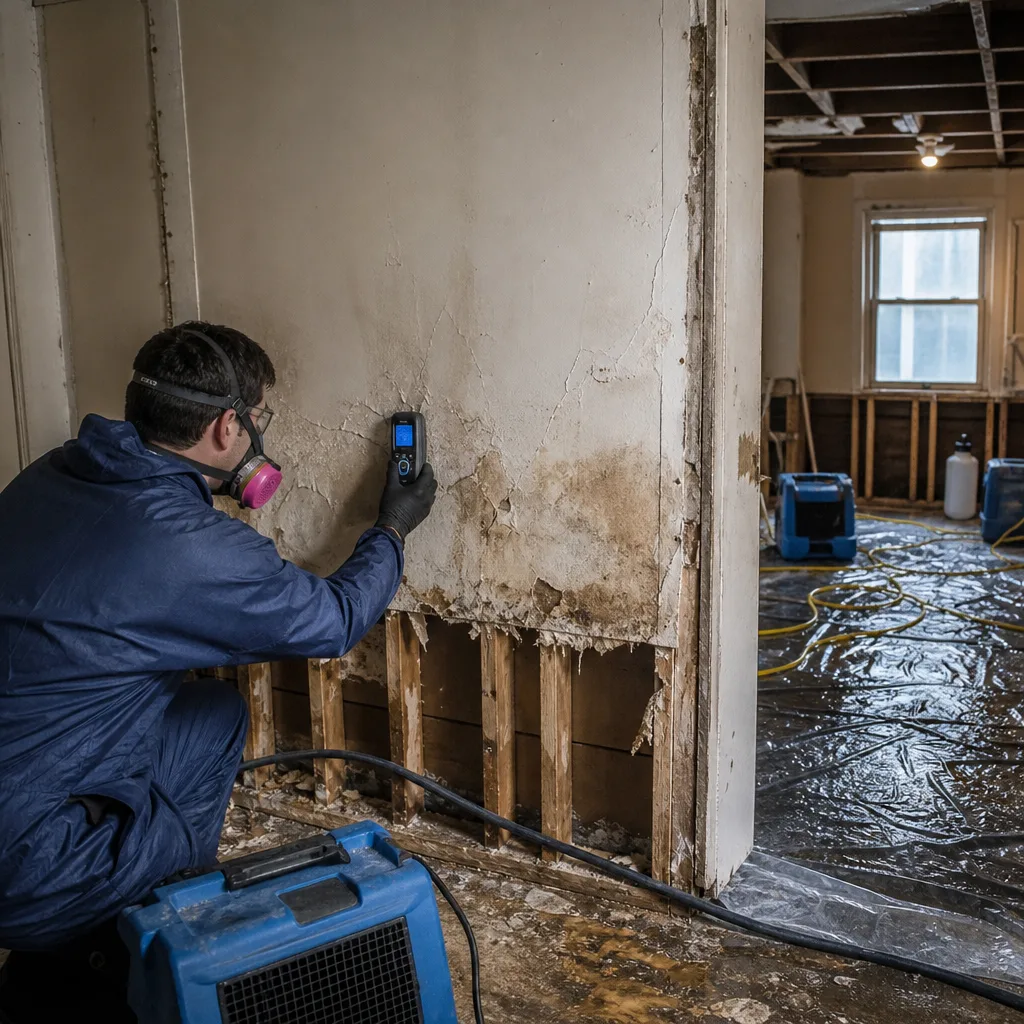 Before
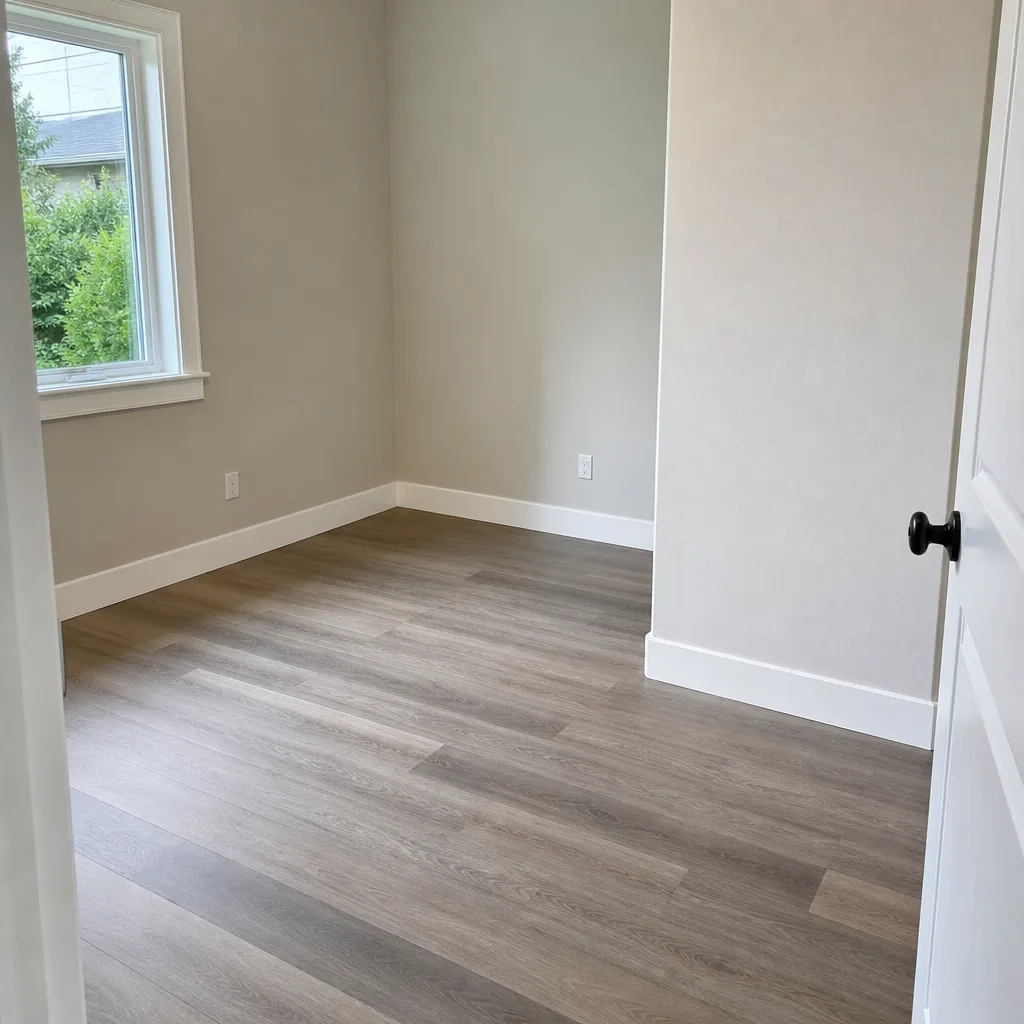 After
After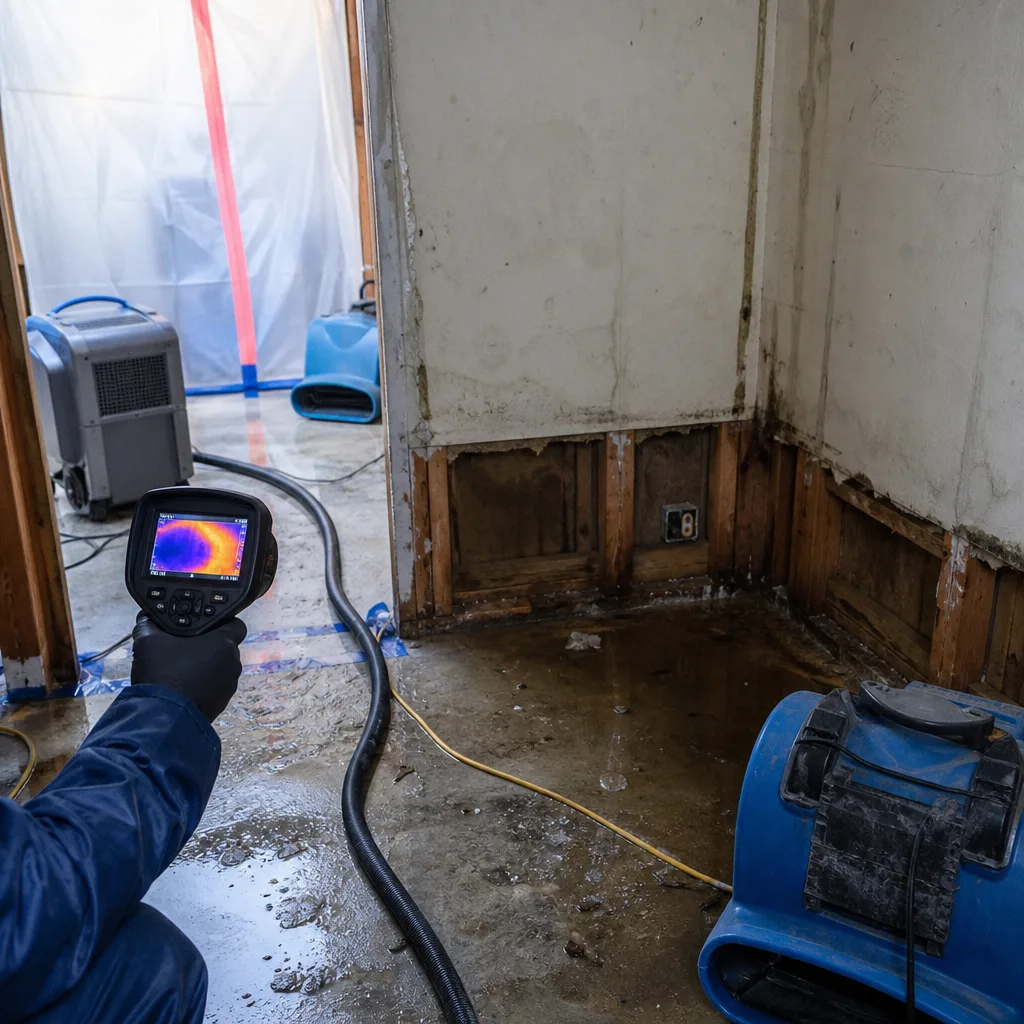 Before
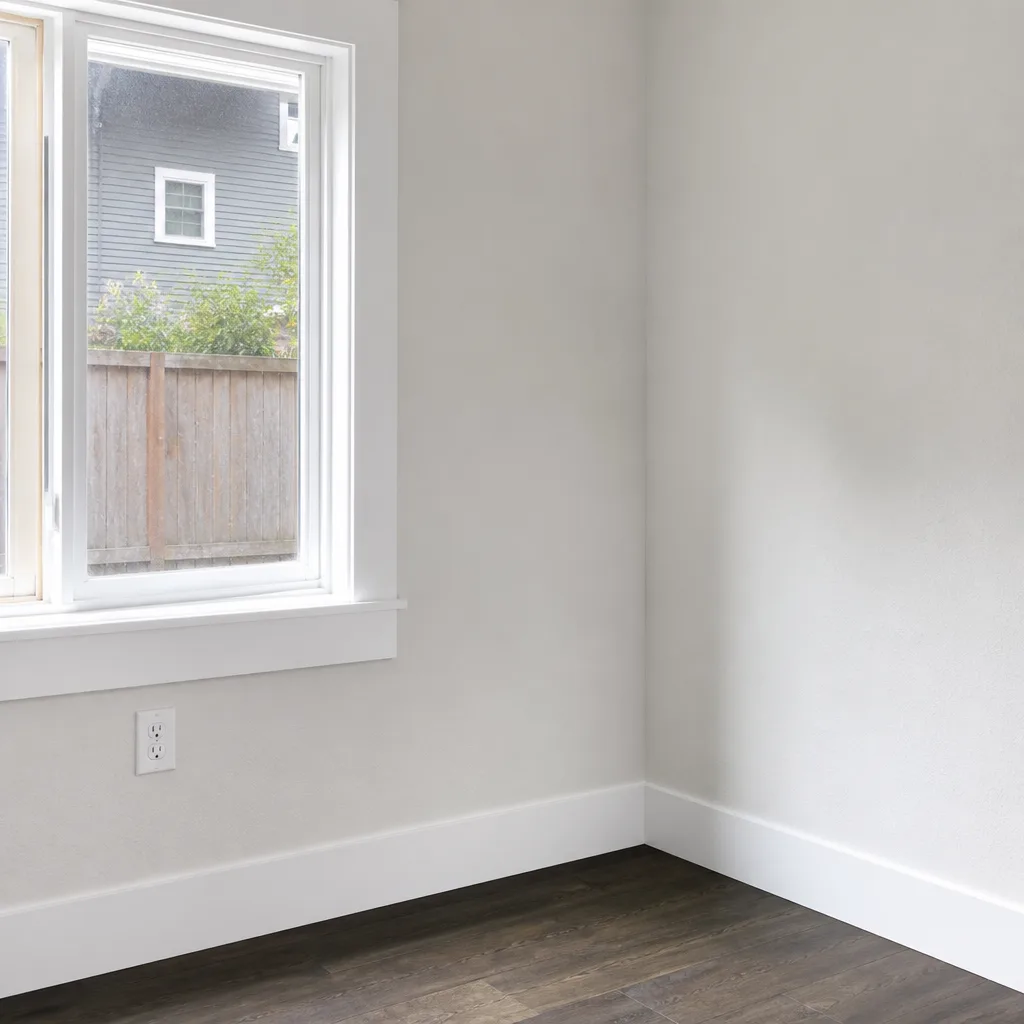 After
After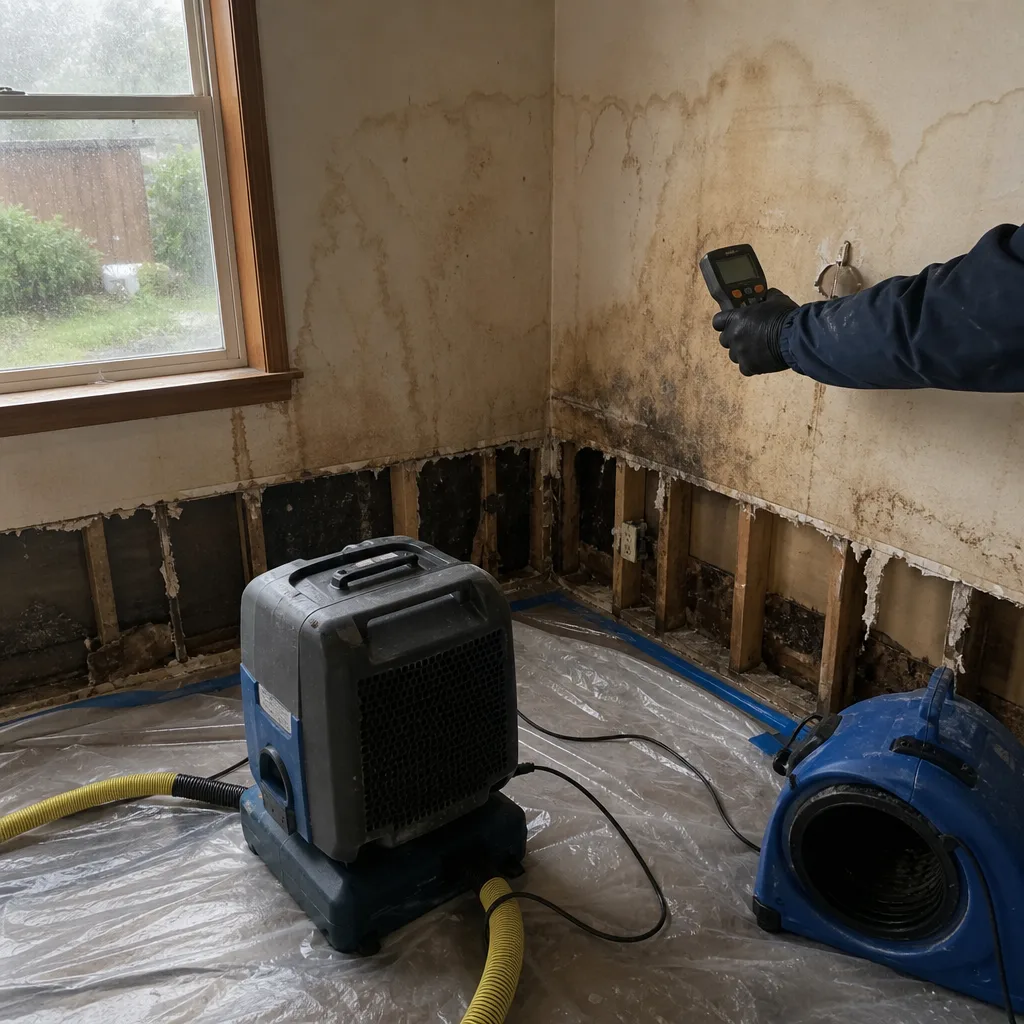 Before
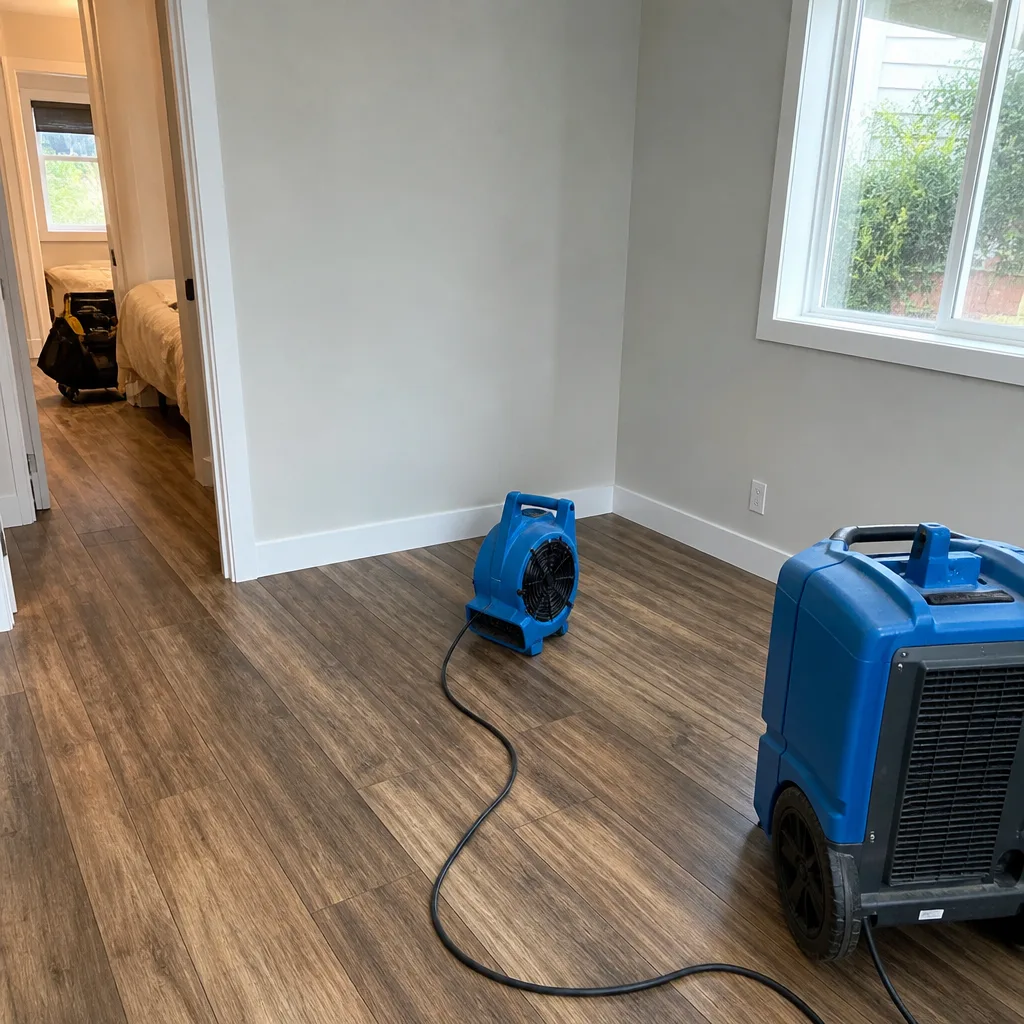 After
AfterTrusted Mold Remediation for Seattle Homeowners
Mold remediation in Seattle typically costs between $1,200 and $6,500 depending on the affected square footage, with most single-room projects falling in the $1,800-$3,400 range. At DryMark Restoration Seattle, we provide a written price before any work begins, documented photo records on every visit, and a 365-Day Done Right Promise backed by The Haven Standard. We’re available at (425) 671-5392 with live phone coverage 24 hours a day, 7 days a week - no voicemail trees, no next-business-day callbacks while moisture keeps spreading.
Seattle’s marine climate creates perfect conditions for mold growth: average relative humidity hovers near 73% year-round, winter rains persist from October through May, and many homes built between 1940 and 1980 lack adequate vapor barriers in crawl spaces. We’ve restored more than 12,000 homes since 2011, every one with a written price before work started and a documented record when the crew left. Our technicians are background-checked, uniformed, and licensed, with license numbers provided on request. We document all work to IICRC, RIA, and IFA standards, producing the daily moisture logs and psychrometric data that turn restoration invoices into payable insurance claims.
Our founder, Alicia Brennan, built Back to Dry Restoration around the documentation gap that costs homeowners their claims - sloppy drying logs, missing photos, and verbal scopes that insurers reject. That origin shapes every Seattle Mold Remediation we perform, from Magnolia’s waterfront homes to the hillside properties of Queen Anne and the mid-century ramblers in Wedgwood.
What Our Mold Remediation Service Includes
Mold Inspection & Testing
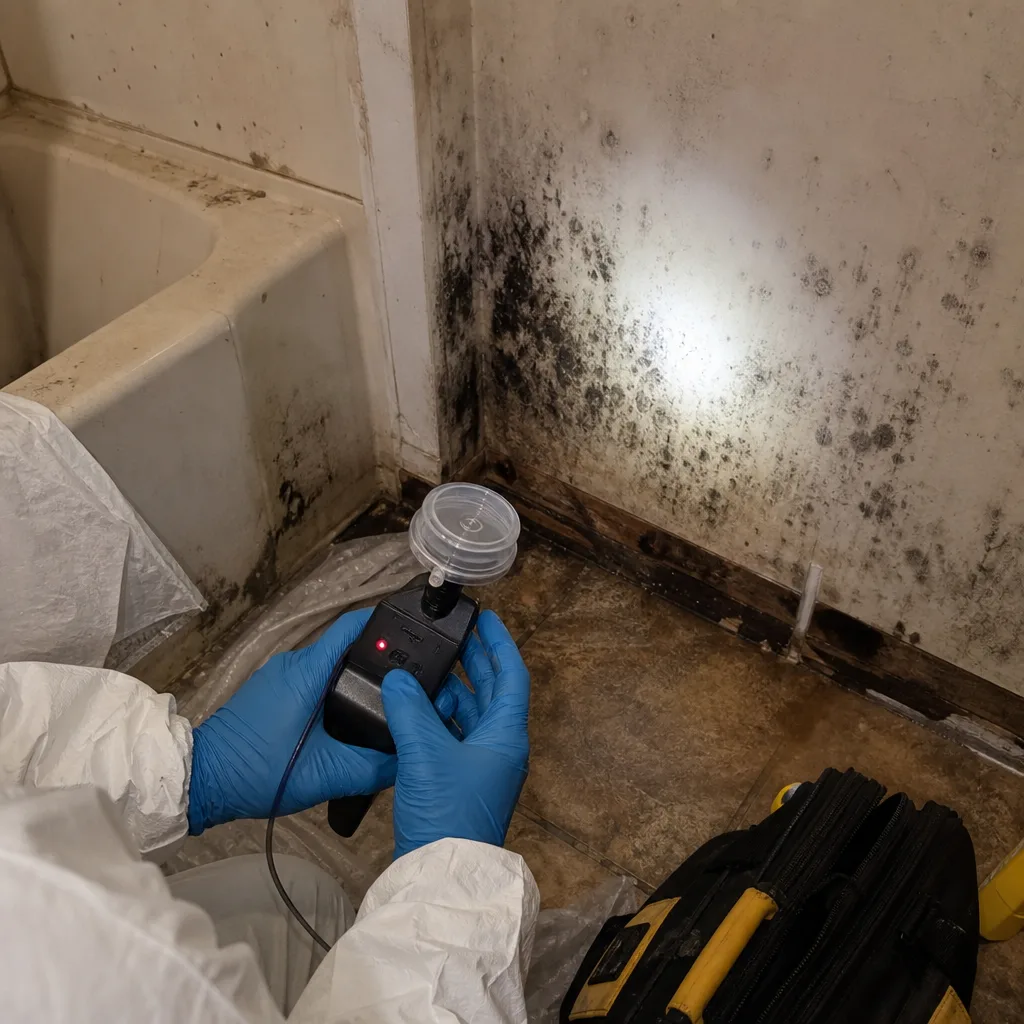
Mold Inspection & Testing identifies the species present, maps the moisture source, and determines the affected square footage before any remediation plan is written. In Seattle, we regularly find Aspergillus and Penicillium species in basements and crawl spaces where foundation drainage has failed, plus Stachybotrys chartarum in homes with chronic roof leaks around original cedar shakes. Our technicians use thermal imaging cameras, moisture meters calibrated to wood, drywall, and concrete substrates, and air sampling pumps that collect spore counts per cubic meter - all documented in a written report with photos, moisture readings by room, and a material classification list. You receive this report before we quote remediation, so you know exactly what we’re treating and why.
Mold Removal
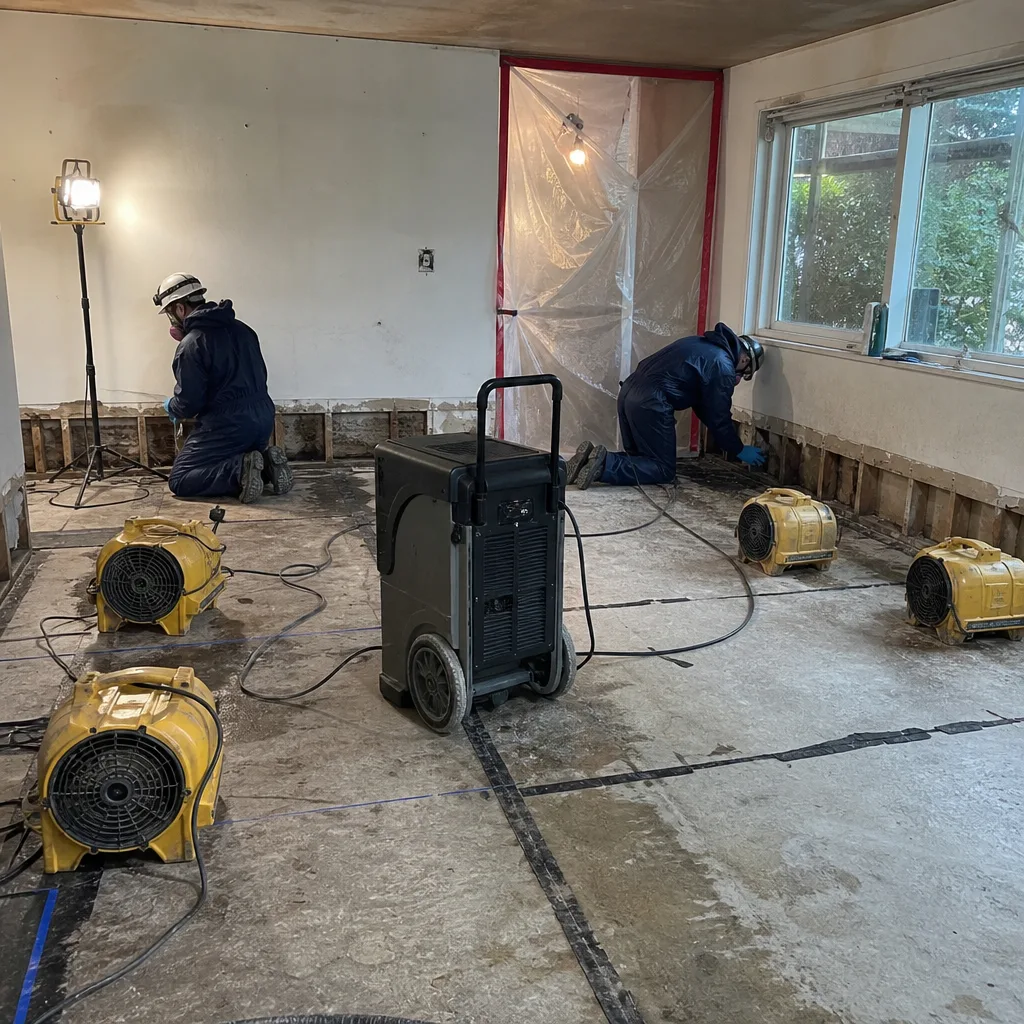
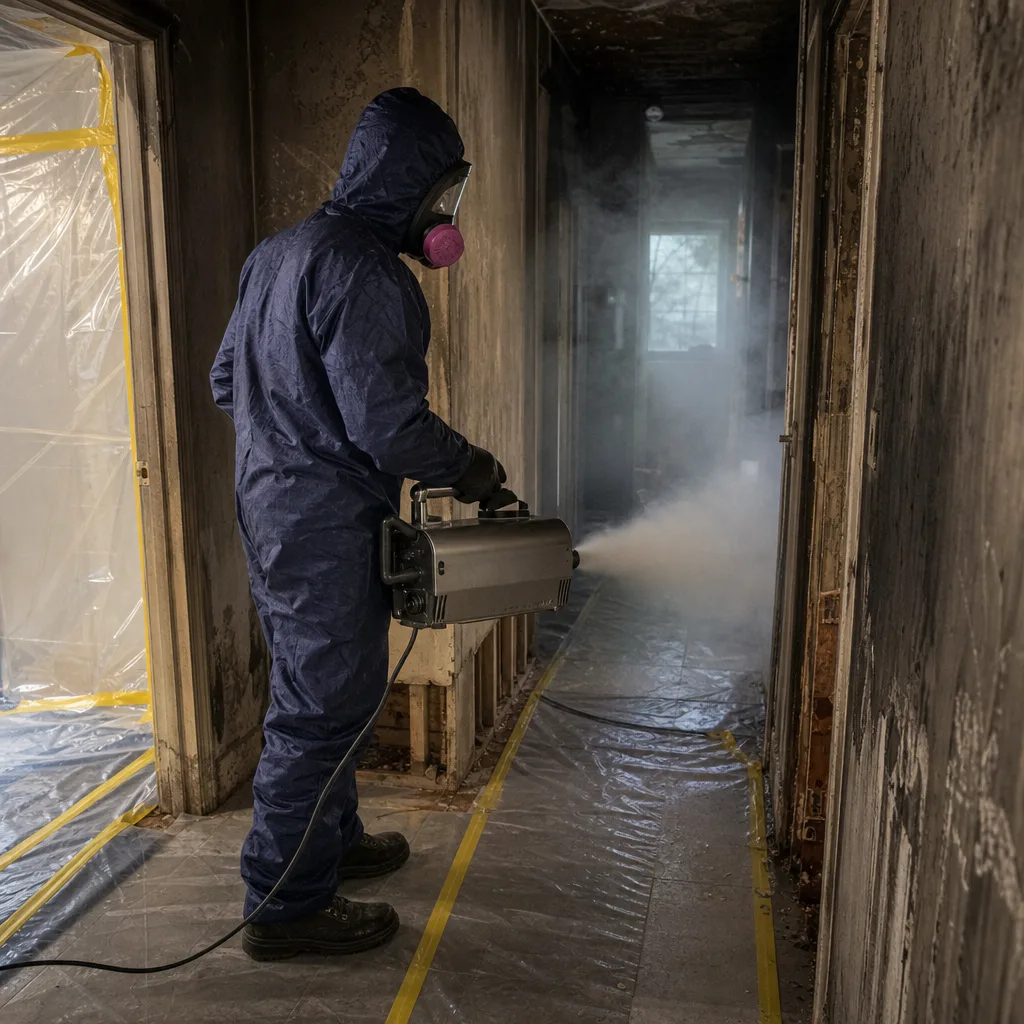
Mold Removal is the physical extraction of contaminated building materials and surface treatment of salvageable structures, performed within contained work zones under negative air pressure. In Seattle’s older housing stock - particularly the balloon-framed homes in Capitol Hill and the post-war builds in Northgate - we often find mold extending beyond visible patches into wall cavities where vapor barriers were never installed. Our crews establish polyethylene containment, run HEPA-filtered air scrubbers, and remove compromised drywall, insulation, or subflooring by the square foot, with every bagged load photo-documented and weighed. Salvageable surfaces receive HEPA vacuuming followed by antimicrobial treatment, with post-remediation verification testing to confirm spore counts have dropped below outdoor baseline levels.
Black Mold Remediation
Black mold remediation addresses Stachybotrys chartarum and other toxigenic species that produce mycotoxins under sustained water intrusion, requiring stricter containment protocols and personal protective equipment than general mold removal. Seattle’s frequent roof leaks - especially on homes with original cedar shake roofs in neighborhoods like Laurelhurst and View Ridge - create the 72-plus hours of continuous moisture that Stachybotrys needs to colonize. We deploy full-face respirators with P100 filtration, Tyvek suits with sealed seams, and contained decon chambers for equipment and personnel. All waste is double-bagged and disposed of as regulated material, with chain-of-custody documentation that satisfies both IICRC standards and Washington State Department of Health requirements for toxigenic mold handling.
Air Quality Restoration
Air quality restoration returns indoor spore counts to levels at or below outdoor ambient readings through source removal, filtration, and controlled ventilation. Seattle’s pollen seasons - alder in February, cedar in March, grass through June - can mask mold spore elevations, so we establish outdoor baseline counts before indoor sampling and compare post-remediation results against that specific day’s ambient levels. Our process includes HEPA filtration running at 6-12 air changes per hour during active remediation, followed by 48 hours of continuous air scrubbing after source removal. We provide a written air quality report with pre- and post-remediation spore counts by species, documented to IFA standards, that you can submit directly to your insurer or property manager.
Crawl Space Treatment
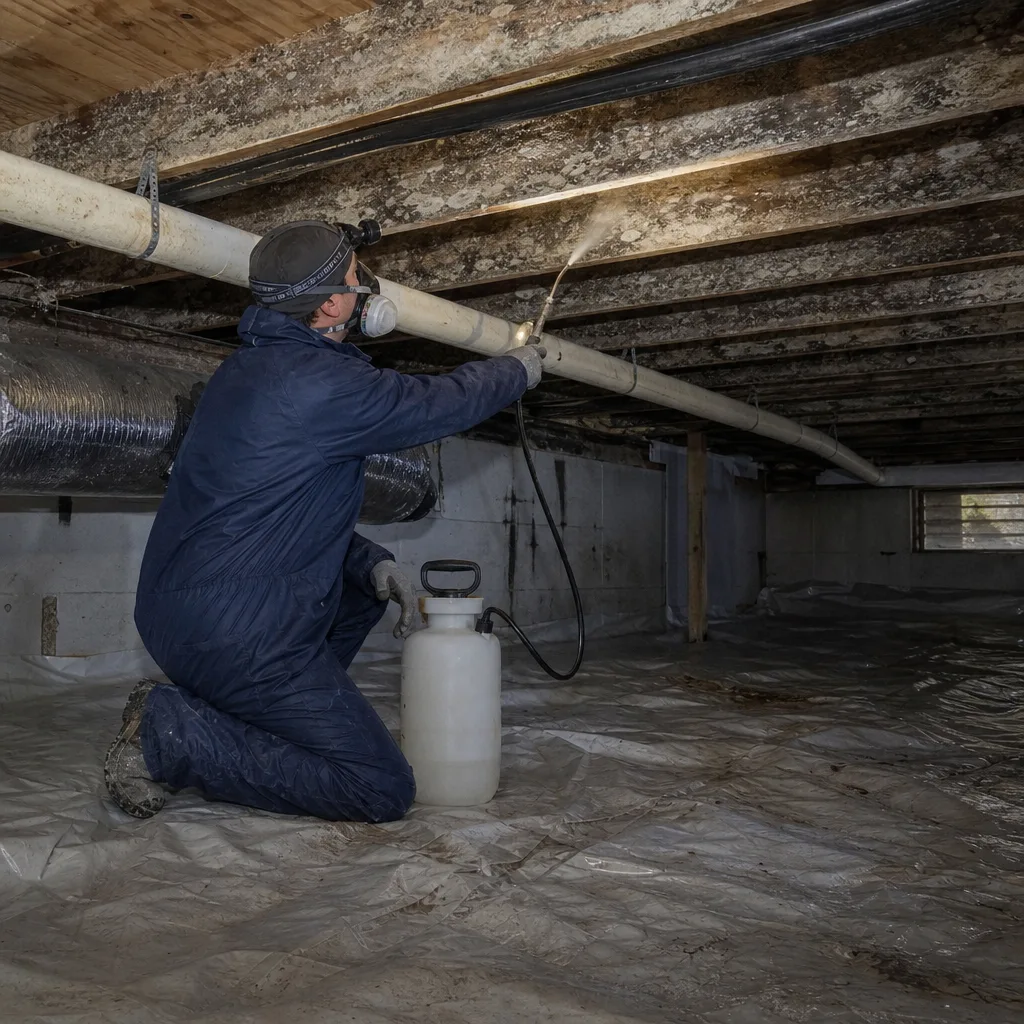
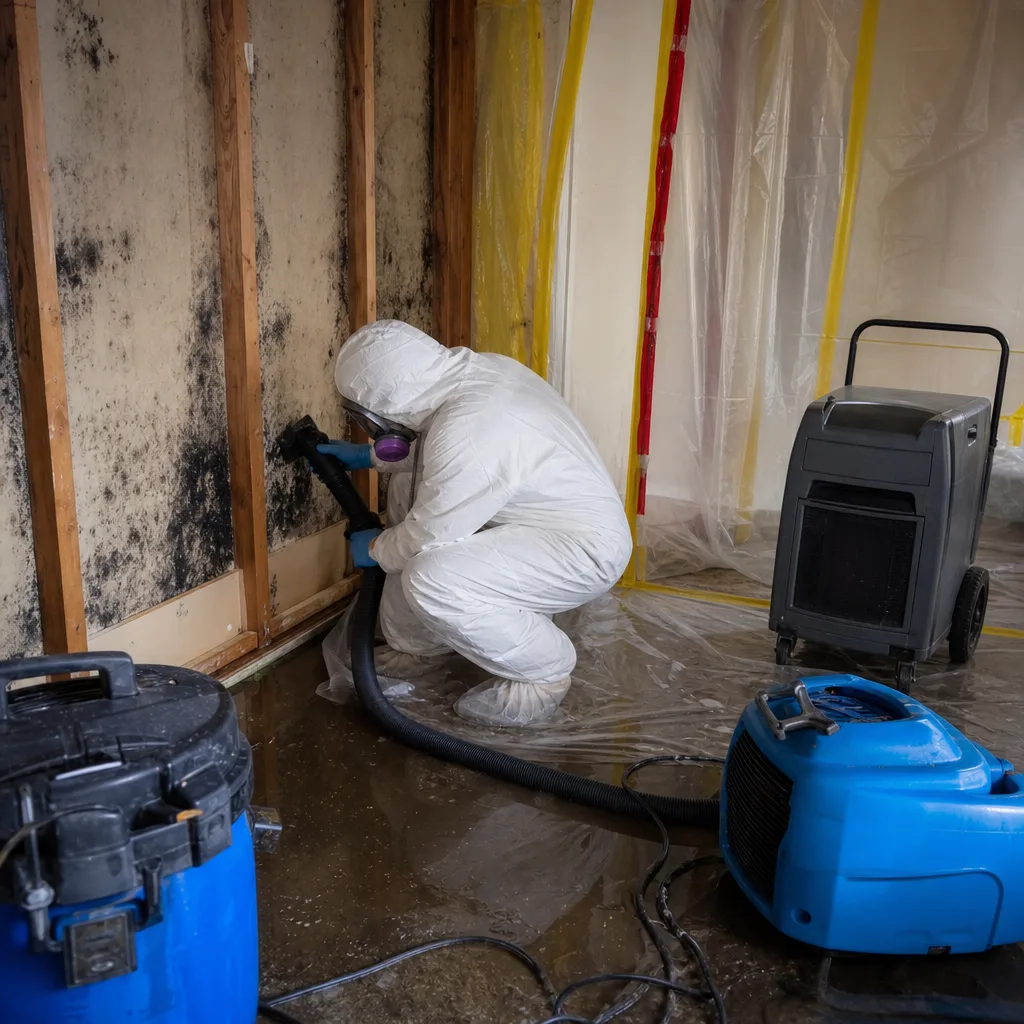
Crawl space treatment addresses the most common mold location in Seattle homes, where cool marine air meets earth-coupled foundations and creates persistent condensation on floor joists and subflooring. In neighborhoods like Ballard, Phinney Ridge, and anywhere with pre-1970 construction, we regularly find crawl spaces with relative humidity above 85% and visible mold on 30-60% of joist surfaces. Our treatment includes removal of contaminated vapor barriers, HEPA vacuuming of all structural members, antimicrobial application to wood surfaces, and installation of new 10-mil vapor barriers sealed to foundation walls. Where chronic moisture persists, we install passive or powered ventilation systems and dehumidifiers sized to the crawl space cubic footage, with moisture readings logged weekly until equilibrium is reached.
Moisture & Humidity Control
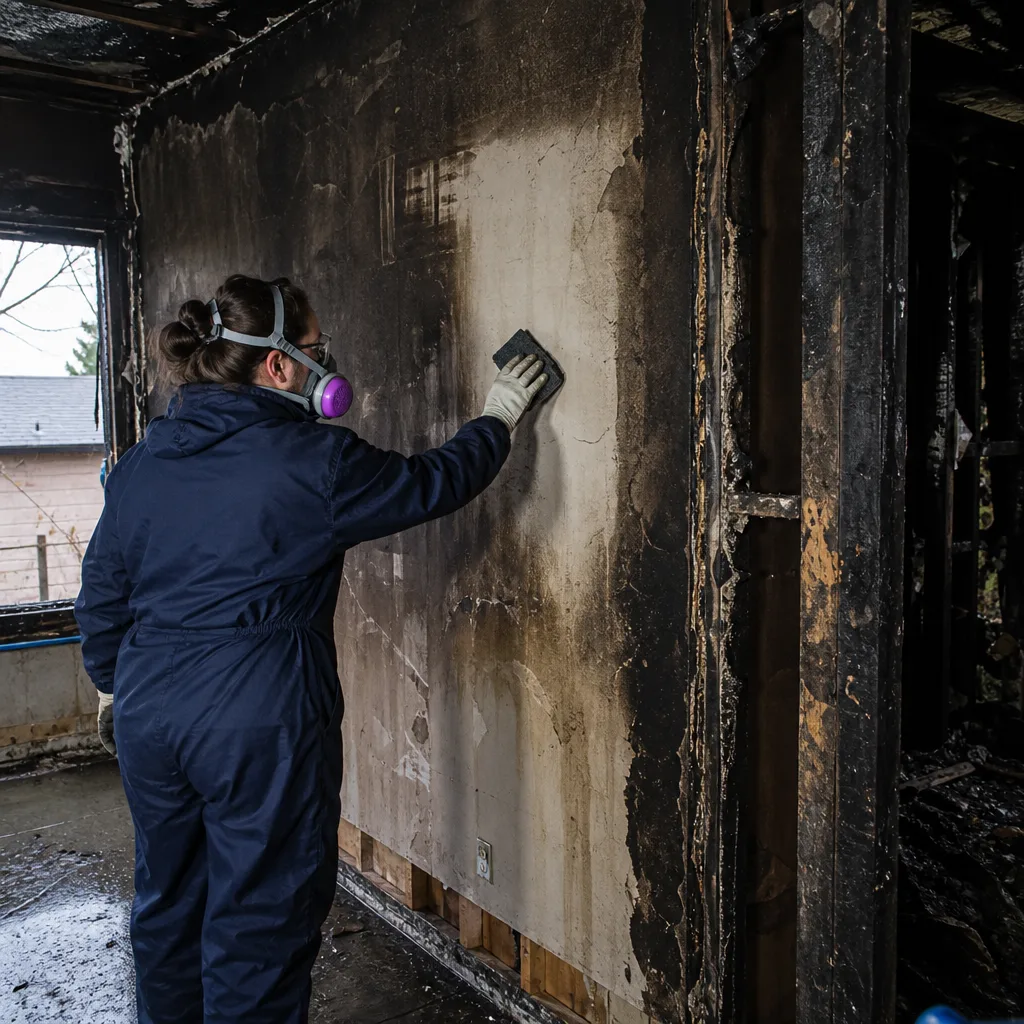
Moisture and humidity control prevents recurrence by identifying and eliminating the water source that enabled mold growth, not just treating visible contamination. Seattle’s homes face unique challenges: impermeable clay soils in parts of Beacon Hill and Rainier Valley that drive hydrostatic pressure against foundations; original galvanized supply lines in Wallingford and Fremont that fail at joints; and bathroom exhaust fans vented into attics rather than outdoors, a code violation we still find in 40% of pre-1990 homes. We use moisture meters, boroscopes for wall cavity inspection, and infrared thermography to trace water pathways to their source. Every moisture control plan includes a written scope with material specifications, a drying target expressed as equilibrium moisture content percentage for each substrate, and a schedule of follow-up readings to confirm the fix held.
What happens when you call
- 1
A real person answersNo phone trees - you reach a local pro.
- 2
You get an upfront price rangeHonest numbers before anyone is dispatched.
- 3
A background-checked tech heads outLicensed & insured, dispatched right away.
- 4
You approve before work beginsNothing starts until you say go.
Signs You Need Mold Remediation Right Now
- A persistent musty odor that doesn’t clear with ventilation. This indicates active microbial volatile organic compound (MVOC) production, meaning mold is actively growing and releasing metabolic byproducts into your air. In Seattle’s climate, where windows stay closed for months, MVOCs accumulate to detectable levels before visible growth appears. If you smell earthiness or wet cardboard that lingers after running exhaust fans, you likely have hidden colonization in wall cavities, crawl spaces, or behind cabinetry.
- Visible discoloration on walls, ceilings, or baseboards that spreads or darkens. Mold colonies expand radially from moisture sources; a spot that grew from dime-sized to quarter-sized in two weeks is actively feeding on cellulose in drywall paper or wood trim. Seattle’s frequent fog and marine layer events create temperature differentials at exterior walls where condensation forms inside cavities, producing exactly this pattern in bedrooms and closets on north-facing walls.
- Recent water damage that was dried without professional documentation. Carpet padding, subflooring, and bottom plates of framed walls can retain moisture for weeks after surface materials appear dry. Without moisture meter verification at multiple depths and daily psychrometric logging, incomplete drying virtually guarantees mold within 30-60 days. We provide free second opinions on any competitor’s drying documentation - bring us their logs and we’ll tell you if the job was done to IICRC standards.
- Respiratory symptoms that worsen at home and improve when you leave. While only a physician can diagnose mold-related illness, a correlation between time spent in your home and symptoms like congestion, throat irritation, or asthma exacerbation warrants environmental investigation. Seattle’s high outdoor pollen can complicate this assessment, which is why we collect outdoor baseline spore samples on the same day as indoor testing - to distinguish mold sensitization from seasonal allergies.
- Sagging or soft drywall, especially near plumbing walls or below windows. This indicates moisture content above 16% in gypsum board, the threshold where mold spores germinate within 48-72 hours. Seattle’s original steel casement windows in pre-1960 homes and the vinyl retrofit windows installed in the 1980s-1990s both fail at sealant joints, producing chronic sill plate moisture that migrates downward through walls. Soft drywall is never just a cosmetic issue; it’s a moisture map pointing to active or incipient mold colonization.
BeforeAfterOur Mold Remediation Process - Step by Step
- 1
Documented inspection and written scope. Our technician arrives with a moisture meter, thermal camera, and air sampling equipment. We map every affected area, identify the moisture source, and photograph conditions before any disturbance. Within 24 hours, you receive a written scope with line-item pricing, material specifications, and a drying target - Haven Standard, Clause 1: written price before work begins. No scope-creep additions once the crew is inside.
- 2
Containment and negative air establishment. We seal affected rooms with 6-mil polyethylene sheeting, create negative air pressure with HEPA-filtered exhaust fans, and install air scrubbers to prevent cross-contamination. Each containment is photographed from multiple angles, with airflow measurements logged in CFM (cubic feet per minute) to confirm negative pressure is maintained throughout the project.
- 3
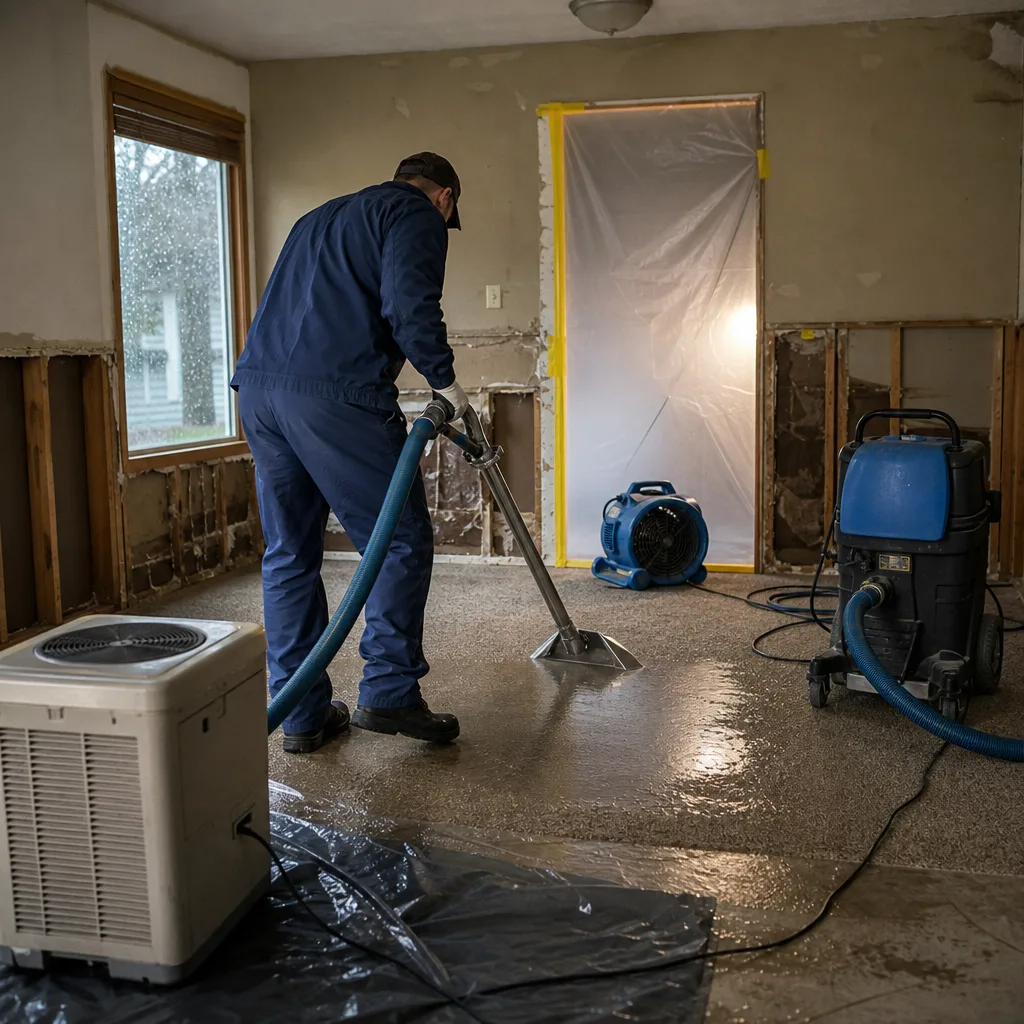
Source removal and HEPA cleaning. Contaminated materials are removed by the square foot, bagged within the containment, and weighed for disposal records. Remaining structural elements receive HEPA vacuuming followed by antimicrobial treatment applied to manufacturer specifications. We use professional-grade equipment from Dri-Eaz, Phoenix, and XPOWER, with serial numbers logged for your documentation.
- 4
Drying and moisture verification. For underlying moisture issues, we deploy Injectidry systems that deliver heated, dehumidified air into wall cavities through small injection ports, drying structural members without removing intact drywall. Daily moisture readings are recorded on a psychrometric chart showing temperature, relative humidity, and vapor pressure differential - the difference in moisture concentration between the affected material and the ambient air that drives drying. You receive these logs as part of your project file.
- 5
Post-remediation verification and written warranty. We collect air and surface samples for independent laboratory analysis, comparing post-remediation spore counts to outdoor baseline. Once clearance is achieved, we remove containment, clean the work area, and deliver your final documentation: photo record, moisture logs, lab results, and the 365-Day Done Right Promise - a signed guarantee under The Haven Standard that if mold returns to treated areas, we make it right at no charge.
How Much Does Mold Remediation Cost in Seattle?
Our Mold Remediation cost guide shows that Seattle pricing follows the scope of contamination, not the zip code. A typical single-room project with limited surface mold - a bathroom with shower surround failure, a closet with minor roof leak staining - runs $1,800-$3,400. Whole-room remediation with wall cavity intrusion, such as a basement with perimeter foundation seepage or a kitchen with supply line failure behind cabinets, typically ranges $3,500-$6,500. Crawl space treatment, the most common Seattle project type, averages $2,800-$5,200 depending on joist coverage percentage, vapor barrier replacement needs, and whether ventilation or dehumidification equipment is required for long-term moisture control.
Several factors move these ranges. Affected square footage is primary: we price by the square foot of visible and hidden contamination, with wall cavities counted at their interior surface dimensions. Material type matters - mold on painted drywall is faster to remediate than raw wood joists or plaster lathe, which require more aggressive mechanical cleaning. Accessibility affects labor hours: a crawl space with 18-inch clearance in a 1920s Ballard bungalow takes longer to work safely than a full-height basement in a 2005 Sammamish build. And the moisture source complexity - a simple failed wax ring versus a foundation crack requiring exterior excavation - determines whether remediation stands alone or requires coordinated repair trades.
The most reliable way to avoid overpaying is to demand written documentation before committing. We provide a free second opinion on any competitor’s written estimate - bring us their scope and we’ll review it against IICRC standards at no charge. Our estimates include line-item pricing for containment, air filtration, removal, cleaning, disposal, and post-remediation verification, with no hidden charges for photo documentation or moisture logging. Those are standard deliverables on every DryMark Restoration Seattle job, not upsells.
Insurance coverage for mold remediation varies by policy and cause of loss. Sudden and accidental water damage - a burst pipe, appliance failure, or storm intrusion - typically triggers coverage for resulting mold if reported promptly and dried to professional standards. Long-term maintenance issues - slow leaks, inadequate ventilation, or failed caulking - are usually excluded. We photograph all damage before any disturbance and coordinate directly with adjusters to establish cause and scope, producing the documentation that supports your claim. Call (425) 671-5392 for an exact quote - estimates are free, and we answer live 24 hours a day, 7 days a week.
Mold Remediation Near Seattle - Our Service Area
We perform mold remediation throughout the Seattle metro and Eastside, with typical response times under 90 minutes for emergency assessments in Seattle proper, Kirkland, Bellevue, and Redmond. Our crews regularly work in Mold Remediation in Kirkland, where waterfront homes on Lake Washington face unique humidity challenges, and Mold Remediation in Bellevue, where newer construction with tighter envelopes traps moisture more aggressively than older, breathable structures. We also serve Manchester, Tukwila, Renton, SeaTac, Bothell, Sammamish, Lynnwood, and Issaquah - each with distinct building eras, soil conditions, and mold patterns we’ve documented across thousands of jobs. Whether your home is a 1905 Craftsman in Wallingford or a 2019 build in Issaquah Highlands, we bring the same documentation standard: written price first, photo record always, home delivered dry.
Serving Seattle, WA - Our Local Coverage Area
We’re based in the Seattle area and know this community well. Use the map below to see our service coverage - if you’re nearby, we can almost certainly help.
Frequently Asked Questions - Mold Remediation in Seattle
Mold remediation is the complete process of containing, removing, and verifying the elimination of mold contamination, including addressing the moisture source that enabled growth. Mold cleaning, by contrast, typically refers to surface treatment only - wiping visible growth with antimicrobial products without containment, source removal, or moisture correction. We perform full remediation to IICRC S520 standards, with documented containment, negative air pressure, HEPA filtration, and post-remediation verification testing that surface cleaning cannot achieve.
Most single-room mold remediation projects in Seattle are completed in 2-4 days, with crawl space treatments typically requiring 3-5 days and whole-home projects extending to 7-10 days. Timeline depends on the affected square footage, material types, moisture source complexity, and laboratory turnaround for post-remediation verification samples. We provide a written schedule with your scope, including drying targets that must be met before we proceed to verification - rushing this phase guarantees recurrence.
Single-room projects typically run $1,800-$3,400, whole-room remediation with cavity intrusion $3,500-$6,500, and crawl space treatment $2,800-$5,200. Every estimate is itemized by line - containment, air filtration, removal, cleaning, disposal, verification testing - with no hidden fees. Haven Standard, Clause 1: your written price is delivered before any work begins, with no scope-creep additions once the crew is inside. Call (425) 671-5392 for an exact quote - estimates are free.
We remediate mold in all construction types and coordinate with equipment from Dri-Eaz, Phoenix, XPOWER, B-Air, and Injectidry for drying and air quality control. Our documentation references IICRC, RIA, and IFA standards regardless of your home’s age or the equipment deployed. Whether you have a 1910 balloon-framed house in Capitol Hill or a 2020 SIP-panel build in Sammamish, our process adapts to the structure while maintaining the same verification and warranty standards.
Live phone coverage is available 24 hours a day, 7 days a week for mold assessments following water damage events - burst pipes, appliance failures, storm intrusion - where rapid response prevents colonization. Established mold growth, while urgent for health reasons, is scoped and scheduled rather than dispatched as an emergency; remediation requires containment setup and material procurement that same-day service cannot properly execute. For active water emergencies with mold risk, call (425) 671-5392 and we’ll assess within hours.
Every mold remediation is covered by our 365-Day Done Right Promise under The Haven Standard - a signed, written guarantee that if mold returns to treated areas within one year, we return at no charge to identify the failure and make it right. This is not a verbal assurance; it’s a documented warranty with claim procedures. Recurrence is rare when the moisture source is properly addressed, and our warranty exists precisely for the exceptions - the failed flashing that wasn’t visible during initial repair, the supply line that degrades six months later.
Remove personal items from affected rooms if safe to do so; our crew will handle furniture and fixtures that require protection or relocation. Do not disturb visible mold - agitation releases spores and complicates containment. Gather any documentation of the water damage or leak history, including prior repair invoices and insurance correspondence, as these establish cause and timeline for adjuster coordination. We provide a written preparation checklist with your scope confirmation, specific to your project type and containment plan.
Schedule Your Mold Remediation Service in Seattle Today
Call (425) 671-5392 now for a free, written estimate with no obligation. Our phones are answered live 24 hours a day, 7 days a week - no voicemail, no callbacks tomorrow while moisture keeps working. You’ll receive a documented inspection, line-item pricing under Haven Standard, Clause 1, and the 365-Day Done Right Promise backed by more than 12,000 restored homes since 2011. Alicia Brennan built this company on the documentation gap that costs homeowners their claims; every mold remediation we perform in Seattle closes that gap with measurable evidence, not promises.
Written by Alicia Brennan, Owner at Back to Dry Restoration, serving Seattle since 2011.