
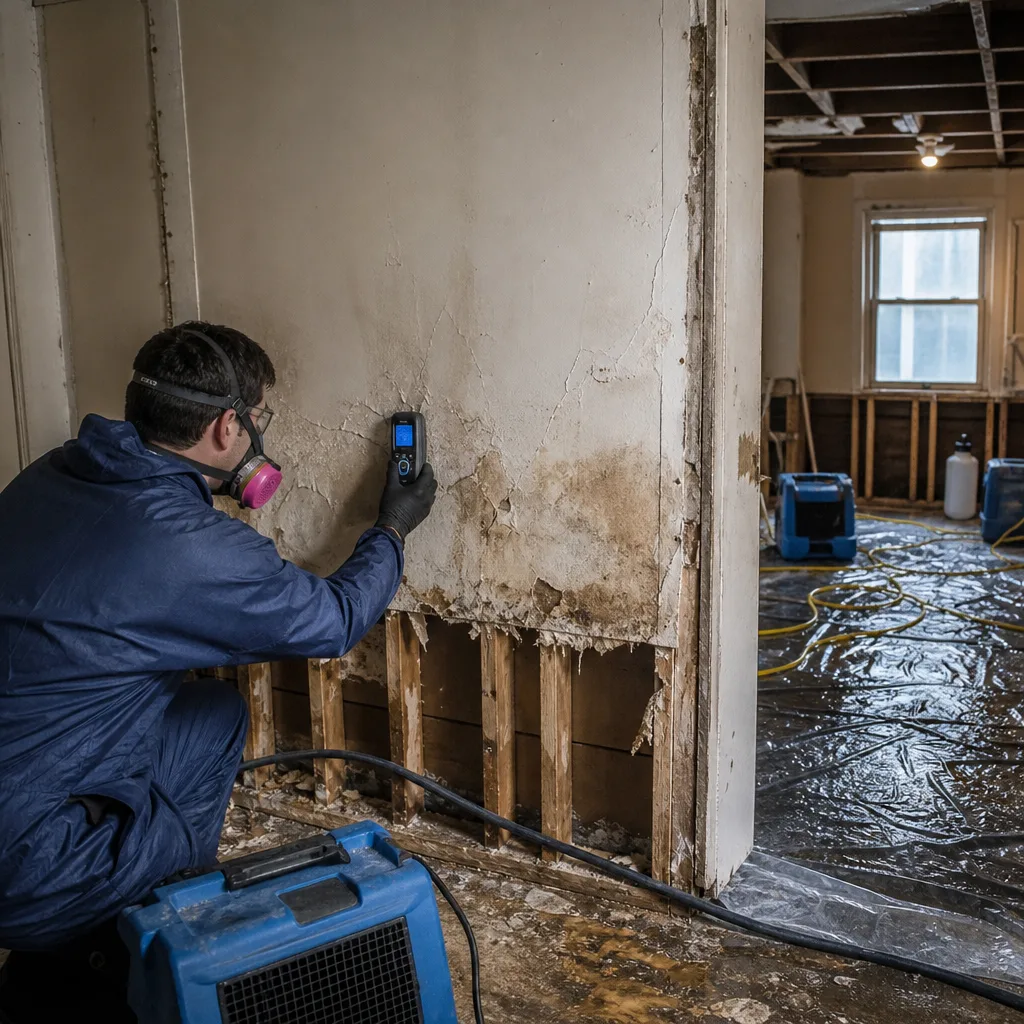
Free visual inspection and a written scope of work before any mitigation begins - photos, moisture readings, and drying logs go in your claim file
The scope we write is the scope we bill. Anything new gets shown to you, in writing, before we touch it.
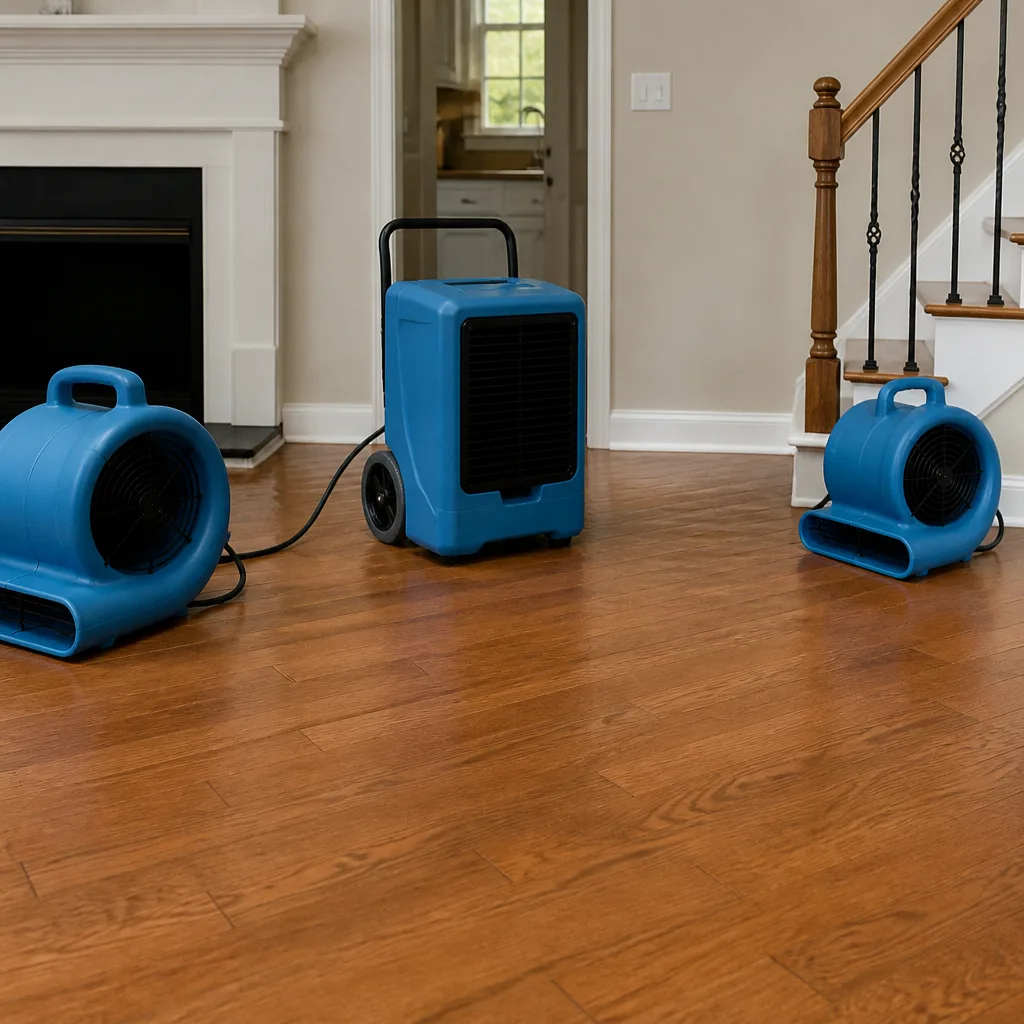
 Before
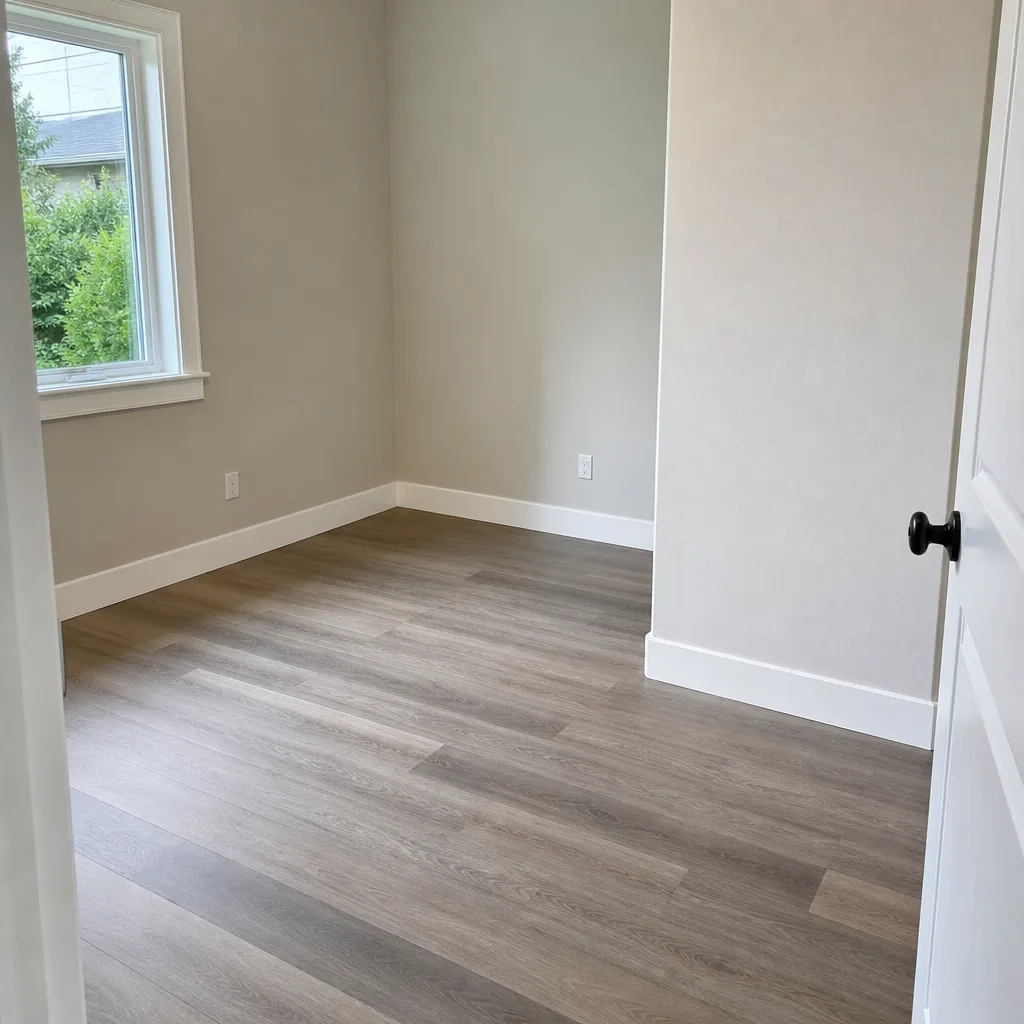 After
After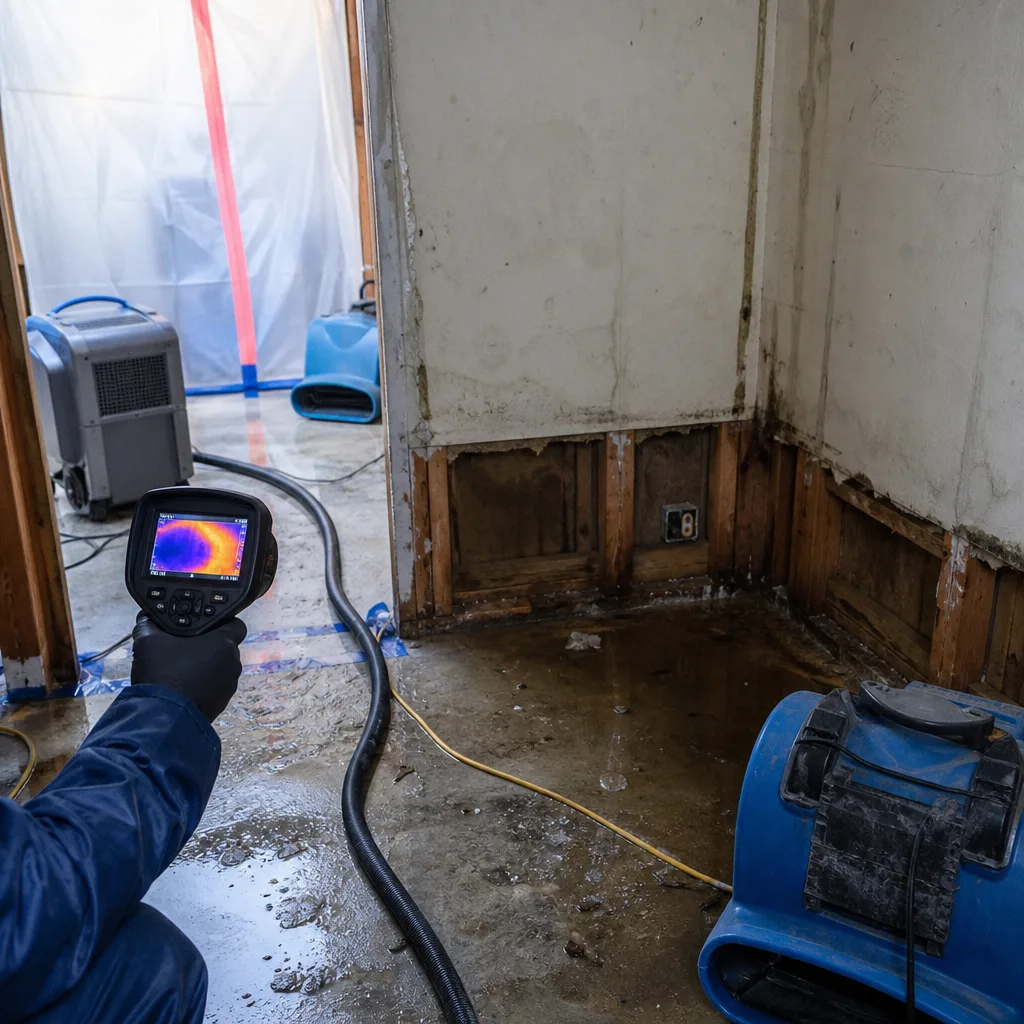 Before
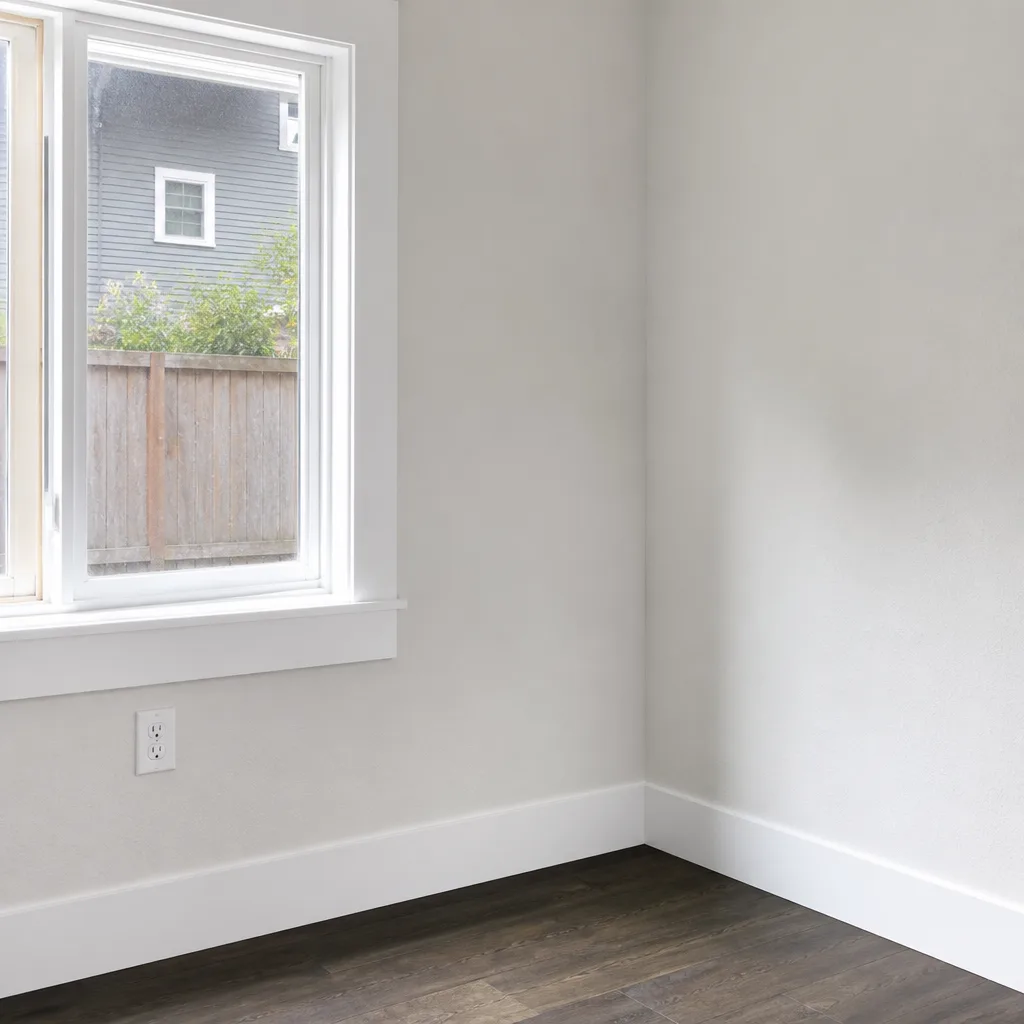 After
After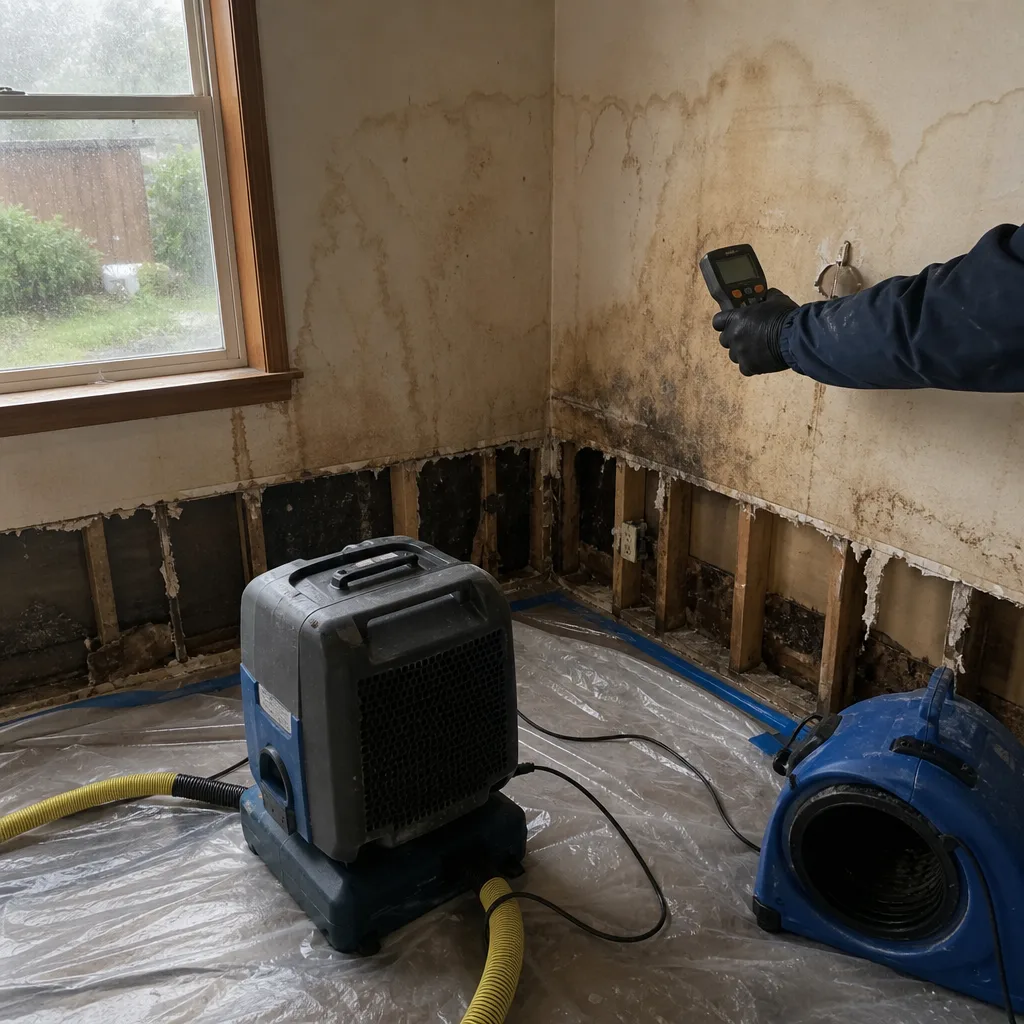 Before
 After
AfterFast, Reliable Water Damage Restoration Across SeaTac
Water damage restoration in SeaTac typically runs $2,800-$6,500 for a standard residential drying job, with emergency extraction starting at $950 and most crews arriving within 60-90 minutes of a call. Our dispatch team coordinates from our Seattle office, with crews already positioned to reach SeaTac neighborhoods from McMicken Heights to Angle Lake without crossing bridge traffic. If you’re standing in water right now, call (425) 671-5392 - a live person answers, 24 hours a day, 7 days a week, no voicemail trees.
We’ve restored water damage in SeaTac since 2011, and the work here is different from Seattle or Bellevue. The city’s housing stock - modest single-family homes and duplexes built between 1950 and 1975 for Boeing and airport workers - carries a hidden complication that changes how we dry: thousands of these homes were retrofitted under the Port of Seattle’s Residential Sound Insulation Program with sealed windows, added wall and attic insulation, and modified HVAC. Those tightened envelopes trap moisture that original construction was designed to breathe out. Our Water Damage Restoration team documents every moisture reading, every photo, every drying log to IICRC standards so your claim gets paid without a fight.
Why DryMark Restoration Seattle Is SeaTac’s Preferred Water Damage Restoration Company
Homeowners in SeaTac measure trust by what we can show them, not by how long we claim to have been around. We show a written price before any work starts - Haven Standard, Clause 1 - and a photo record on every visit. Alicia Brennan founded Back to Dry in 2011 after working as a claims adjuster and watching sloppy documentation cost homeowners their settlements. That origin is the problem we solve every day.
Our 12,000+ restored homes include hundreds in SeaTac zip codes 98148, 98158, and 98168. Reviews from SeaTac customers consistently cite two things: our techs name the moisture reading they’re looking at, and they explain why the number matters. One McMicken Heights homeowner wrote that our crew “showed me the psychrometric data on a tablet and told me what dry standard meant before I had to ask.”
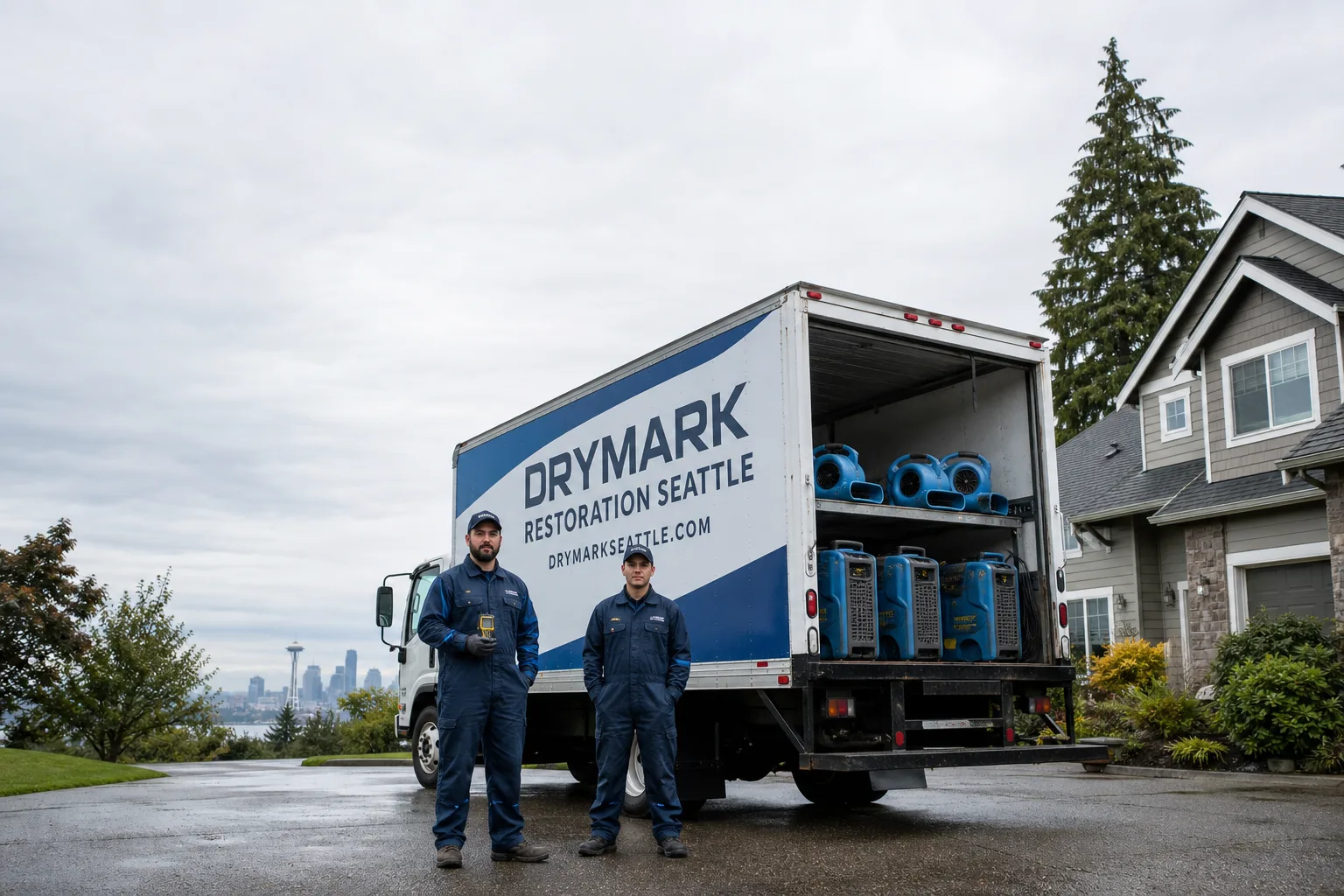
Response time to SeaTac averages under 90 minutes because we stage equipment south of downtown Seattle and our drivers know the local grid - Pacific Highway South, International Boulevard, the 509 corridor. We don’t guess our way to your door.
Local knowledge that matters: we know which SeaTac blocks sit on clay-dense glacial till with a high water table, which means groundwater intrusion keeps coming back even after extraction. We test for it. We document it. We don’t pretend a wet crawl space is “just humidity.”
Our Water Damage Restoration Services in SeaTac
Emergency Water Extraction
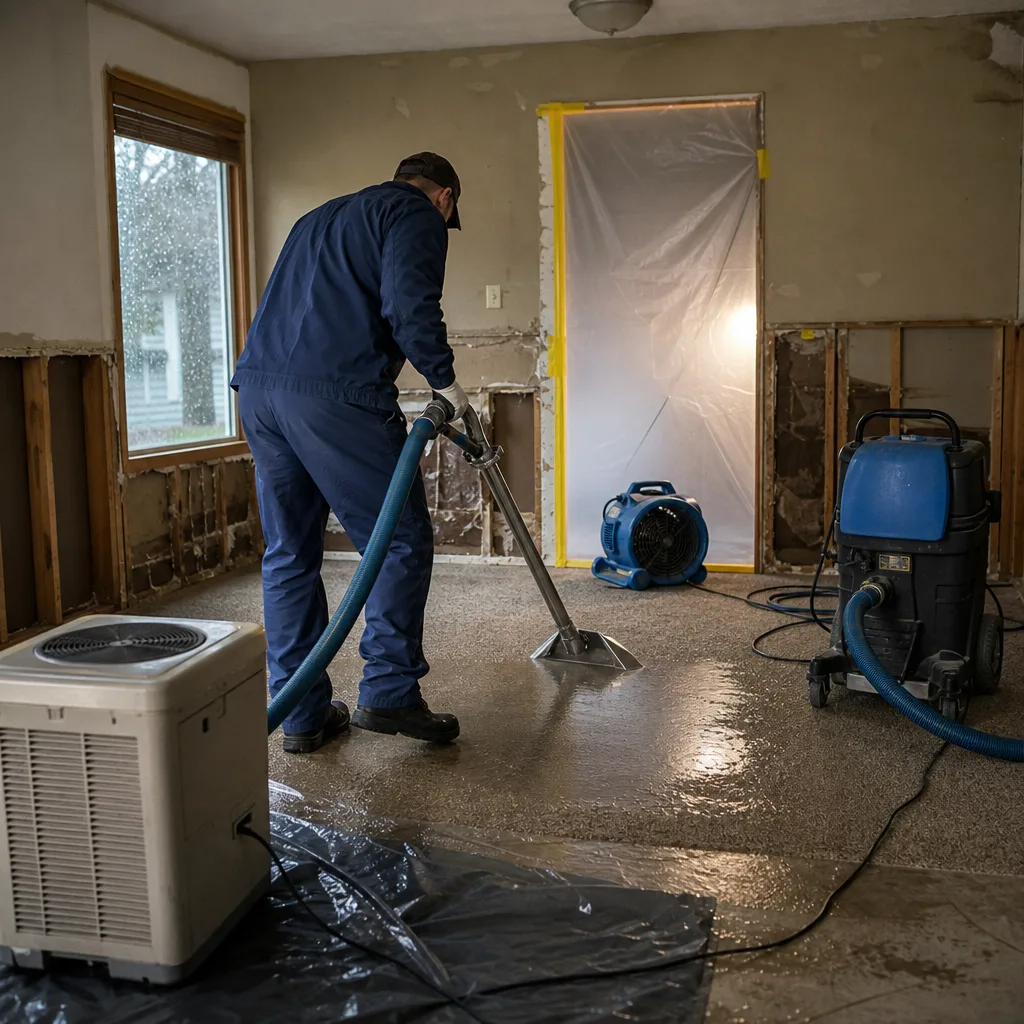
A burst pipe at 2 a.m. on South 188th Street doesn’t wait for business hours. Our emergency extraction crews carry truck-mounted systems from Dri-Eaz and portable units from XPOWER that pull standing water from carpet, tile, and unfinished concrete at rates up to 25 gallons per minute. In SeaTac’s older homes with minimal subfloor vapor barriers, speed matters - water hits the crawl space fast, and clay-heavy soil underneath wicks it back upward. We extract, then we probe the subfloor with moisture meters before we call it done. Typical emergency extraction in SeaTac: $950-$1,800 depending on affected square footage and water category.
Structural Drying & Dehumidification
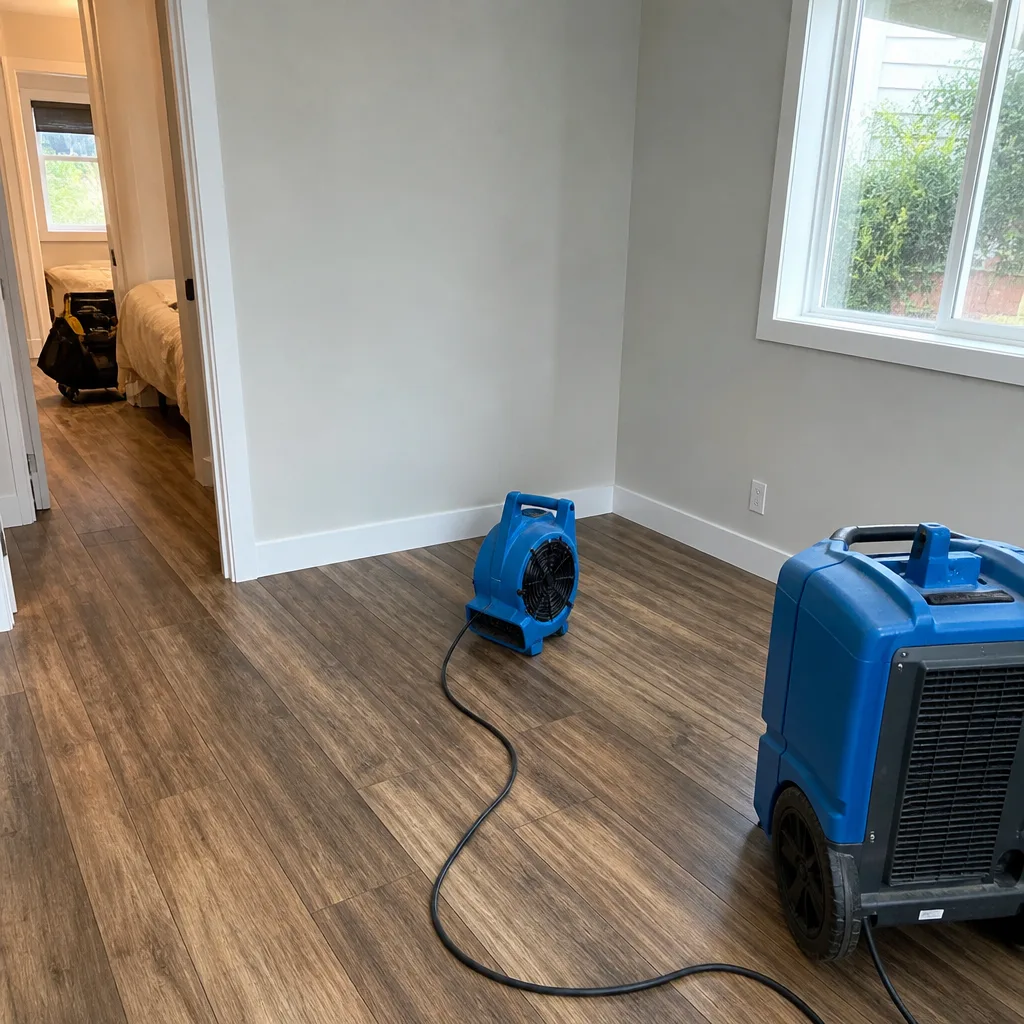
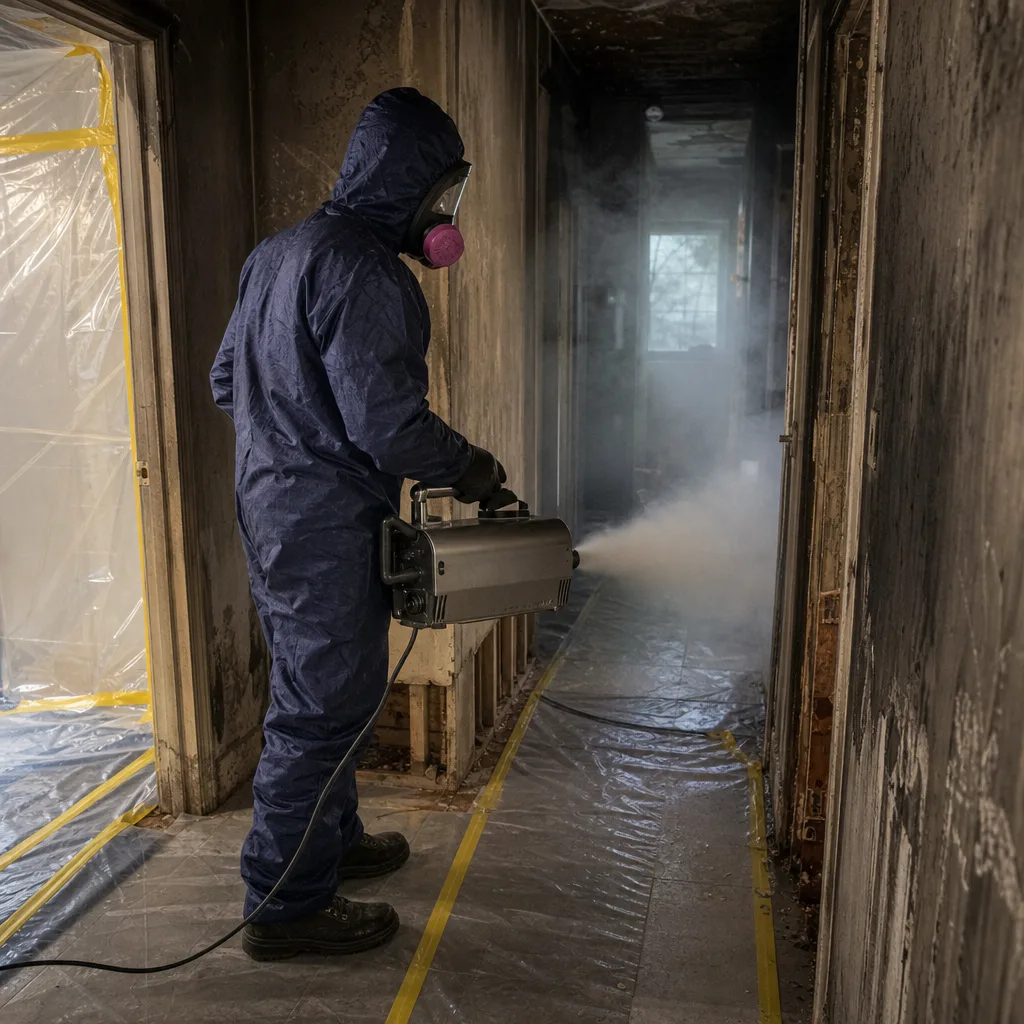
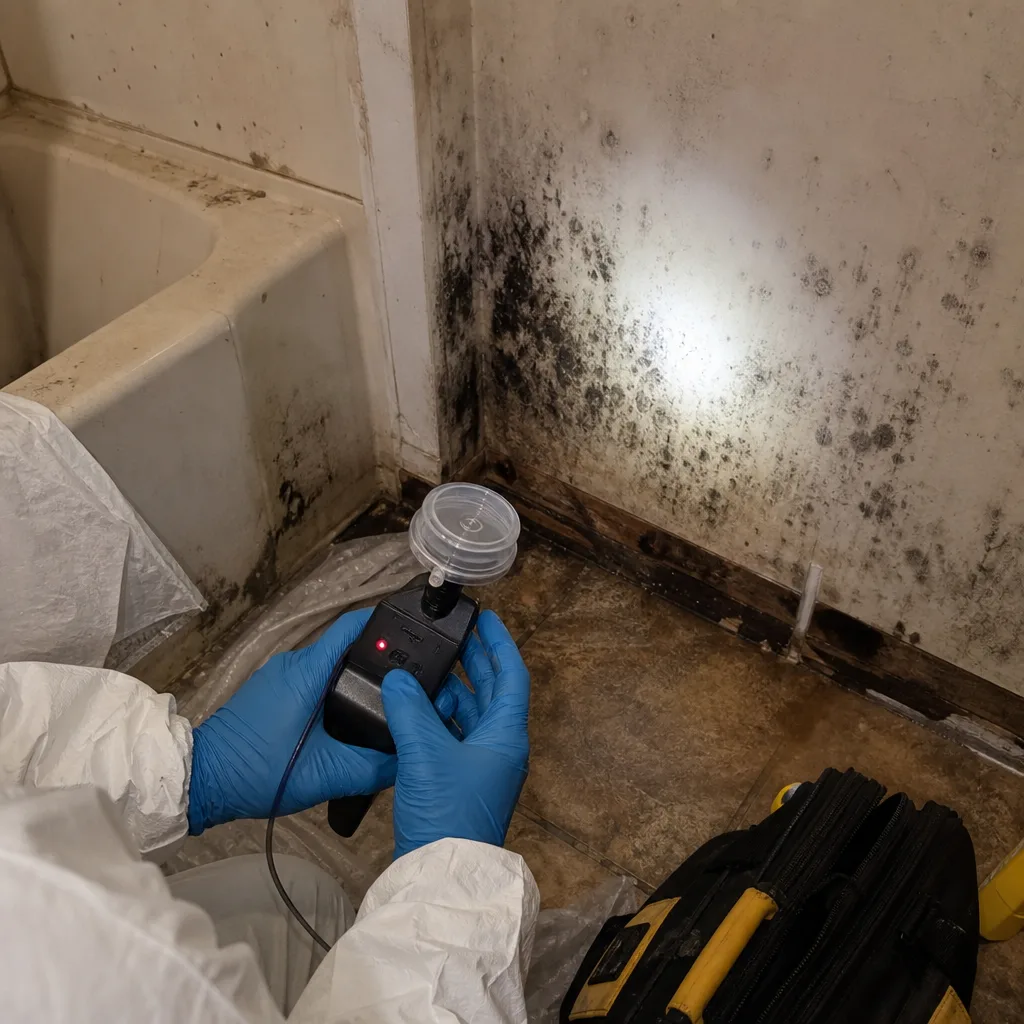
This is where SeaTac’s noise-retrofit envelopes make us work harder than in neighboring cities. Conventional structural drying - air movers pointed at wet drywall - assumes moisture moves through the materials we can see. In a 1967 SeaTac ranch with Port-installed rigid foam over original fiberboard sheathing, the moisture hides in the cavity between old and new. Surface readings look dry. The cavity colonizes mold.
On a 1963 duplex off South 176th Street near the airport, our techs pulled a slow roof-leak call and found the moisture never surfaced - it had migrated behind Port-installed rigid foam and was feeding mold against the original 1960s fiberboard sheathing. We ran moisture mapping through the retrofit cavity, set containment, and used Injectidry and Dri-Eaz air movers with a Phoenix dehumidifier to reach dry standard in a space conventional structural drying can’t reach.
Our drying systems document psychrometric data - temperature, relative humidity, vapor pressure differential - in daily logs that your adjuster can read. Vapor pressure differential is simply the force that drives moisture from wet materials into dry air; we measure it, we control it, we prove we controlled it. Structural drying in SeaTac typically runs $1,800-$4,200 for a standard residential job, with complex retrofit-cavity work at the higher end.
Flood Cleanup
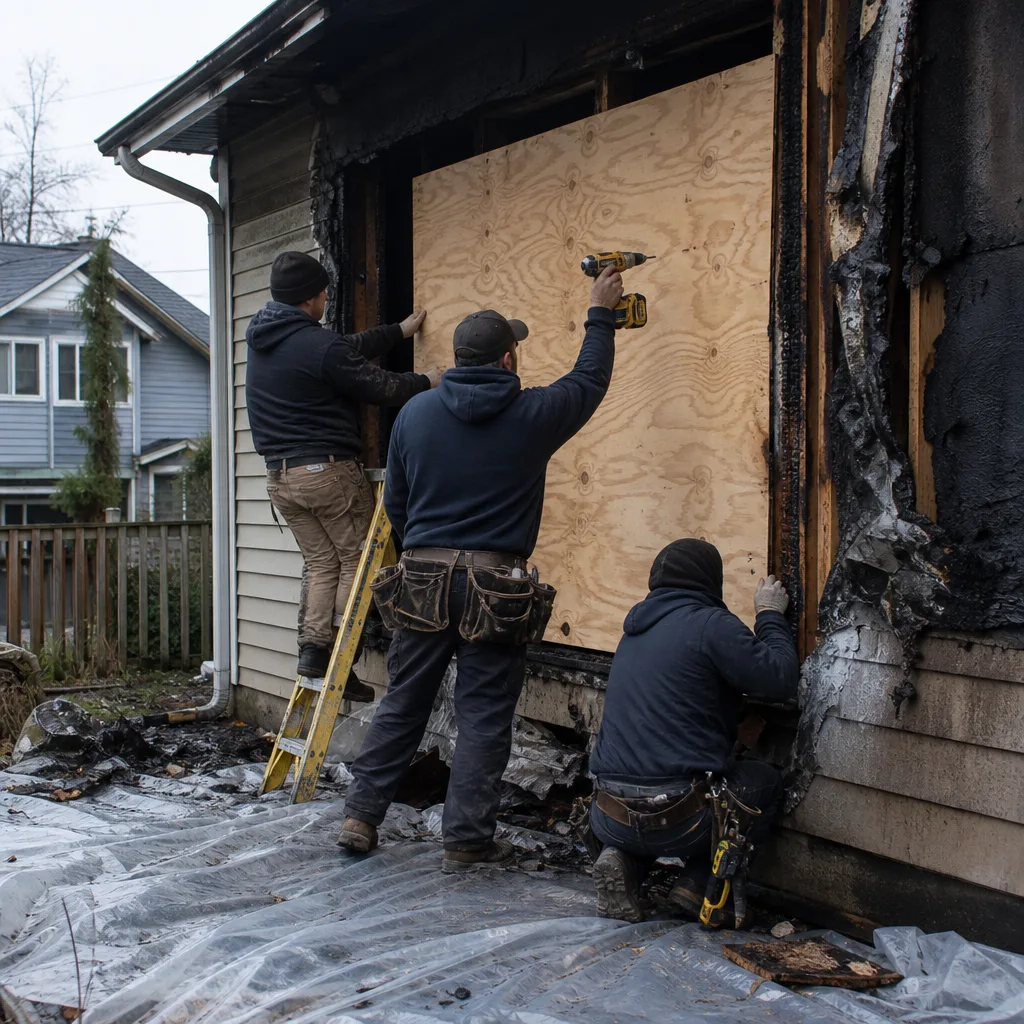
SeaTac’s flat terrain and poorly draining soils mean flash flooding in low-lying pockets around Angle Lake and along the Green River valley tributaries hits crawl spaces and slab foundations hard. Category 3 floodwater - groundwater, sewage backup, or street runoff - carries contaminants that change what we can save. We test, we classify, we document the category in writing before demolition begins. Flood cleanup in SeaTac ranges $3,500-$8,500 depending on contamination level, affected square footage, and whether the crawl space requires full remediation. Every flood job gets a written scope before work starts - Haven Standard, Clause 1.
Burst Pipe Restoration
Original copper and galvanized plumbing in SeaTac’s 1950s-1970s housing stock fails at fittings, at corrosion points, and at stress fractures from the freeze-thaw cycle that hits uninsulated crawl spaces every winter. We extract the water, we dry the structure, and we document the line of migration so your adjuster can see what the pipe failure caused versus what was pre-existing. Burst pipe restoration in SeaTac typically runs $2,200-$5,500 including extraction, drying, and necessary demolition. We also offer a Free Second Opinion on any competitor’s written estimate - bring their scope, we’ll review it at no charge.
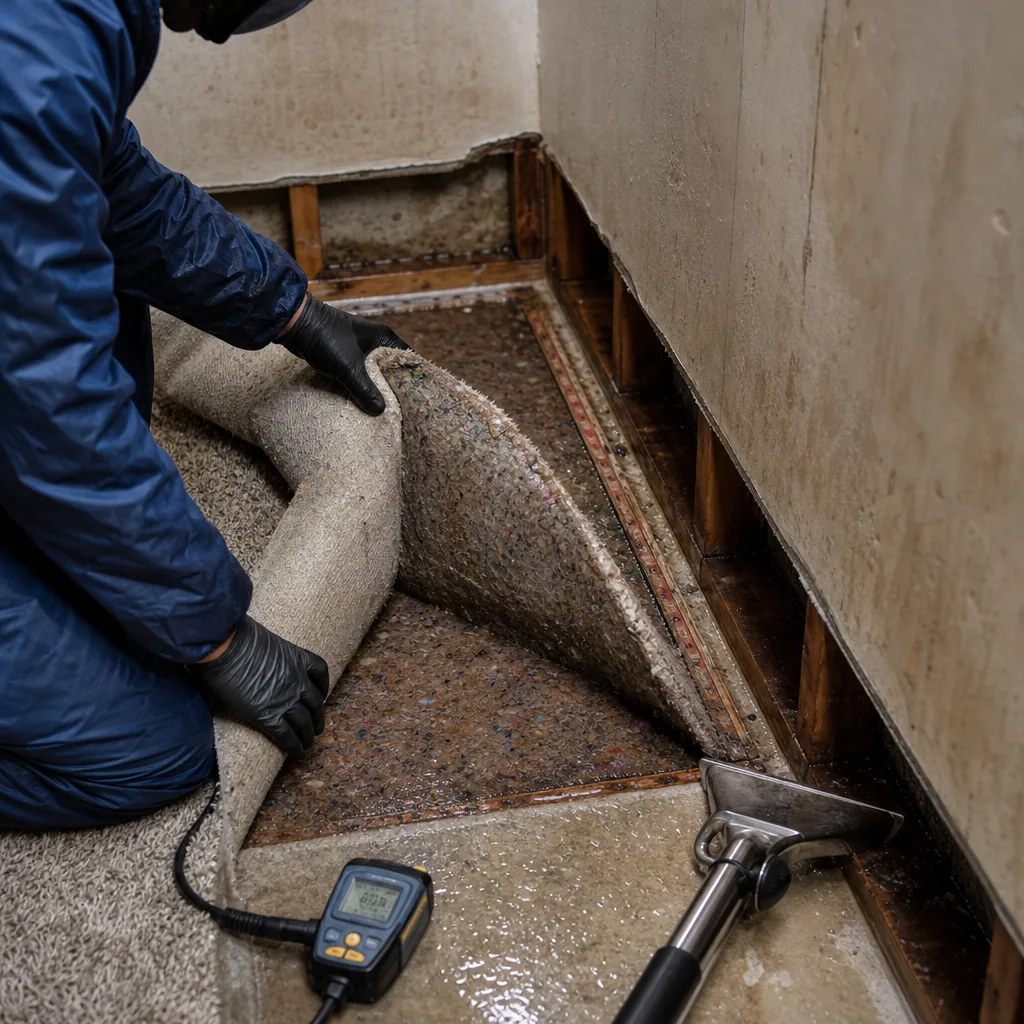
Ceiling & Roof Leak Water Damage
SeaTac’s 38 inches of annual rainfall, concentrated October through May, finds every compromised roof membrane and failed flashing. In noise-retrofit homes, the leak path is especially deceptive - water travels along the original roof deck, hits the added insulation layer, and spreads laterally before any stain shows on the ceiling below. We use thermal imaging to trace the full migration path, then we dry the cavity without tearing out finished surfaces unnecessarily. Ceiling and roof leak restoration in SeaTac: $1,600-$4,800 depending on cavity access and whether the retrofit insulation requires removal and replacement.
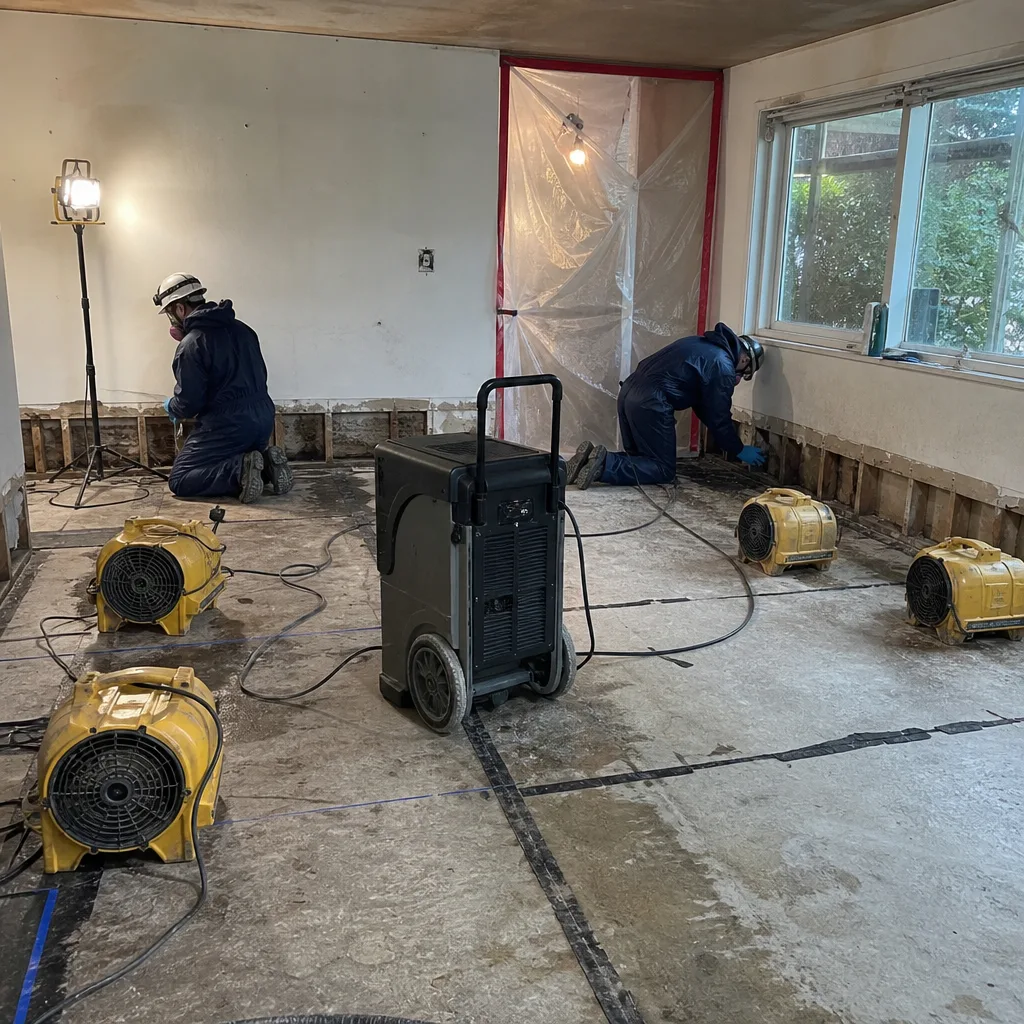
Basement Water Removal
Full basement water removal in SeaTac is less common than crawl space work - many homes here were built on slab or cripple-wall foundations - but where basements exist, they sit close to that high water table. We deploy submersible pumps, wet/dry extraction, and continuous dehumidification with daily moisture logs until the space hits dry standard. Basement water removal: $1,200-$3,200.
What happens when you call
- 1
A real person answersNo phone trees - you reach a local pro.
- 2
You get an upfront price rangeHonest numbers before anyone is dispatched.
- 3
A background-checked tech heads outLicensed & insured, dispatched right away.
- 4
You approve before work beginsNothing starts until you say go.
BeforeAfterTrusted Brands We Service in SeaTac
Our equipment fleet runs on Dri-Eaz, Phoenix, and Injectidry systems - the same names your adjuster’s preferred vendor list probably includes. We don’t rent equipment for your job; we own it, we maintain it, we document its calibration. For SeaTac homeowners, that means no waiting for a rental house to open up during a regional storm event. Our Phoenix 200 MAX dehumidifiers and Dri-Eaz Revolution LGR units are staged locally, ready to deploy. When every hour of delay means more moisture migration behind that Port-installed insulation, local equipment inventory isn’t a convenience. It’s the difference between a salvageable cavity and a full gut.
Common Water Damage Restoration Problems We See in SeaTac Homes
- Hidden cavity mold behind noise-retrofit insulation. The gap between new rigid foam or fiberglass batts and original 1960s fiberboard sheathing becomes a moisture trap that surface readings miss. We find it with borescopes and thermal imaging, then dry it with targeted injection systems.
- Recurring groundwater in crawl spaces on clay-dense soils. SeaTac’s glacial till doesn’t drain; it ponds. Extraction alone won’t solve it. We identify the source, document it with photos, and design drying protocols that account for ongoing vapor drive from below.
- Failed original plumbing in 1950s-1970s housing stock. Galvanized steel supply lines and original copper with pinhole corrosion burst without warning. We map the water migration path to prove causation for your claim.
- Drying against 80%+ ambient humidity October through May. SeaTac’s wet season means outdoor air is often wetter than the structure we’re trying to dry. We seal the envelope, dehumidify aggressively, and never rely on air movers alone.
Pricing for Water Damage Restoration in SeaTac, WA
We publish ranges because Haven Standard, Clause 1 requires a written price before work starts - and that price should never be a surprise.
| Service | Typical Range in SeaTac |
|---|---|
| Emergency Water Extraction | $950 - $1,800 |
| Structural Drying & Dehumidification | $1,800 - $4,200 |
| Flood Cleanup (Category 3) | $3,500 - $8,500 |
| Burst Pipe Restoration | $2,200 - $5,500 |
| Ceiling & Roof Leak Damage | $1,600 - $4,800 |
| Basement Water Removal | $1,200 - $3,200 |
| Full Water Damage Restoration (typical residential) | $2,800 - $6,500 |
What moves a job toward the high end: Category 3 contamination requiring PPE and disposal protocols; hidden moisture in retrofit cavities needing injection drying; crawl spaces with active groundwater requiring ongoing vapor management; and any job where asbestos or lead testing is indicated in pre-1978 construction. What keeps costs controlled: fast notification, clear access, and accurate initial moisture mapping that prevents scope creep.
Every estimate is free. Every written scope is delivered before work begins. Call (425) 671-5392 for exact pricing on your specific situation.
We Also Serve Cities Near SeaTac
Our crews respond daily throughout the metro area. If you’re searching for Water Damage Restoration in SeaTac and need service in surrounding communities, we also handle jobs in Seattle, Kirkland, Bellevue, and Manchester with the same documentation standards and written pricing. Dispatch is coordinated from our Seattle office, but the crew that arrives at your door knows your neighborhood’s soil, housing stock, and common failure modes.
Serving SeaTac, WA - Our Local Coverage Area
We’re based in the SeaTac area and know this community well. Use the map below to see our service coverage - if you’re nearby, we can almost certainly help.
FAQs - Water Damage Restoration in SeaTac
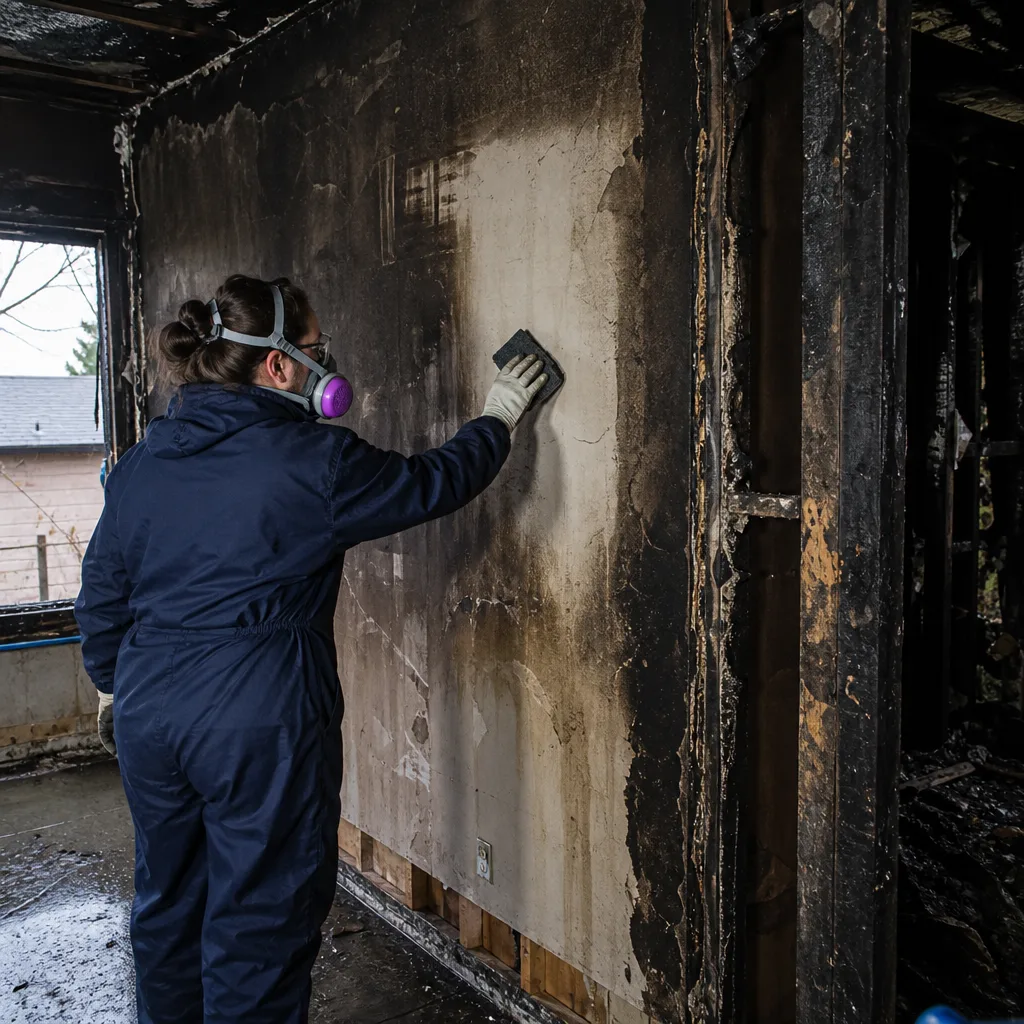
SeaTac’s Port of Seattle noise-insulation retrofits tightened thousands of homes that were originally built to breathe, trapping moisture in wall cavities where conventional drying can’t reach. The retrofit cavity between new insulation and original fiberboard sheathing requires targeted injection drying and extended dehumidification that Burien or Tukwila homes - with fewer retrofits per block - rarely need. We document the extended timeline in your drying log so your adjuster understands why the job took the time it took. Call (425) 671-5392 for a free assessment of your specific cavity conditions.
Mold colonization begins 24-72 hours after water intrusion in SeaTac’s tight-envelope homes, faster than the 48-96 hour window typical in older, draftier construction. The retrofitted insulation creates a warm, humid cavity with no airflow - ideal conditions for spore germination. We treat any water damage in a noise-retrofit home as a potential mold job from day one, running cavity probes and air sampling as standard protocol. If you suspect a slow leak, call (425) 671-5392 - waiting for visible mold in these homes means the cavity is already colonized.
Yes. Category 1 clean water - burst supply lines, tub overflows - allows us to save most structural materials if we extract within hours. Category 2 gray water - dishwasher discharge, washing machine leaks - requires removal of porous materials like carpet pad and lower drywall. Category 3 black water - groundwater flooding, sewage backup, street runoff - mandates removal of all porous materials and antimicrobial treatment of structural elements. SeaTac’s frequent crawl space groundwater intrusion often tests as Category 3, which we confirm with lab analysis before writing your scope. The category determines the salvageability, and we document the classification in writing before demolition begins.
It looks like nothing - until it doesn’t. Surface drywall and paint often appear normal while the cavity between Port-installed rigid foam and original fiberboard sheathing grows dense mold colonization. Homeowners notice a musty odor that doesn’t match any visible stain, or they see paint bubbling at seams where cavity moisture finally breaches the finish layer. We find it with thermal imaging (temperature differentials where wet insulation conducts differently) and borescope inspection through a quarter-inch probe hole. If your SeaTac home was retrofitted and you smell mold without seeing it, the cavity is the first place we look. Call (425) 671-5392 for cavity moisture mapping.
Clay-dense glacial till soils and a high water table in SeaTac’s low-lying areas - particularly around Angle Lake and the Green River valley margins - prevent natural drainage. Water that pools in these soils has nowhere to go but through foundation cracks and vapor-barrier gaps into the crawl space. Even after extraction, capillary action wicks moisture back up through the soil contact layer. We address this with vapor-barrier assessment, perimeter drainage evaluation, and dehumidification protocols designed for ongoing vapor drive - not just the initial flood event. Our drying logs document groundwater versus incident water so your claim covers the right scope.
Written by Alicia Brennan, Owner at Back to Dry Restoration, serving SeaTac since 2011.