
Free visual inspection and a written scope of work before any mitigation begins - photos, moisture readings, and drying logs go in your claim file
The scope we write is the scope we bill. Anything new gets shown to you, in writing, before we touch it.
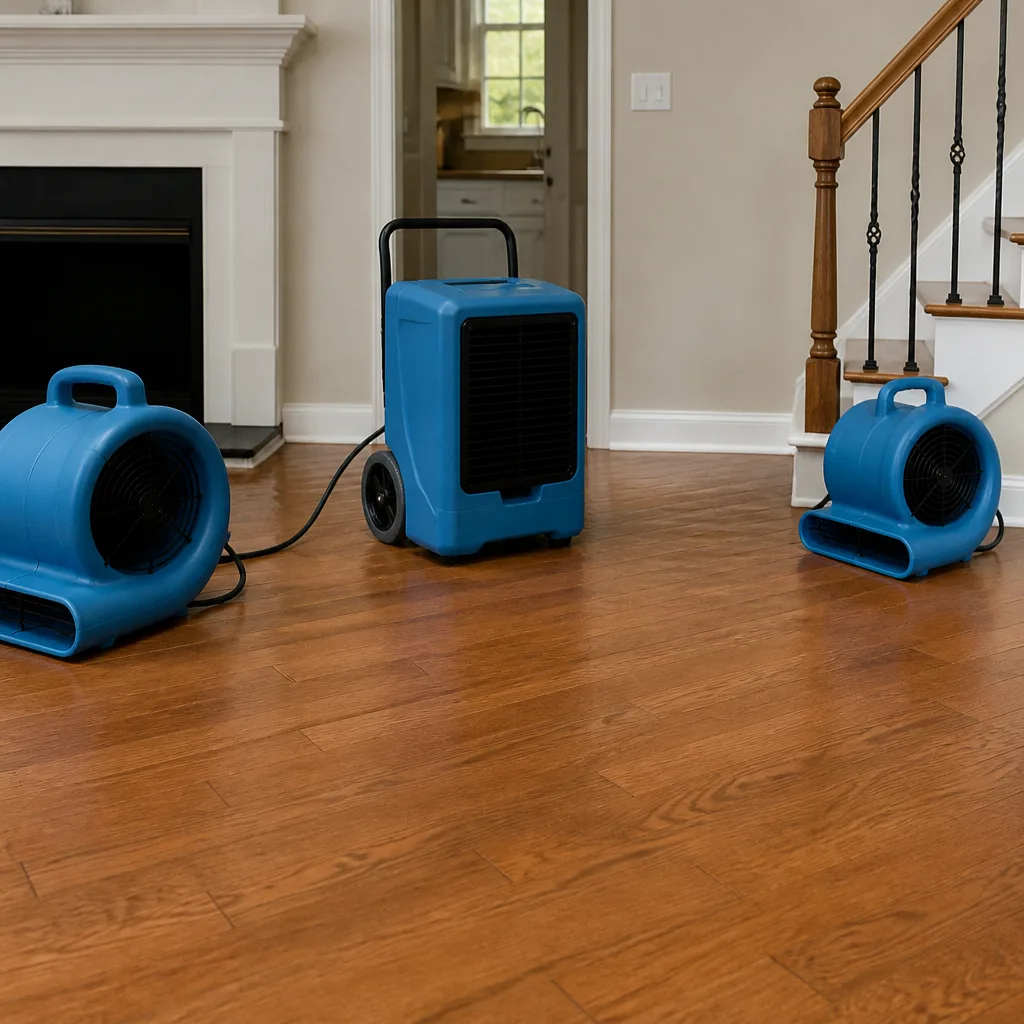
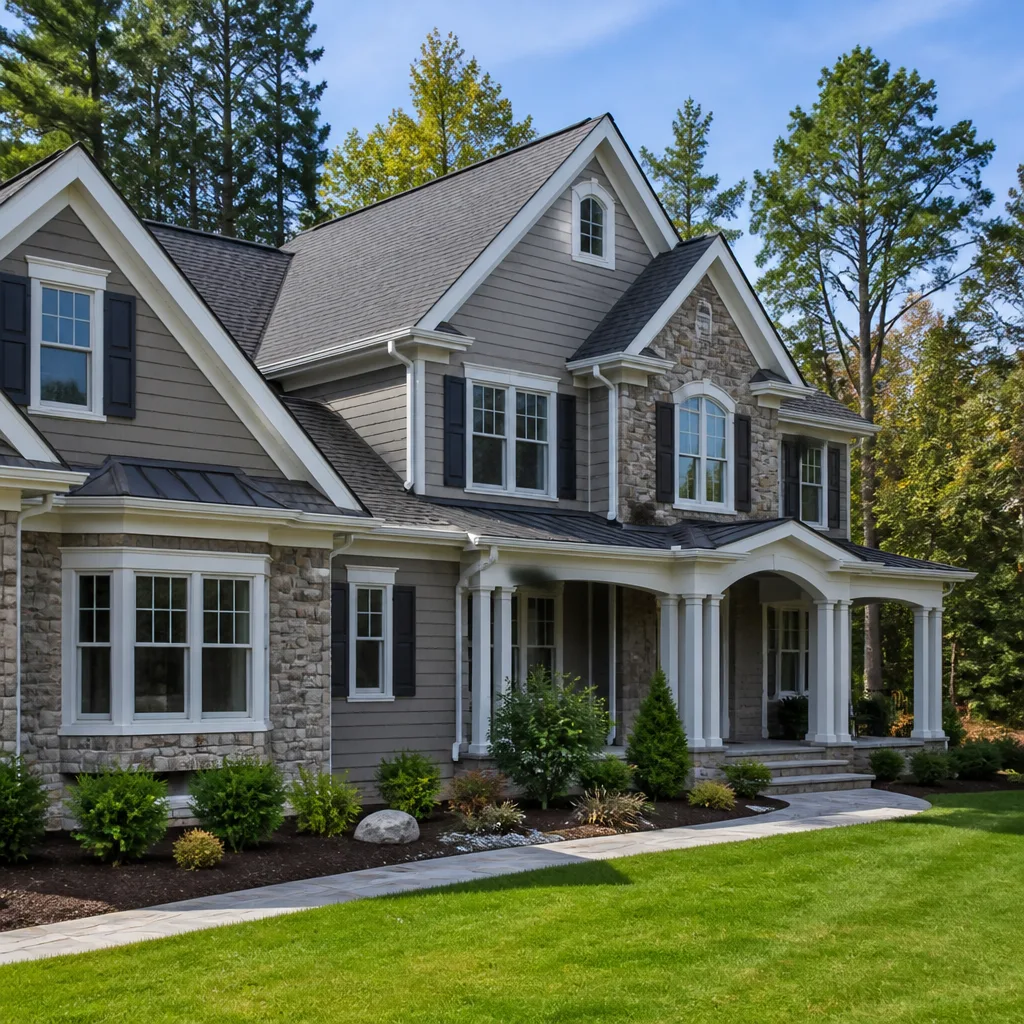
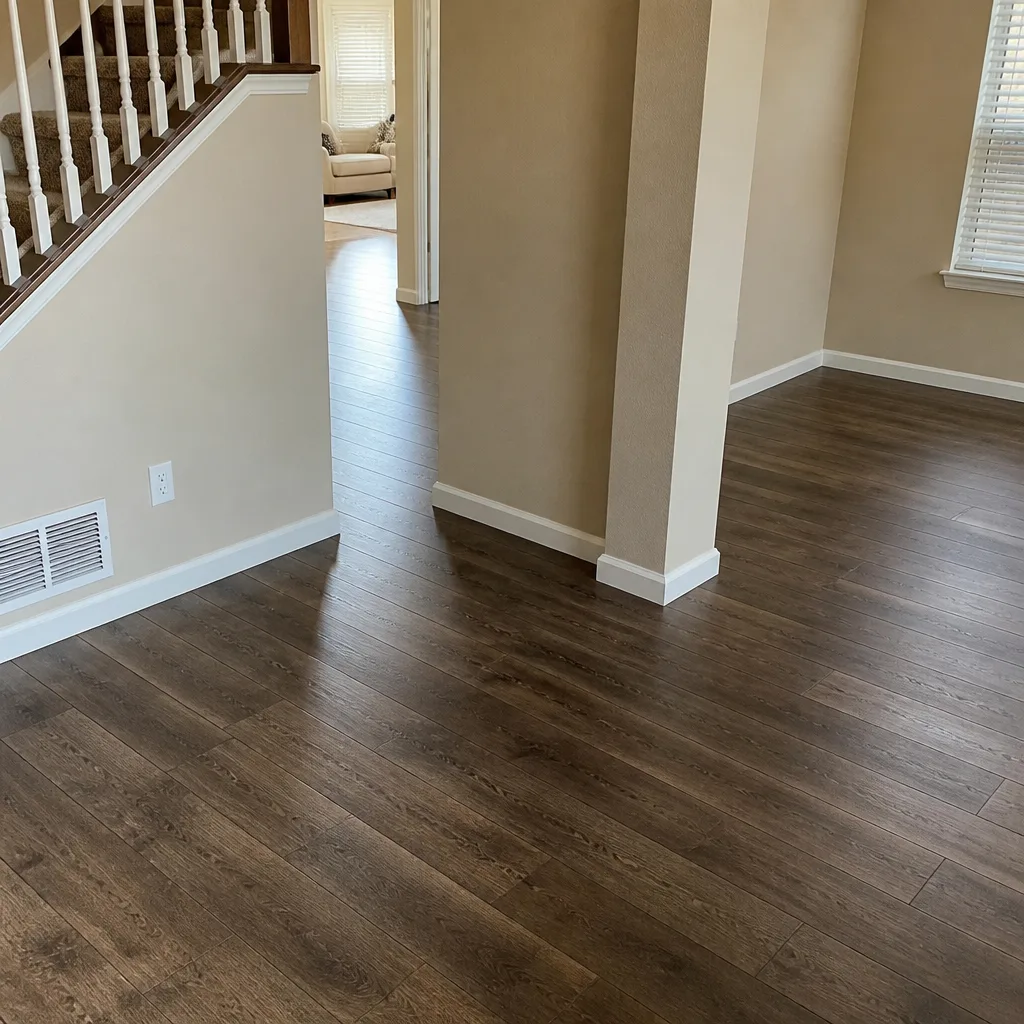
 Before
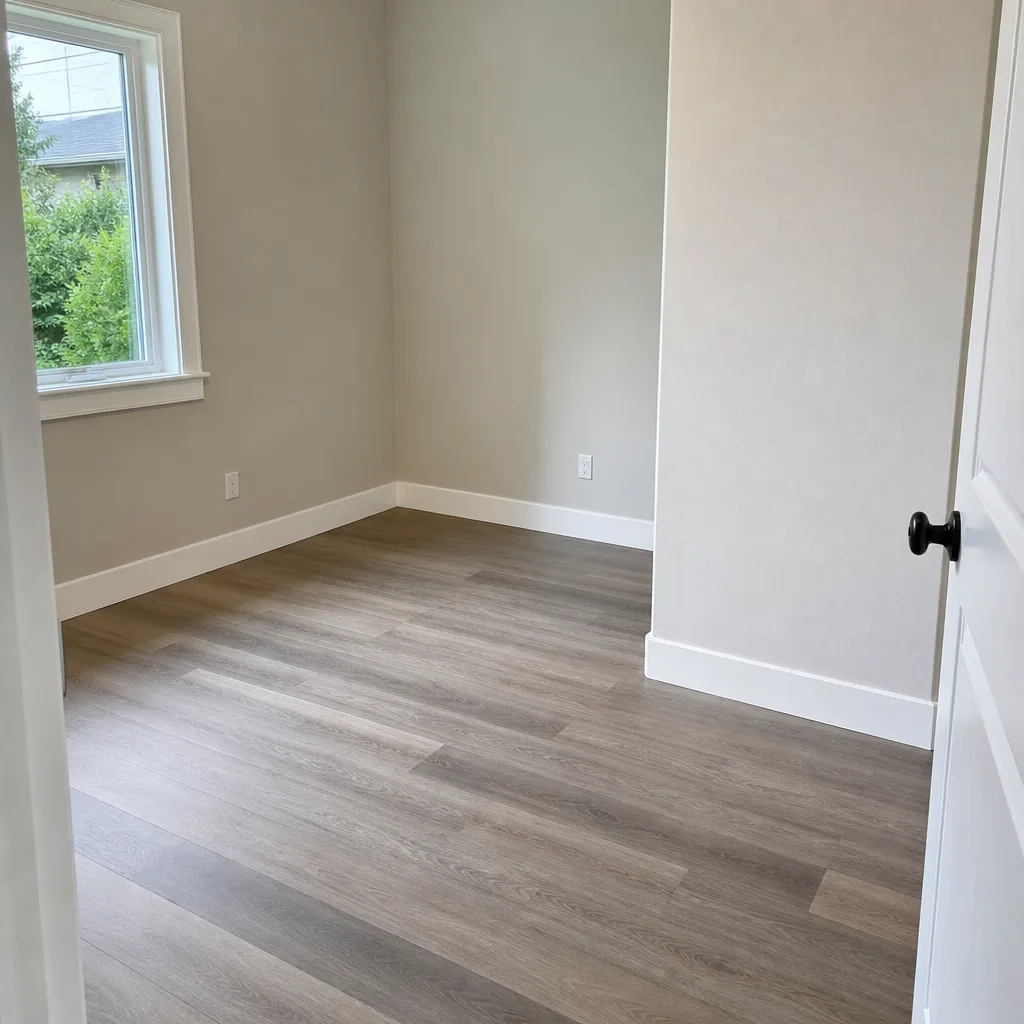 After
After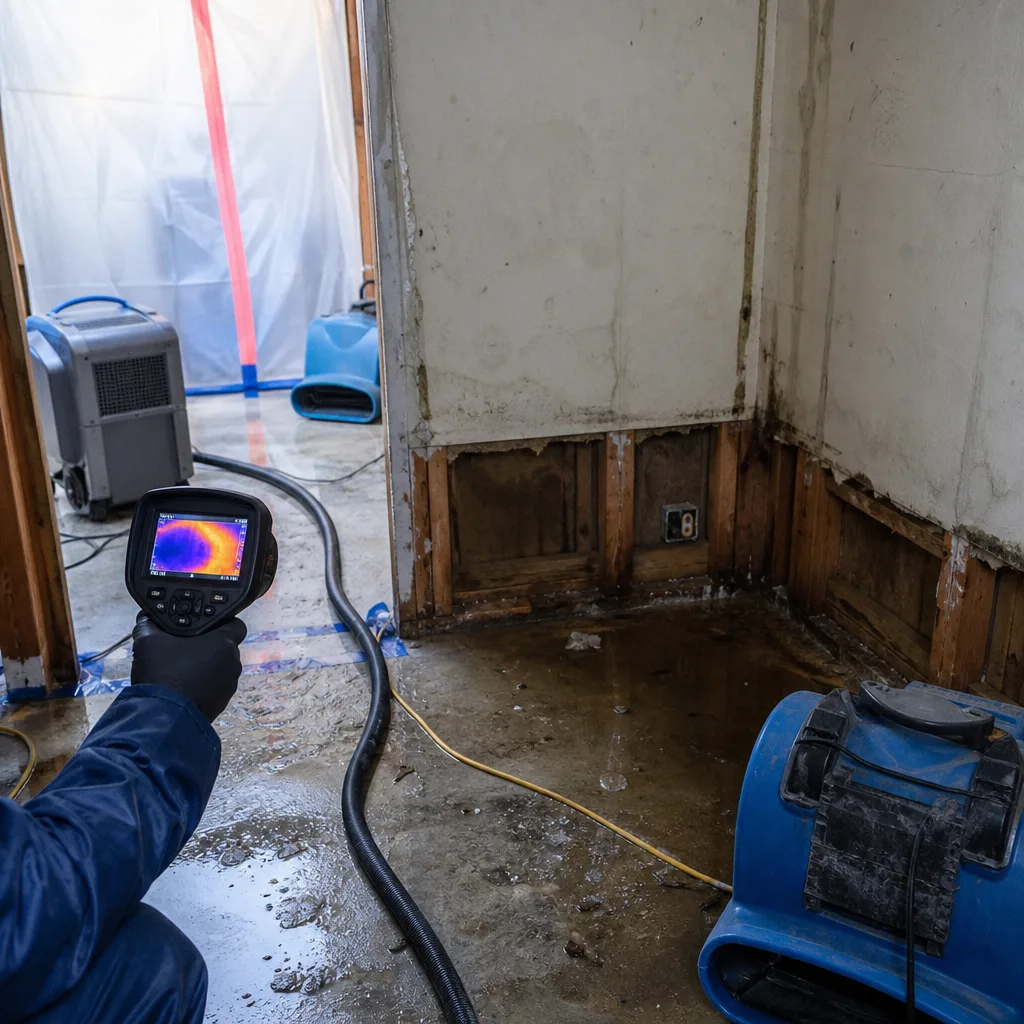 Before
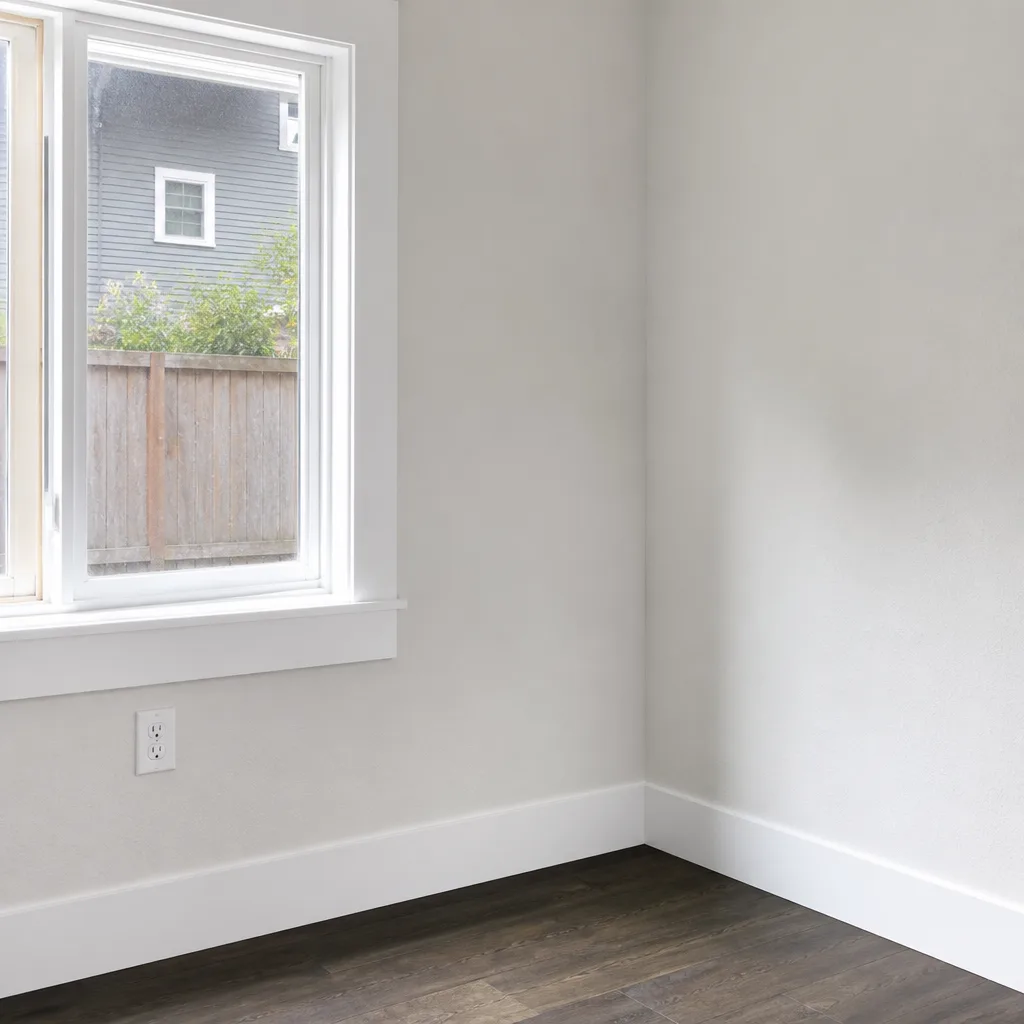 After
After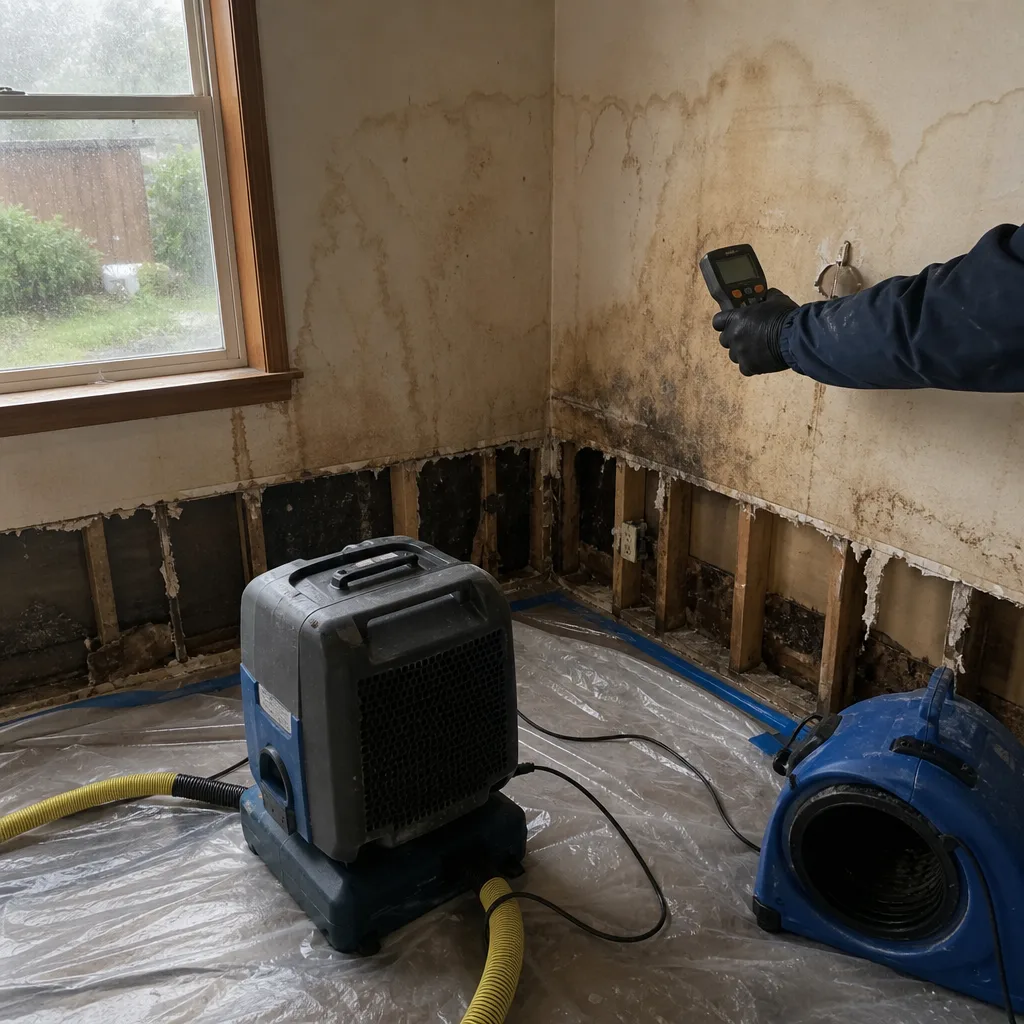 Before
 After
AfterFast, Reliable Mold Remediation Across Kent
Mold remediation in Kent typically costs $1,800-$4,500 for residential crawl spaces and $3,500-$8,000 for Category 3 biohazard jobs tied to sewage intrusion. Most Kent inspections are scheduled within 24 hours, with containment and removal starting as soon as the written scope is signed.
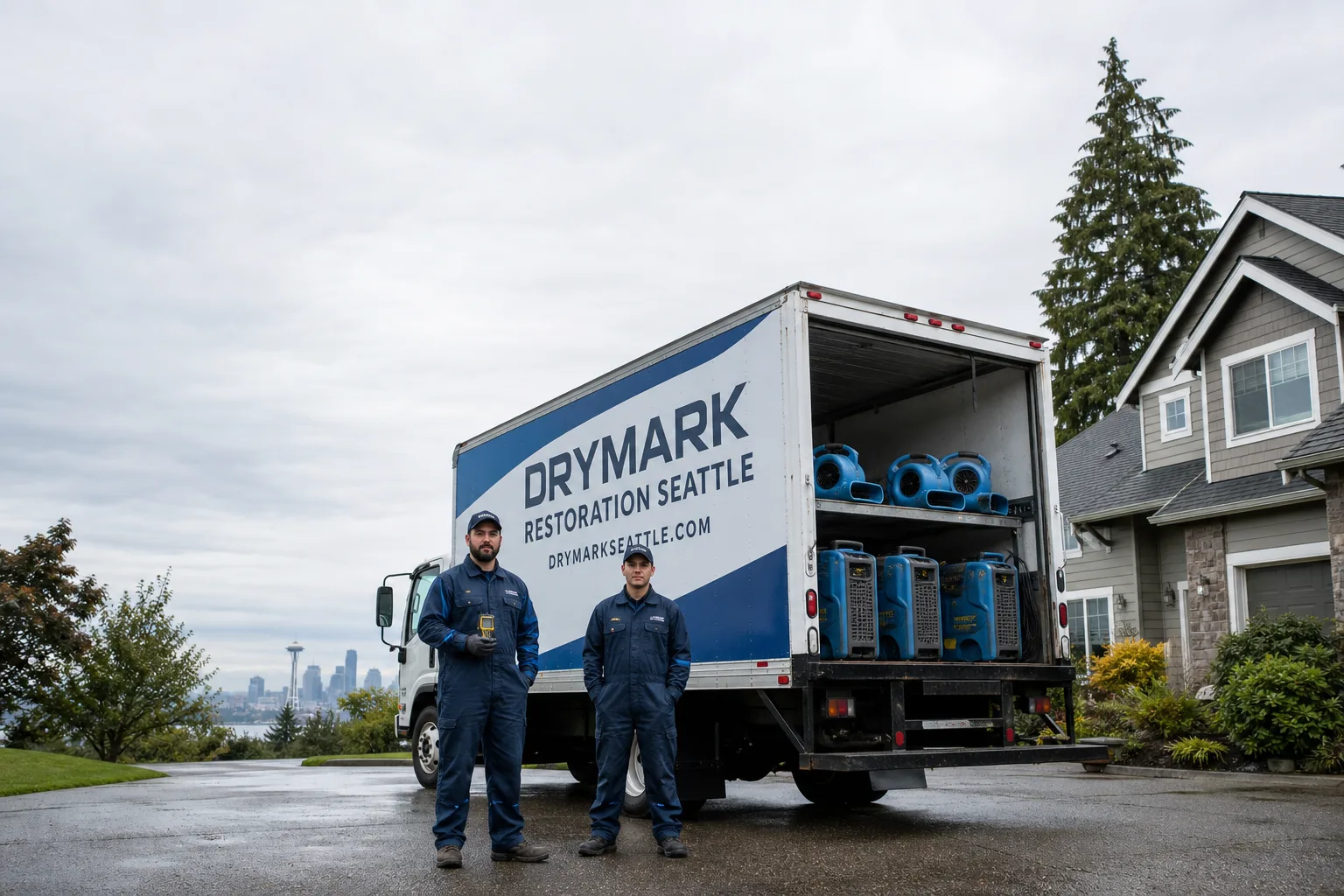
We serve Kent from our Seattle office, with crews on East Hill, West Hill, and the valley floor daily. Kent’s Green River Valley location and its concentration of 1970s-1990s tract homes with crawl-space foundations create mold conditions that differ from neighboring suburbs. The clay-loam soils on the hills shed water into the basin fast, and those original 1980s ABS drain pipes under East Hill homes crack with age, feeding Category 3 moisture into enclosed spaces for months before anyone notices. We know the difference between a surface mold call and a subfloor sewage job, and we document it before we quote. Call (425) 671-5392 for a free inspection with a written price before any work starts, Haven Standard, Clause 1.
Why DryMark Restoration Seattle Is Kent’s Preferred Mold Remediation Company
Kent homeowners measure contractors by what they can show, not what they claim. Our photo-documented assessments, written scopes, and daily moisture logs turn remediation invoices into claims insurers pay without dispute. We’ve restored 12,000+ homes since 2011, every one with a written price before work started and a documented record when the crew left.
Our response time to Kent neighborhoods averages same-day for inspection calls. East Hill, West Hill, the valley floor near Kent Station, and the Meridian corridor are all in our regular rotation. Technicians are background-checked, uniformed, and licensed, with license numbers provided on request. A live person answers every call, 24 hours a day, 7 days a week, no voicemail trees.
We coordinate closely with Kent homeowners’ insurance adjusters. Photo documentation starts at arrival and continues through every visit. Direct adjuster coordination is standard, not an upsell. And our Free Second Opinion on Any Written Estimate means you can bring a competitor’s quote and we’ll review it at no charge.
Our Mold Remediation Services in Kent
Mold Inspection & Testing in Kent
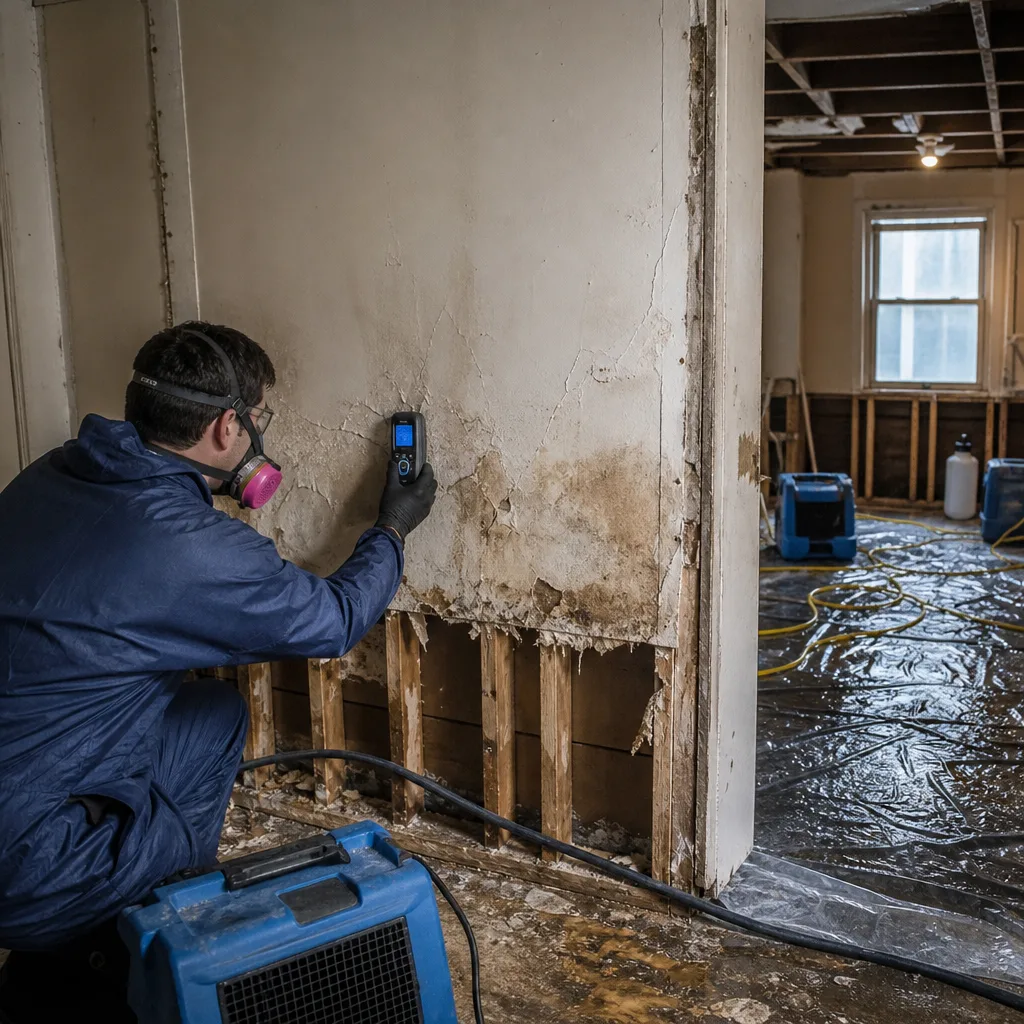
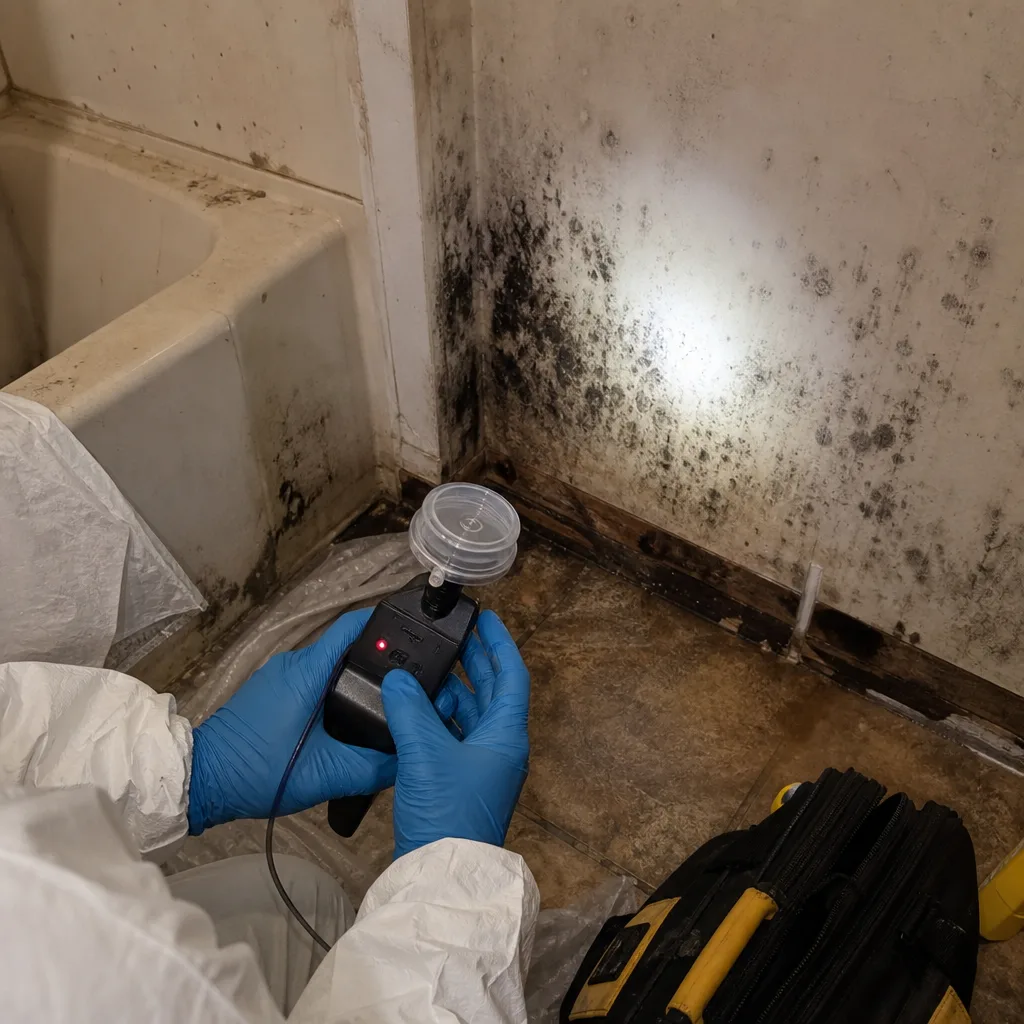
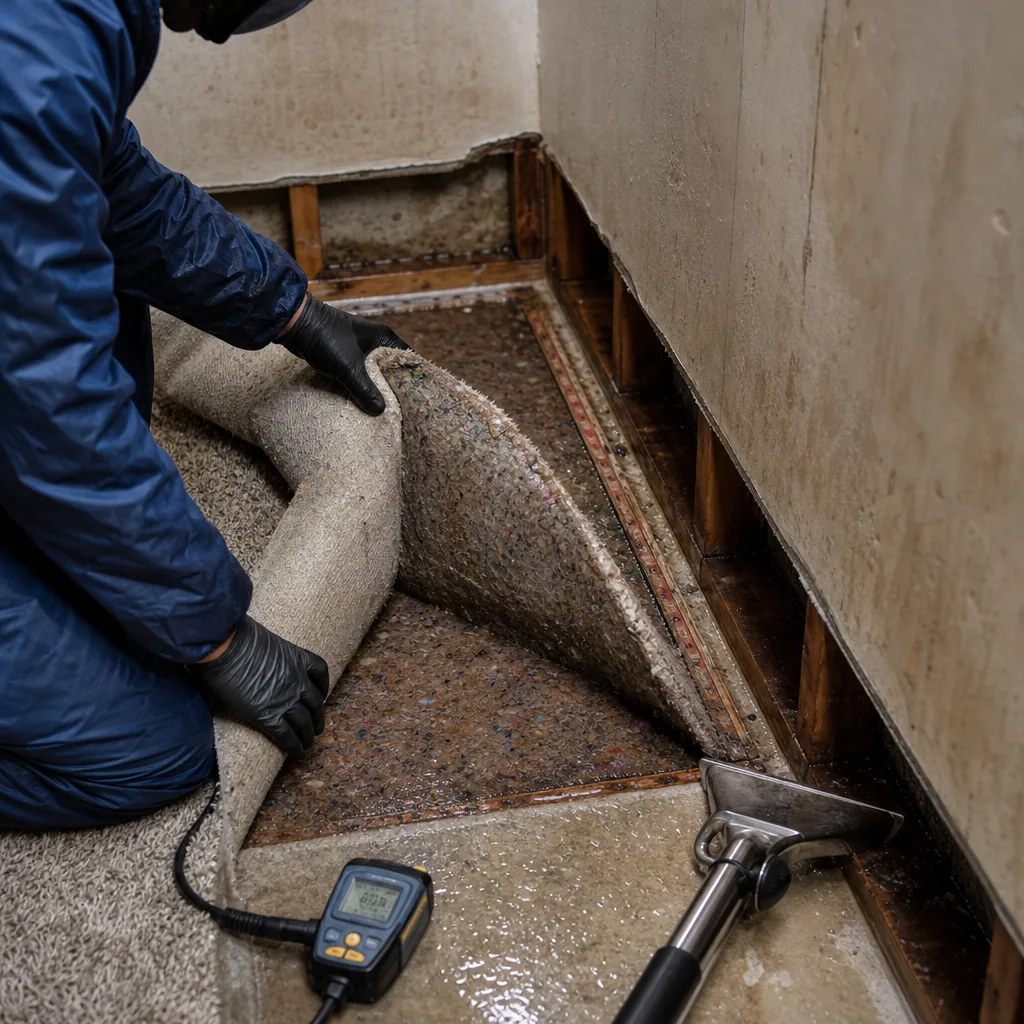
Every Kent inspection begins with moisture mapping, not a visual guess. We use thermal imaging and penetrating moisture meters to find hidden saturation in subfloors, wall cavities, and crawl-space joists. In Kent’s 1980s East Hill homes, we specifically check for cracked black corrugated ABS drain pipe, the failure mode that turns a “mold smell” call into a Category 3 biohazard job. Air sampling and surface swabs go to a third-party lab; we don’t self-certify clearance. You’ll receive the lab report, the moisture readings by room, and a written scope with a fixed price before any remediation starts.
Mold Removal in Kent
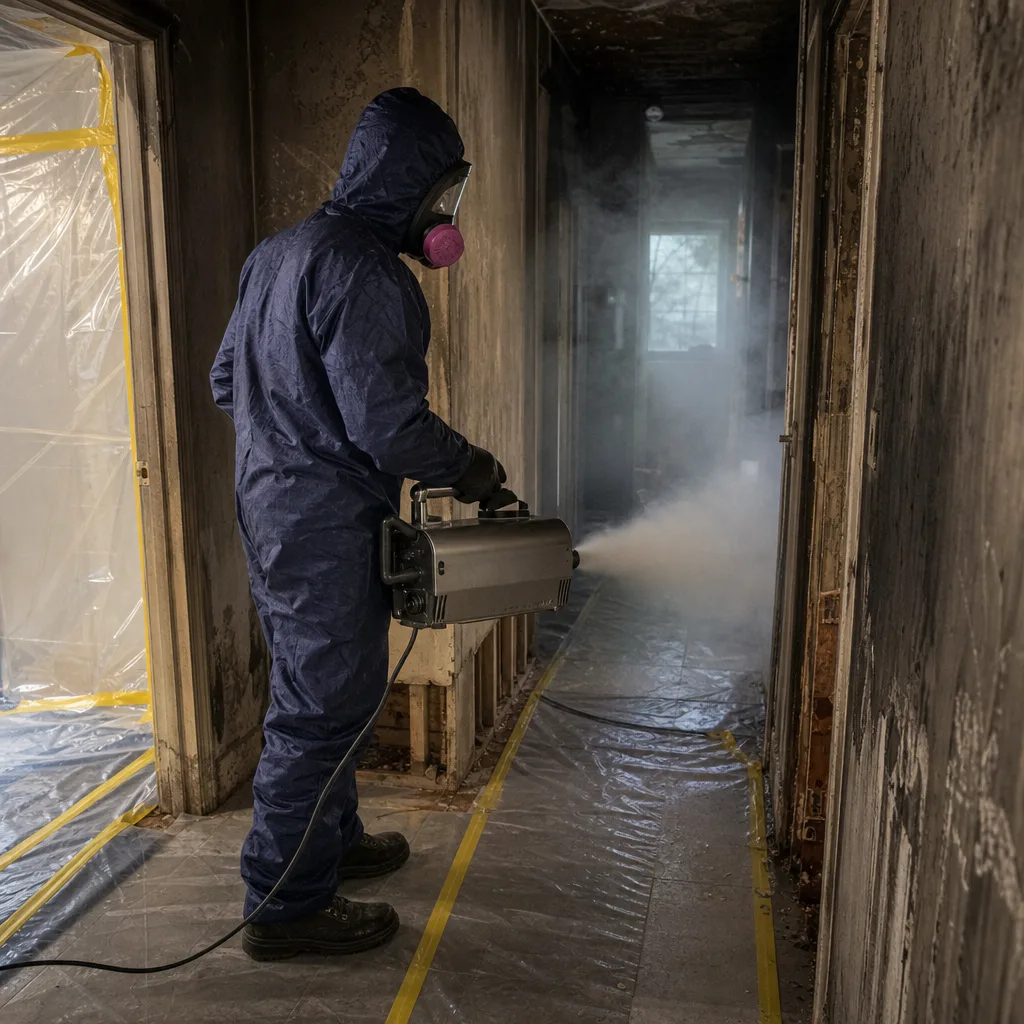
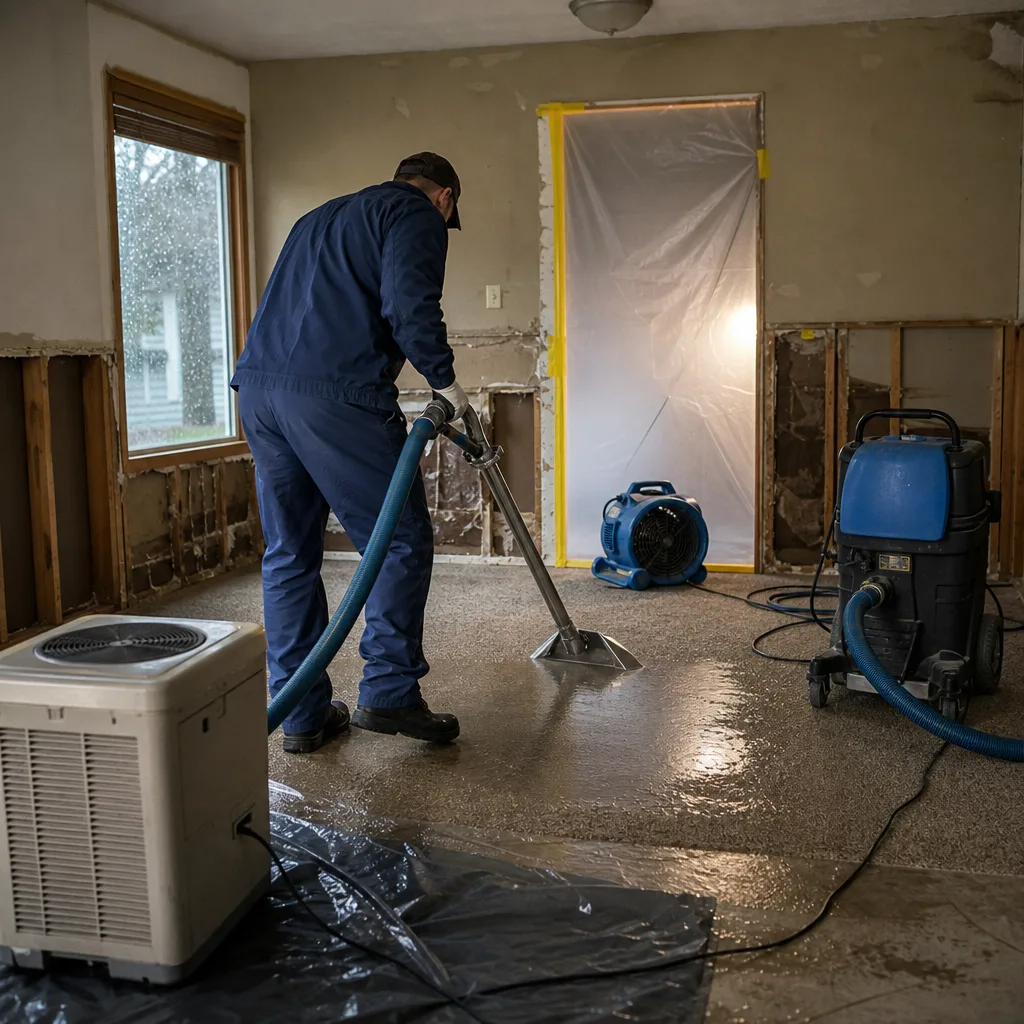
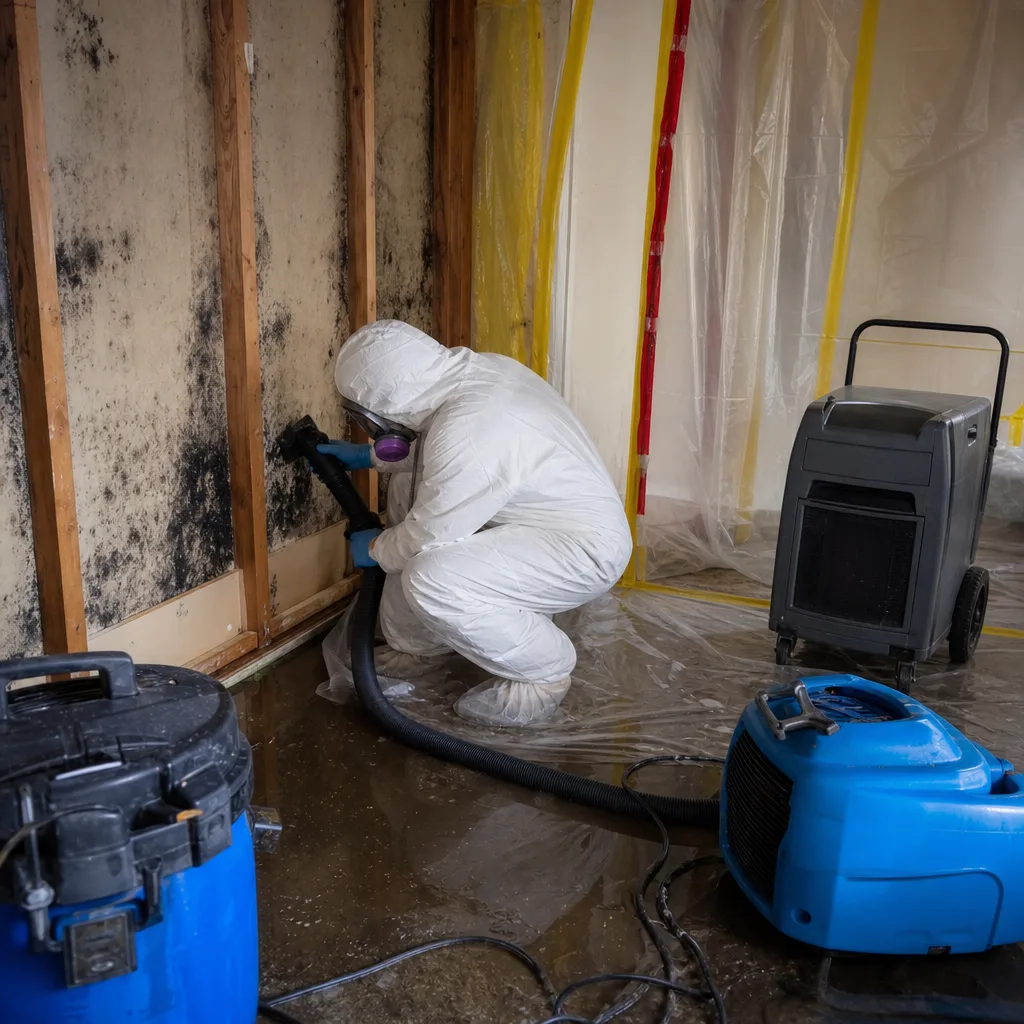
Removal in Kent means containment first, always. Negative air machines with HEPA filtration seal the work zone before disturbed spores migrate to living spaces. On East Hill split-levels, we often find mold extending past the visibly stained area because cracked ABS pipe has been seeping for months. We remove contaminated drywall, insulation, and subfloor material to the extent the moisture map demands, not an inch less or more. Antimicrobial treatment follows removal, with dwell-time documentation per IICRC standards. Every bagged load is manifest-tracked for proper disposal.
Black Mold Remediation in Kent
Stachybotrys and other toxigenic molds in Kent are almost always linked to chronic moisture, not a single event. The Green River Valley’s FEMA Special Flood Hazard Area status means soil saturation persists weeks after storms, and vapor barriers in 40-year-old crawl spaces have often failed or were never installed. Black mold remediation here requires full containment, personal protective equipment with respirators, and specialized antimicrobial agents. We document spore counts before and after, and no Kent job clears without third-party verification.
Air Quality Restoration in Kent
After remediation, Kent homes need more than “it smells better.” We run post-remediation air sampling to verify spore counts at or below outdoor baseline levels for the Kent area. HEPA air scrubbers run during and after work, with filter-change documentation. For homes near I-5, the valley floor distribution centers, or other particulate sources, we note local air quality context in our report so your documentation is complete for any future claim.
Crawl Space Treatment in Kent
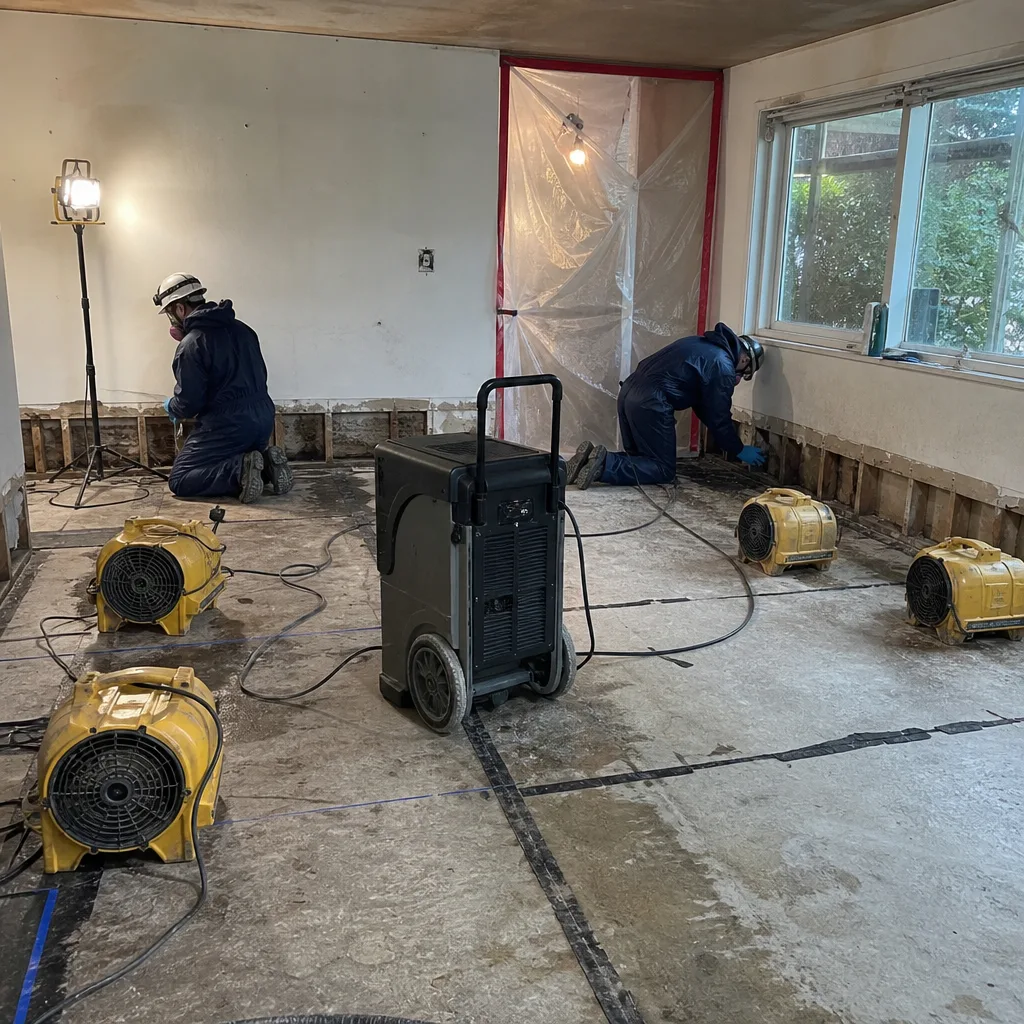
This is where Kent differs from every nearby suburb. East Hill’s 1980s tract homes with original black corrugated ABS drain pipe create a recurring failure mode: cracked sewage lines feed Category 3 moisture into enclosed crawl spaces for months. We treat this as biohazard remediation, not surface cleaning. Containment, removal of contaminated material, antimicrobial treatment, and structural drying with Injectidry mats and Dri-Eaz dehumidification follow. We replace the failed drain line or coordinate with your plumber, then install or repair vapor barriers to prevent re-wetting from the valley’s saturated soils.
Moisture & Humidity Control in Kent
Kent’s 38-40 inches of annual rain, concentrated October through April, keeps crawl spaces and basements damp even without active leaks. We install permanent dehumidification and grade vapor barriers to spec, with humidity sensors that feed data to your drying log. For valley-floor homes, we specifically address hydrostatic pressure from clay-loam soil saturation, not just airborne moisture.
What happens when you call
- 1
A real person answersNo phone trees - you reach a local pro.
- 2
You get an upfront price rangeHonest numbers before anyone is dispatched.
- 3
A background-checked tech heads outLicensed & insured, dispatched right away.
- 4
You approve before work beginsNothing starts until you say go.
BeforeAfterTrusted Brands We Service in Kent
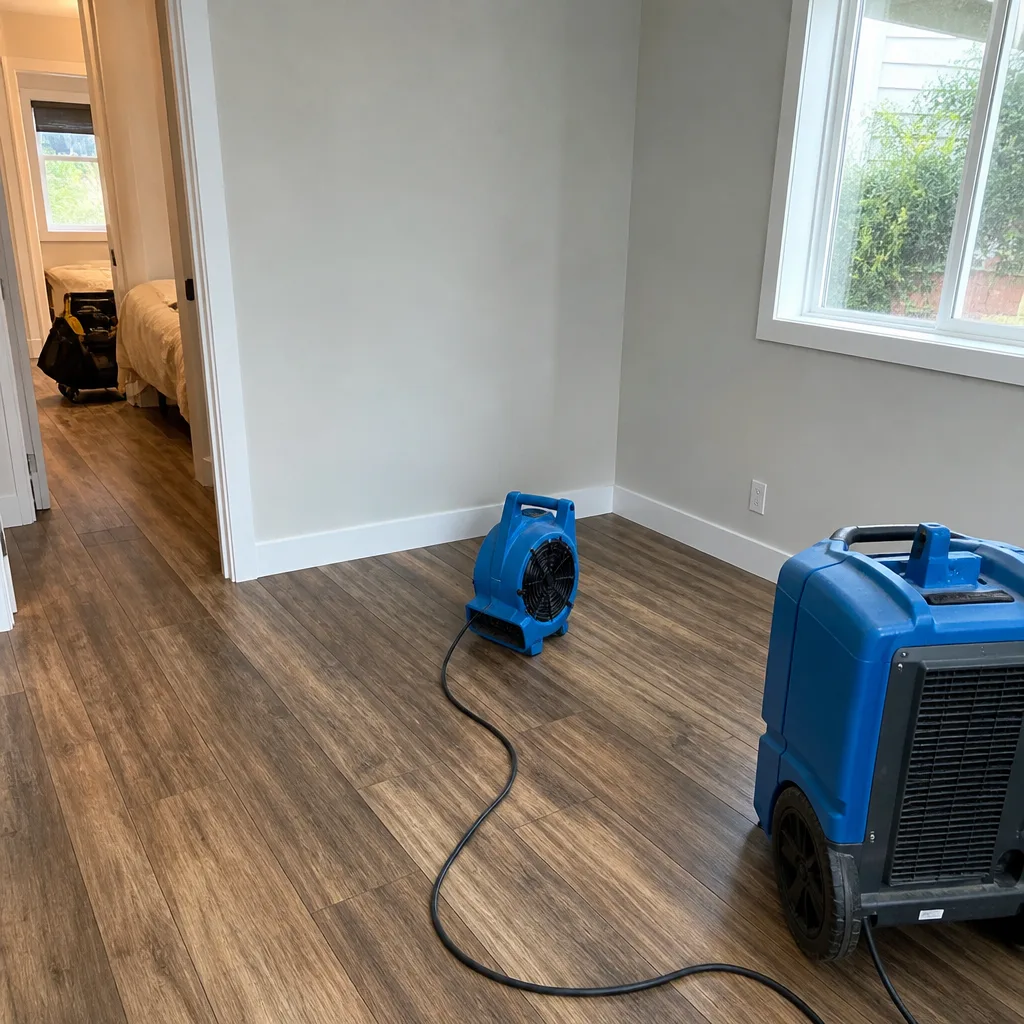
Our Mold Remediation crews deploy professional-grade drying systems from Dri-Eaz, Phoenix, and Injectidry, documented to IICRC, RIA, and IFA standards. For Kent’s crawl-space-focused jobs, Injectidry’s mat system dries subfloor joists from below without removing finished flooring above. Dri-Eaz and Phoenix dehumidifiers handle the heavy vapor load from Green River Valley soil saturation. We stock antimicrobial agents and replacement vapor barrier material locally, so Kent jobs don’t wait on Seattle warehouse delivery. Equipment calibration records are included in your job file per The Haven Standard.
Common Mold Remediation Problems We See in Kent Homes
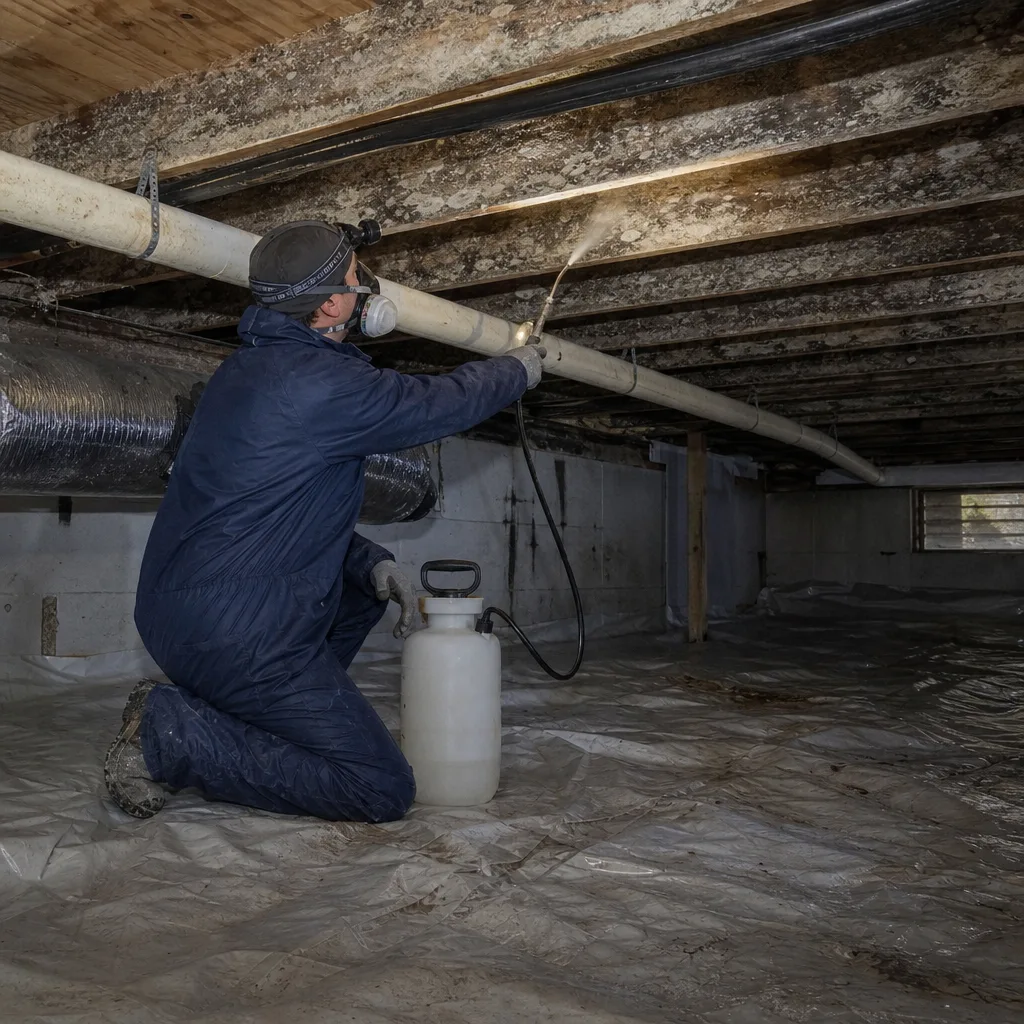
- Category 3 sewage mold misidentified as surface growth. On a 1982 split-level off East Hill, our tech found original black corrugated ABS drain pipe cracked under the crawl space, with Category 3 sewage moisture feeding mold across the subfloor joists. We set containment, removed the failed line, ran antimicrobial treatment, then placed Injectidry mats and Dri-Eaz dehumidification with air movers to complete structural drying - moisture mapping and drying logs confirmed the joists returned to pre-loss condition before we closed the access.
- Crews dry visible mold but ignore saturated valley soils. The Green River Valley’s clay-loam soils hold water for weeks after storms. Without verifying the vapor barrier and mapping surrounding soil moisture, the crawl space re-wets within a month and mold returns.
- Air movers run without containment or drying logs. Mold looks gone, but moisture readings never reach pre-loss condition. The job fails clearance, and the homeowner pays twice.
- Atmospheric river flooding overwhelms drainage. Kent’s low-lying blocks near the Green River can see simultaneous ground-floor commercial flooding across multiple properties. Mold starts within 48-72 hours of water intrusion, but valley-floor saturation means the source persists long after the rain stops.
Pricing for Mold Remediation in Kent, WA
A typical mold inspection in Kent runs $250-$450, including moisture mapping, thermal imaging, and air or surface sampling. Surface mold removal in a contained area of a Kent home runs $1,800-$3,200. Crawl-space mold remediation with Category 3 sewage contamination, the common East Hill scenario, ranges $3,500-$6,500 depending on square footage, joist involvement, and whether drain-line replacement is needed. Full-structure air quality restoration after toxigenic mold runs $4,000-$8,000. Commercial warehouse jobs on the valley floor scale from $8,000-$25,000+ based on affected square footage and HVAC contamination.
What moves the price: extent of hidden moisture, Category 3 versus clean water source, structural material replacement (subfloor, joists, drywall), vapor barrier installation, and third-party clearance testing. Every Kent job gets a written price before work starts, Haven Standard, Clause 1. No scope-creep additions once the crew is inside. Call (425) 671-5392 for your exact quote - estimates are free.
We Also Serve Cities Near Kent
Our Mold Remediation in Kent crews also respond to Renton, Federal Way, Issaquah, and Bellevue. Each city’s housing stock and soil conditions create different mold drivers. Renton’s hillside homes see different drainage patterns. Federal Way’s proximity to Puget Sound brings salt-air corrosion into the moisture equation. Issaquah’s elevation and freeze-thaw cycles create distinct envelope failures. Bellevue’s newer construction has its own vapor-barrier and HVAC issues. We adjust our inspection protocol and drying plan for each, with documentation to match.
Serving Kent, WA - Our Local Coverage Area
We’re based in the Kent area and know this community well. Use the map below to see our service coverage - if you’re nearby, we can almost certainly help.
FAQs - Mold Remediation in Kent
Because original black corrugated ABS drain pipe from the early-to-mid 1980s cracks with age and root intrusion, feeding raw sewage moisture into enclosed crawl spaces for months before detection. That moisture source is Category 3 per IICRC standards, requiring full containment, antimicrobial treatment, and structural drying, not surface wiping. Call (425) 671-5392 for inspection if you smell mustiness in an East Hill crawl space - the source may be sewage, not rain.
Yes. The FEMA Special Flood Hazard Area status means soil saturation persists weeks after storm events, especially with clay-loam soils on the surrounding hills shedding water into the flat basin. Vapor barriers fail, hydrostatic pressure pushes moisture through slabs, and crawl spaces re-wet even without a visible leak. Mold follows within days. We map soil moisture and vapor barrier condition as standard on Kent valley-floor jobs.
Mold colonization begins 48-72 hours after water intrusion in Kent’s climate, with the Pacific Northwest’s cool, humid conditions actually favoring some species that thrive below typical “mold weather” temperatures. The bigger Kent-specific risk is delayed discovery: cracked ABS pipe or valley soil saturation keeps the moisture source active for weeks or months, by which time mold has spread well beyond the original wet zone. Early moisture mapping prevents this.
Containment with negative air pressure, removal of contaminated structural material to the extent the moisture map demands, antimicrobial treatment with documented dwell time, structural drying with Injectidry mats and Dri-Eaz or Phoenix dehumidification, and third-party clearance verification. For East Hill’s common Category 3 jobs, we also coordinate drain-line replacement and vapor barrier repair. You receive photo documentation, daily moisture logs, and a written warranty.
Yes, and not just for your protection. A proper inspection distinguishes Category 3 sewage mold from clean-water mold, identifies hidden moisture in subfloor joists, and establishes pre-remediation spore counts for clearance comparison. Skipping inspection leads to under-scoped work that fails verification and returns. Our Kent inspections include thermal imaging, penetrating moisture meters, and third-party lab sampling. The $250-$450 inspection cost is credited toward remediation if you proceed. Call (425) 671-5392 to schedule.
Written by Alicia Brennan, Owner at Back to Dry Restoration, serving Kent and the Puget Sound region since 2011.